Wheel Alignment and Wheel Balancing Charges
If your steering wheel sits crooked on a straight road, your car pulls to one side, or your tires are wearing out faster than they should, the question usually comes up fast: what are wheel alignment and wheel balancing charges, and what are you actually paying for?
That’s a fair question. Plenty of drivers hear the terms together and assume they’re the same job. They’re not. Alignment sets your wheels to the correct angles so the vehicle tracks properly. Balancing corrects weight distribution in the tire and wheel assembly so it spins smoothly. Both matter for ride quality, tire life, and safety, but the price can vary depending on your vehicle, the condition of the suspension, and whether you need a simple adjustment or extra repair work first.
What wheel alignment and wheel balancing charges usually cover
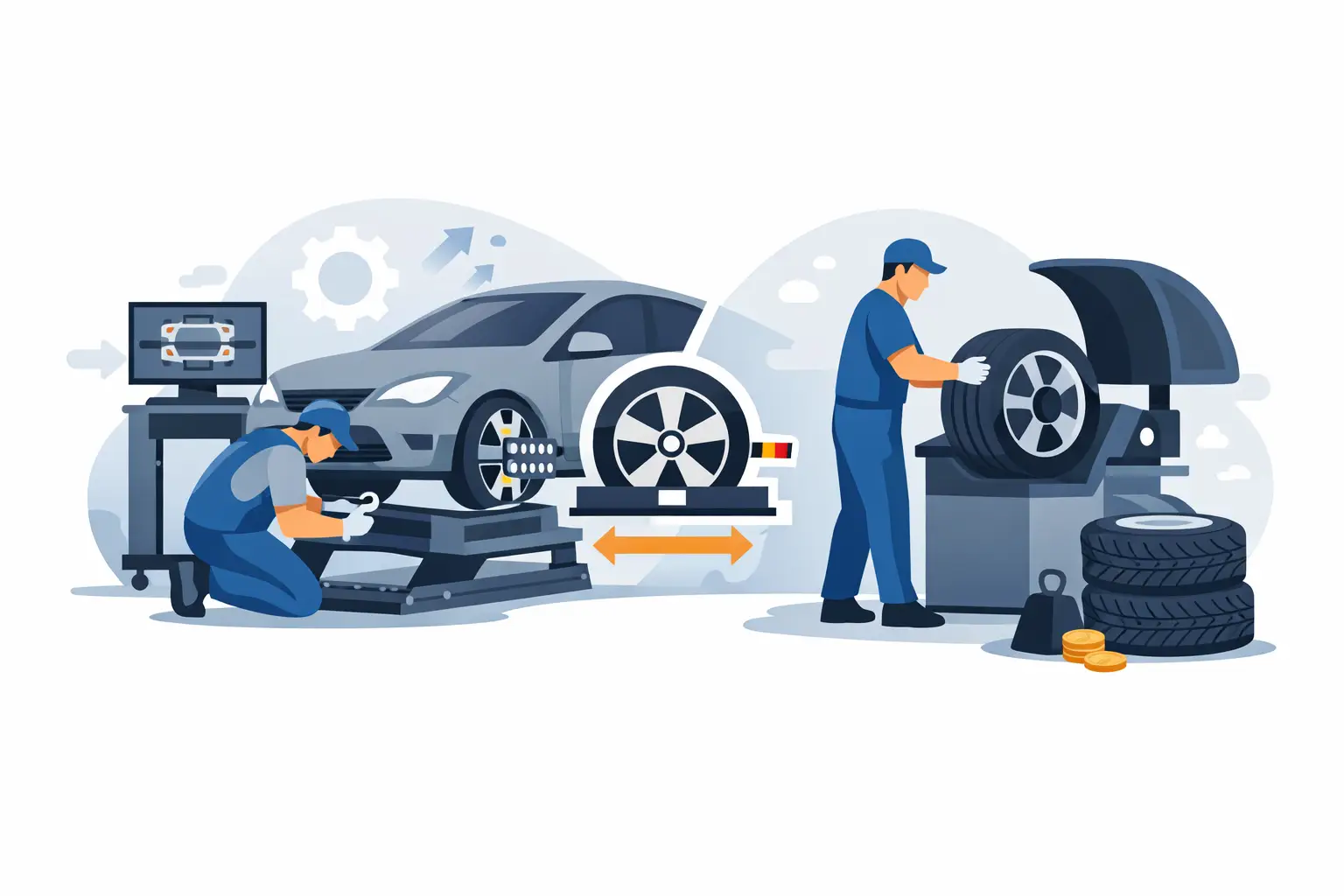
A wheel alignment charge is usually for measuring and adjusting the angles of the wheels to manufacturer specs. On most passenger vehicles, that means checking toe, camber, and caster where adjustment is available. The workshop uses alignment equipment to compare the current settings against the recommended range and then makes corrections.
A wheel balancing charge is different. That service usually involves removing the wheel and tire assembly, spinning it on a balancing machine, identifying heavy spots, and fitting small weights so the assembly rotates evenly. If you have a vibration through the steering wheel at highway speeds, balancing is often the first thing to check.
The reason prices vary is simple. Some vehicles are straightforward and some are not. A small sedan with no seized components is usually quicker to align than a lifted 4WD, a work ute with suspension wear, or a vehicle with aftermarket wheels and tires. Balancing also changes in price depending on tire size, wheel type, and whether all four wheels are being done or just two.
Why charges can be different from one vehicle to the next
Drivers often expect a flat rate, but wheel alignment and wheel balancing charges depend on labor time, vehicle design, and the condition of the car when it arrives.
For alignment, one of the biggest factors is whether the vehicle needs a front-end alignment or a four-wheel alignment. Many modern vehicles benefit from a full four-wheel check because rear wheel angle can affect how the car tracks. If the rear is out, adjusting the front alone may not solve the problem.
Suspension condition matters too. Worn tie rod ends, damaged control arm bushings, bent parts, sagging springs, or loose ball joints can stop an alignment from being completed correctly. In that case, the charge may cover the inspection and measurement, but additional repairs may be needed before final settings can be adjusted.
For balancing, tire condition plays a part. If a tire is badly worn, out of round, damaged, or has a shifted belt, balancing weights may reduce vibration but won’t fully fix it. That’s why a good shop checks whether the issue is balance, tire wear, wheel damage, or something else in the front end.
Wheel alignment vs wheel balancing
A lot of people book one when they really need both. That can waste time and leave the original problem half fixed.
Alignment is mainly about direction and tire wear. If the car drifts, the steering wheel is off-center, or the inner or outer edge of the tire is wearing faster, alignment is the likely issue.
Balancing is mainly about vibration. If the vehicle feels smooth at lower speeds but starts shaking through the seat or steering wheel as speed rises, balancing is a common fix.
Sometimes the symptoms overlap. A car can have uneven wear from poor alignment and vibration from poor balancing at the same time. That’s why many drivers get better value by having the tires and front-end condition checked properly instead of guessing.
When paying for alignment is worth it
Some drivers put off alignment because the car still feels drivable. That usually ends up costing more in tires.
A vehicle can be only slightly out of spec and still chew through a set of tires much earlier than expected. That’s where wheel alignment and wheel balancing charges can save money instead of just adding another workshop bill. Spending on the service at the right time can help avoid replacing tires early, reduce strain on suspension components, and make the car easier to control.
It’s usually worth booking an alignment after hitting a pothole hard, clipping a curb, replacing suspension or steering parts, fitting new tires, or noticing the steering has changed. If you drive a ute, trailer tow regularly, or use a 4WD on rough roads, checks are even more worthwhile because suspension angles can shift over time.
When wheel balancing should be done
Balancing is commonly done when new tires are fitted, but it’s not only for new tire installs. If a weight falls off, if mud builds up inside a wheel, or if a tire wears unevenly, vibration can show up later.
It’s also smart to check balancing if the tires have been rotated and the vibration changed position, or if the steering wheel shake starts at a predictable speed range. A balance service is relatively quick compared with chasing driveline or suspension faults one by one, so it often makes sense as an early step in diagnosis.
What can increase wheel alignment and wheel balancing charges
The cheapest advertised price is not always the full story. That doesn’t mean the price is wrong. It just means the final charge may depend on what the technician finds.
Common factors that can add to alignment cost include seized adjustment points, aftermarket suspension parts, lifted or lowered ride height, worn steering components, and vehicles that need extra setup time. On some cars, there are limited factory adjustments, so correction may require specialized kits or replacement parts.
Balancing charges can increase with oversized tires, specialty wheels, commercial vehicles, or assemblies that need more time to clean and correct. Low-profile tires and larger wheel packages can also be more sensitive to small imbalances, so getting them right matters.
A practical workshop should explain this clearly before doing extra work. That matters just as much as the price itself. Nobody likes surprises on the invoice.
How to tell if you’re getting value
The lowest price only makes sense if the job is done properly. With alignment, that means the vehicle should be measured on proper equipment and adjusted to usable specifications, not just given a quick look and sent out. With balancing, it means each wheel is checked correctly and the result is road-tested or verified if there’s still a problem.
Value also comes from catching related issues early. If the shop notices your tires are feathering, your front bushings are worn, or one wheel is bent, that information helps you make a better decision. A quick cheap service that ignores the real cause usually leads to another visit.
For local drivers trying to keep a family car, work vehicle, or weekend 4WD reliable, convenience matters too. Being able to sort tire issues, alignment, balancing, suspension checks, and replacement tires in one place saves time and gets the vehicle back on the road faster.
Should you do both at the same time?
Often, yes. If you’re fitting new tires, replacing worn suspension parts, or chasing both vibration and uneven tire wear, doing alignment and balancing together usually makes sense. It gives the tires the best chance of wearing evenly from the start and helps avoid coming back for the second job a week later.
That said, it depends on the problem. If your tires were just balanced and the car now pulls left after hitting a pothole, alignment may be the only thing needed. If the steering is straight but there’s a fresh vibration at 60 mph, balancing may be enough. A good shop won’t sell both automatically if only one is required.
A practical way to approach pricing
If you’re comparing wheel alignment and wheel balancing charges, ask what is included, whether the price is for two wheels or four, and whether there are likely extra costs if worn or damaged parts are found. That gives you a more honest comparison than looking at a headline number alone.
For drivers around Kingswood and Penrith, the best result usually comes from choosing a workshop that can inspect the whole picture, not just perform a single tire service in isolation. Ryan Automotive and Tyres handles alignment, balancing, tires, suspension, and general repairs under one roof, which makes it easier to solve the actual problem instead of patching the symptom.
If your car is pulling, vibrating, or wearing through tires too quickly, don’t wait for the tread to disappear before asking questions. A straightforward check now is often cheaper than a new set of tires later.