Is Wheel Alignment and Wheel Balancing the Same?
If your steering wheel is off-center, your car pulls to one side, or you feel a shake through the seat at highway speed, it is fair to ask: is wheel alignment and wheel balancing the same? They are not. Both affect how your vehicle drives and how your tires wear, but they fix different problems and are done in different ways.
That mix-up is common because alignment and balancing are often recommended around the same time, especially after new tires, suspension work, or a bad pothole hit. But treating them as the same service can cost you money, shorten tire life, and leave the real issue untouched.
Is wheel alignment and wheel balancing the same thing?
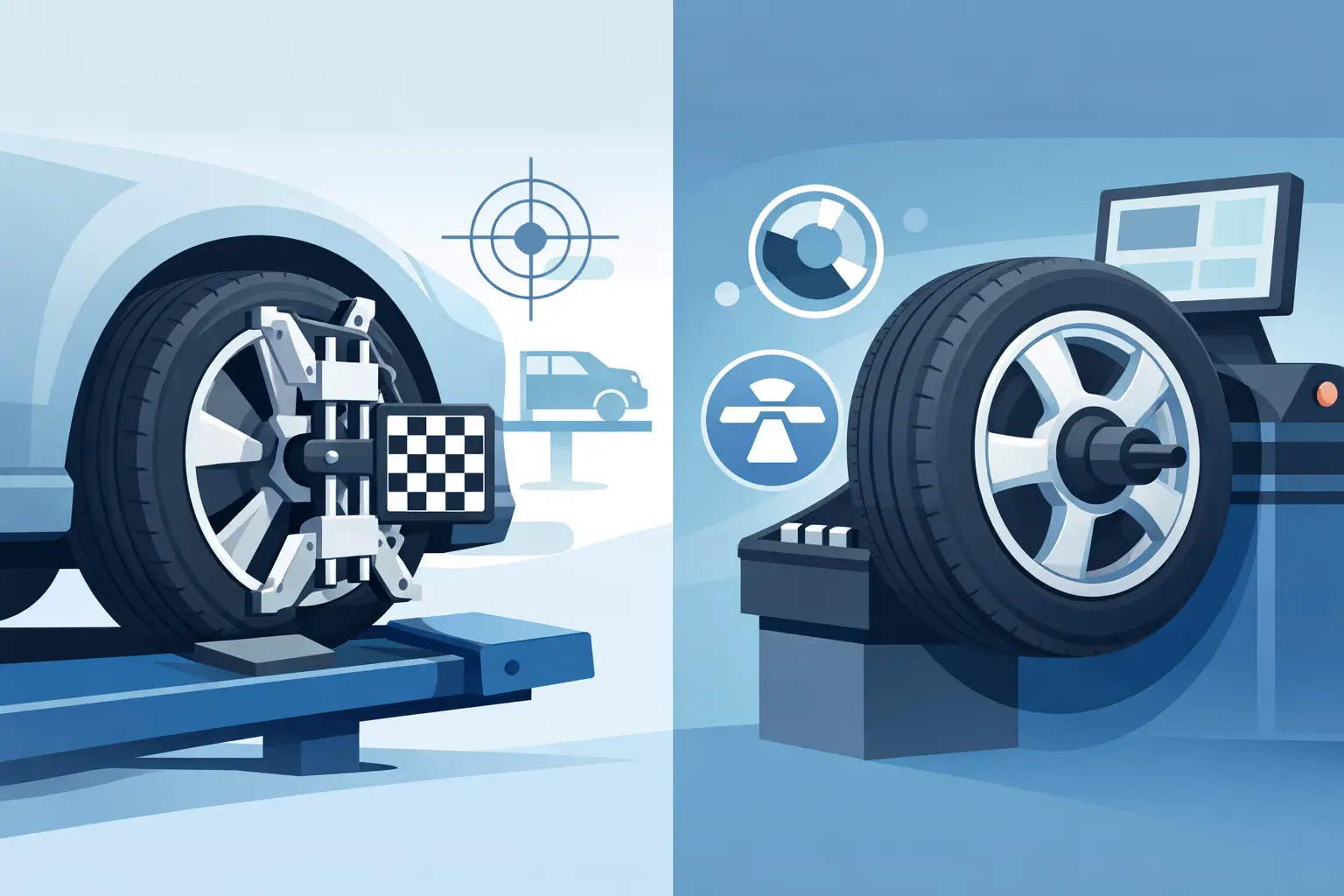
No. Wheel alignment adjusts the angles of your wheels so they sit correctly relative to the road and to each other. Wheel balancing corrects uneven weight in the tire and wheel assembly so it spins smoothly.
A simple way to think about it is this: alignment is about direction, while balancing is about rotation. If the alignment is out, the tires may scrub across the road instead of rolling straight. If the wheels are out of balance, the tire may spin with a wobble or vibration even if the alignment is perfect.
That is why a car can need one service, the other, or both. They work together, but they are not interchangeable.
What wheel alignment actually does
Wheel alignment is a suspension adjustment. A technician sets key angles like camber, caster, and toe to match your vehicle manufacturer’s specifications. Those settings affect how your tires contact the road, how stable the car feels, and whether it tracks straight.
When alignment is off, the signs are usually pretty clear. The car may drift left or right on a flat road. The steering wheel may sit crooked even when you are driving straight. You might also notice uneven tire wear, especially on the inner or outer edges.
Alignment problems often show up after hitting a curb, dropping into potholes, replacing steering or suspension parts, or just from normal wear over time. For tradies, family SUVs, trailers, and work utes carrying loads, suspension stress can bring these issues on faster.
A proper alignment does not involve adding weights to the wheel. It involves measuring and adjusting suspension geometry. That is why it needs the right equipment and a workshop that understands how the whole front end and rear suspension system work together.
Common signs you need a wheel alignment
If your car pulls to one side, the steering feels loose or uneven, or your tires are wearing out faster on one edge, alignment is worth checking. Even a slight pull can get tiring on longer drives and can wear down a good set of tires sooner than expected.
Sometimes drivers ignore these signs because the vehicle still feels drivable. The problem is that poor alignment rarely fixes itself. It usually gets more expensive as the tires wear and suspension components keep working against each other.
What wheel balancing actually does
Wheel balancing is about making sure the tire and wheel assembly has even weight distribution all the way around. A balancing machine spins the wheel and identifies heavy spots. Small weights are then added to correct the imbalance.
If a wheel is out of balance, you will usually feel vibration rather than pulling. That vibration often shows up at certain speeds, commonly around highway driving, and may be felt through the steering wheel, floor, or seat.
Balancing issues can happen with new tires, after a tire repair, when a weight falls off, or as tires wear down unevenly. Mud buildup, damaged wheels, and poor tire fitment can also play a part, especially on trucks, trailers, and 4WDs that see rougher conditions.
Common signs you need wheel balancing
The big clue is vibration that changes with speed. If the steering wheel shudders at 55 to 70 mph, front wheel imbalance is a likely cause. If the vibration is more through the seat or cabin floor, the rear wheels may be involved.
You may also notice uneven tread wear, but balancing wear usually looks different from alignment wear. Instead of one edge wearing down faster, the tread may develop a choppy or cupped pattern. That can make road noise worse too.
Why people confuse the two
The confusion makes sense because both services involve wheels and tires, both can improve ride quality, and both are often suggested when fitting new tires. On top of that, the symptoms can overlap a little. Uneven tire wear can come from alignment, balancing, suspension wear, incorrect tire pressure, or a combination of problems.
That is why guessing is not ideal. A shaky steering wheel does not always mean balancing, and rapid tire wear does not always mean alignment alone. A bent rim, worn shocks, loose steering parts, or damaged suspension bushings can mimic both.
In a one-stop workshop, it is easier to sort that out properly because tire, wheel, and mechanical issues can be checked together instead of sending you to multiple places.
Do you need alignment, balancing, or both?
It depends on what the car is doing and what has happened recently. If you just installed new tires, balancing is part of the job, and an alignment check is often a smart move. New tires on a poorly aligned vehicle can start wearing unevenly almost right away.
If you hit a pothole hard and now the car pulls, alignment is more likely. If you had a flat repaired and now feel a vibration at speed, balancing is a stronger suspect. If you replaced suspension or steering parts, alignment should be part of the follow-up. If your tires are wearing oddly and the car also vibrates, you may need both services.
That is the trade-off many drivers miss. Paying for only one service when the vehicle needs both can leave you back in the shop a week later. On the other hand, not every car needs both every time. A decent inspection should tell you what is actually necessary.
What happens if you ignore it?
Ignoring alignment can chew through tires, reduce fuel economy, and make the vehicle less predictable in wet conditions or emergency braking. It also puts extra strain on suspension and steering components.
Ignoring balancing usually shows up as ride discomfort first, but it can also shorten tire life and put extra stress on bearings, shocks, and suspension parts. The vibration may seem minor at first, then get worse as the tire wears irregularly.
For drivers who rely on their vehicle every day, that matters. A commuter car, work truck, trailer, or family SUV all depend on tires wearing evenly and the vehicle tracking properly. Downtime gets expensive fast when a small wheel issue turns into replacing tires early.
When to have them checked
A good rule is to check alignment if you notice pulling, uneven tire wear, an off-center steering wheel, or after suspension work and impact damage. Wheel balancing should be checked when you feel vibration, install new tires, rotate tires, repair a puncture, or lose a wheel weight.
It also makes sense to ask for both to be reviewed during routine tire service if you drive rough roads often, carry heavy loads, or use your vehicle for work. In areas around Kingswood and Penrith, where drivers deal with daily commuting, tradie use, family driving, and all kinds of road surfaces, these issues show up more often than people think.
Getting the right fix the first time
The real question is not just is wheel alignment and wheel balancing the same, but which one is causing your problem right now. That takes a proper look at the tires, wheels, steering, and suspension as a whole.
At Ryan Automotive and Tyres, that practical approach matters because customers do not want guesswork or multiple bookings for related problems. They want the car checked, the fault explained clearly, and the right service done at a fair price so they can get back on the road.
If your car is pulling, vibrating, or wearing through tires faster than it should, do not write it off as normal. A small correction at the right time can save a set of tires and make the vehicle feel right again.