How Much Does Wheel Alignment and Balancing Cost?
A steering wheel that sits crooked on a straight road usually tells you something before your tires do. The same goes for a vibration through the seat or floor at highway speed. If you’re asking how much does wheel alignment and wheel balancing cost, you’re probably already seeing the warning signs – and waiting too long usually costs more in tire wear than the service itself.
For most drivers, wheel alignment and wheel balancing are not major-ticket repairs. They are routine maintenance jobs that protect your tires, improve drivability, and help your vehicle stay predictable on the road. The catch is that pricing can vary based on the vehicle, the shop, and what the technician finds once the car is on the hoist.
How much does wheel alignment and wheel balancing cost?
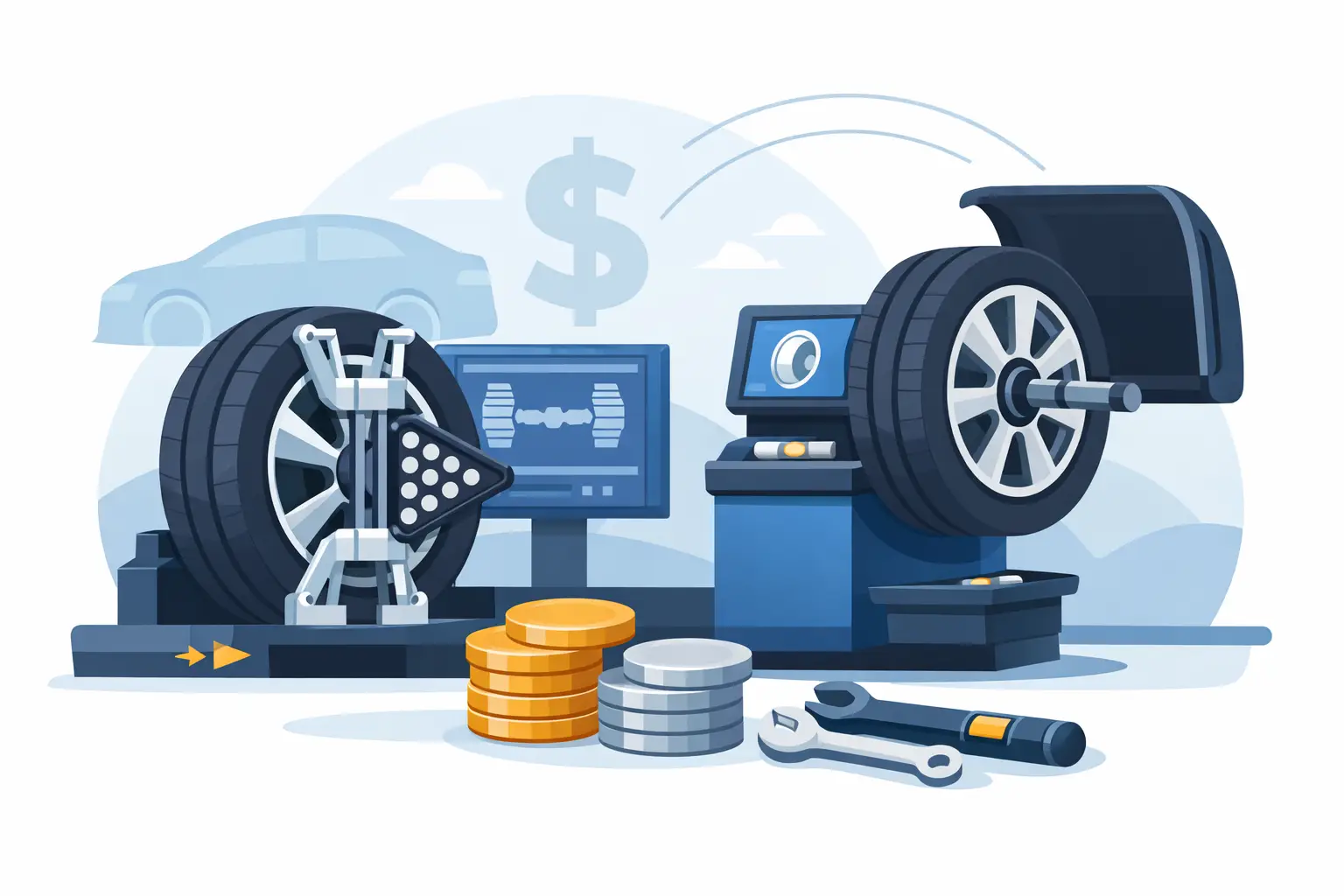
In most cases, a wheel alignment costs about $80 to $150 for a standard passenger vehicle. Wheel balancing usually costs around $15 to $30 per wheel. If you do both services together, many shops will quote a combined price somewhere between $140 and $250, depending on the vehicle and whether the tires are already off the car.
That is the short answer, but real-world pricing depends on the setup of the vehicle. A small commuter car is usually quicker and cheaper than a lifted 4WD, a work ute with suspension wear, or a vehicle with larger aftermarket wheels. Some shops also price front-end alignment differently from a four-wheel alignment, which can change the total.
Wheel alignment vs. wheel balancing
These services are often grouped together, but they fix different problems.
Wheel alignment is about angles. The technician adjusts how the wheels sit in relation to the road and each other. If the alignment is off, the car may pull left or right, the steering wheel may sit off-center, and the tires can wear unevenly.
Wheel balancing is about weight distribution. Small weights are added to the wheel so it spins evenly. If a wheel is out of balance, you will often feel vibration at certain speeds, especially on the highway.
A lot of drivers assume one service replaces the other. It does not. You can have perfectly balanced wheels and still have poor alignment, or a good alignment and a wheel that shakes because the balance is off.
What changes the price?
The biggest factor is the type of vehicle. A standard sedan or hatchback is usually the simplest job. SUVs, light trucks, vans, and 4WDs often take more time, especially if they have larger tires, modified suspension, or components that need extra adjustment.
The second factor is whether you need a two-wheel or four-wheel alignment. Older vehicles or simpler front-end setups may only need front alignment, but many modern vehicles should be checked and aligned on all four wheels. A four-wheel alignment costs more, but it is often the correct service rather than an upsell.
Condition matters too. If tie rod ends, control arm bushings, ball joints, or suspension parts are worn, the alignment may not hold properly. In that case, the shop may recommend repairs before final adjustments. That can change the bill quickly, but it also prevents paying for an alignment that will not last.
Tire size can influence balancing costs as well. Larger wheels, low-profile tires, off-road setups, and specialty wheels may need more time and care. Some vehicles also use road-force balancing or more advanced equipment, which can cost extra but may fix stubborn vibration issues that standard balancing misses.
When paying more actually makes sense
Cheap pricing looks good until the car still pulls on the drive home. Alignment is one of those services where equipment, technician experience, and attention to detail matter.
A bargain alignment may only involve a quick front-end adjustment. A proper job includes checking tire condition, inspecting steering and suspension play, measuring all relevant angles, correcting them where possible, and confirming the steering wheel is centered. If your vehicle has uneven tire wear or recent suspension work, that extra care matters.
The same applies to balancing. A quick spin balance may be enough for many daily drivers, but not every vibration is simple. Bent rims, uneven tire wear, mud-terrain tires, and load-carrying work vehicles can be more difficult to dial in. Paying for the right service the first time is often cheaper than chasing the same problem across multiple visits.
Signs you may need alignment or balancing
You do not always need both services together, but they are often done at the same time because the symptoms overlap.
If the car pulls to one side, the steering wheel is not straight, or the inside or outside edge of the tire is wearing faster than the rest, alignment is the likely issue. If the vibration shows up mostly at certain speeds, especially through the steering wheel or cabin, balancing is a stronger suspect.
You should also think about these services after hitting a pothole, curb, or road debris. The same goes for fitting new tires, replacing suspension parts, or noticing fuel economy drop without another clear cause. Bad alignment increases rolling resistance, and that means your tires and wallet both work harder.
Is it worth getting both done together?
Most of the time, yes. If you’re already having tires fitted or rotated, balancing is commonly part of the process or can be added with minimal extra labor. Alignment makes sense at the same visit because it protects the investment in the tires you already have.
This is especially true for drivers who cover plenty of miles every week, family vehicles that need predictable handling, and tradie vehicles that carry gear and spend long hours on the road. Uneven tire wear can wipe out the savings of skipping alignment pretty quickly.
At a one-stop workshop, this is also just easier. You are not juggling a tire shop, a mechanic, and a separate suspension specialist unless there is a deeper fault that genuinely needs specialist work. For busy drivers, that convenience is worth something.
How often should you get it checked?
A good rule is to have alignment checked about once a year, or any time you fit new tires, replace steering or suspension parts, or notice handling changes. Balancing is commonly done when new tires are installed, when tires are rotated, or whenever vibration shows up.
There is no perfect schedule that fits every vehicle. A work truck on rough roads may need more frequent attention than a lightly driven commuter car. A 4WD with larger tires may also need closer monitoring, especially after off-road use or suspension changes.
How to avoid paying for it too often
Good driving habits help more than people think. Avoid hitting curbs when parking, slow down for potholes, keep your tire pressures right, and do not ignore small steering or suspension noises. Problems that start small in the front end tend to turn into tire wear bills later.
It also helps to act early. If the steering wheel has just started sitting off-center or the car has developed a slight shake, getting it checked now is usually cheaper than replacing prematurely worn tires a few months from now.
What to ask a shop before booking
A straightforward quote should tell you whether the price is for front alignment or four-wheel alignment, whether balancing is priced per wheel, and whether inspection of steering and suspension components is included. That keeps the conversation clear and helps you compare shops fairly.
You should also ask what happens if worn parts prevent the alignment from being completed properly. A dependable workshop will explain that before starting, not after charging you for a result the vehicle could never hold.
For local drivers who want tires, wheel work, mechanical repairs, and inspections handled in one place, a shop like Ryan Automotive and Tyres makes that process a lot simpler – especially when downtime matters more than shopping around for the absolute cheapest line on a quote.
The real cost is usually the tire wear you do not see
If you’re wondering how much does wheel alignment and wheel balancing cost, the service itself is usually manageable. What catches people out is the hidden cost of ignoring it. One bad tire can cost more than a balance. A full set worn out early by poor alignment costs a lot more.
If your vehicle is pulling, shaking, or chewing through tread unevenly, getting it checked is less about spending money and more about stopping waste. A fair-priced alignment and balance done at the right time is one of the simpler ways to keep your car safe, steady, and cheaper to run.