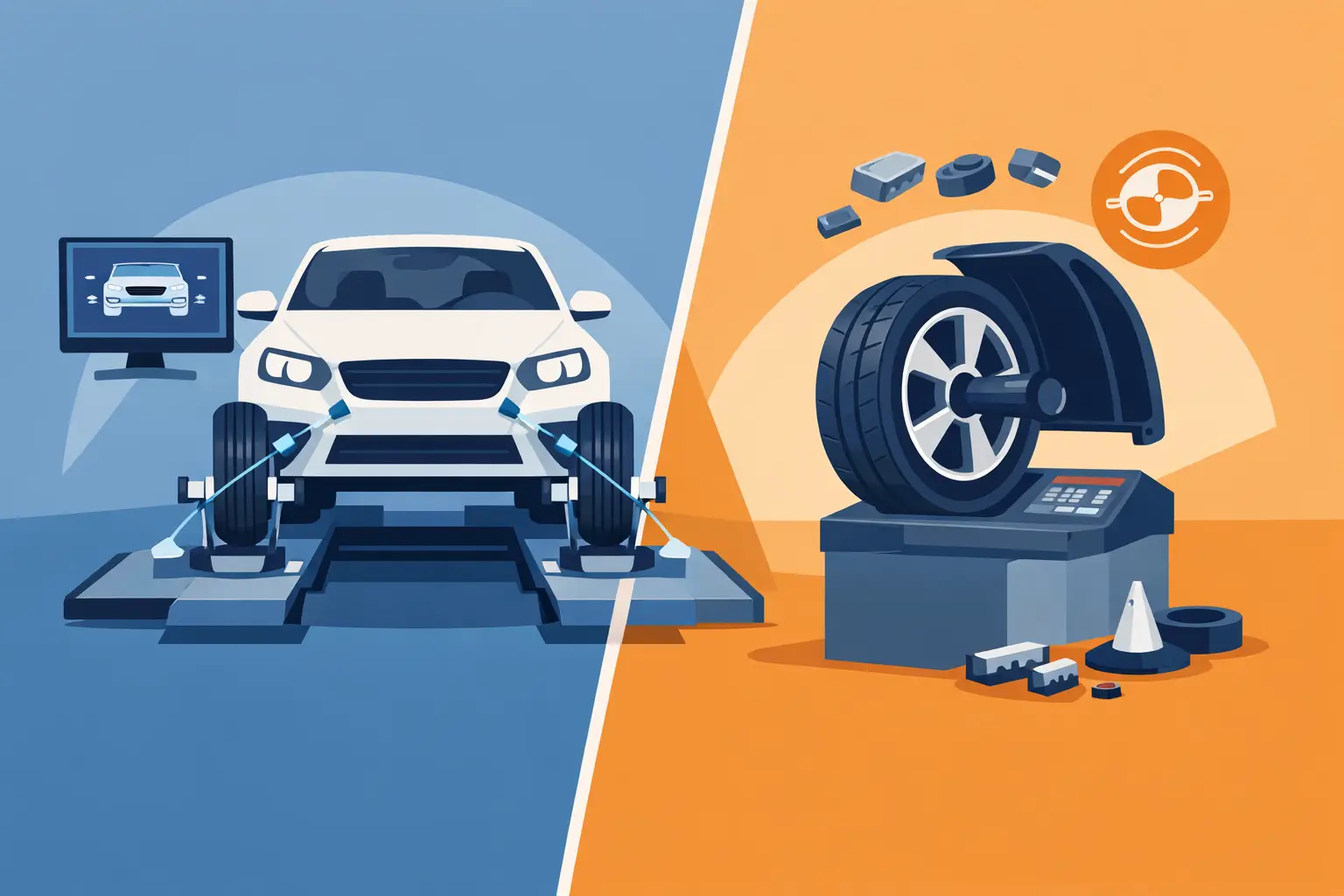
Wheel Alignment and Wheel Balancing Difference
You feel it first on the road. Maybe the steering wheel sits a little off-center on the drive through Penrith, or the car starts vibrating once you hit higher speeds on the M4. A lot of drivers assume alignment and balancing are the same job, but the wheel alignment and wheel balancing difference matters because each service fixes a different problem, affects tire wear in a different way, and plays a big part in how safe and comfortable your car feels.
Getting the right service at the right time can save you money on tires, protect your suspension, and stop small issues from turning into bigger workshop bills. If you know what each one does, it becomes much easier to explain what your car is doing and get it sorted faster.
What is the wheel alignment and wheel balancing difference?
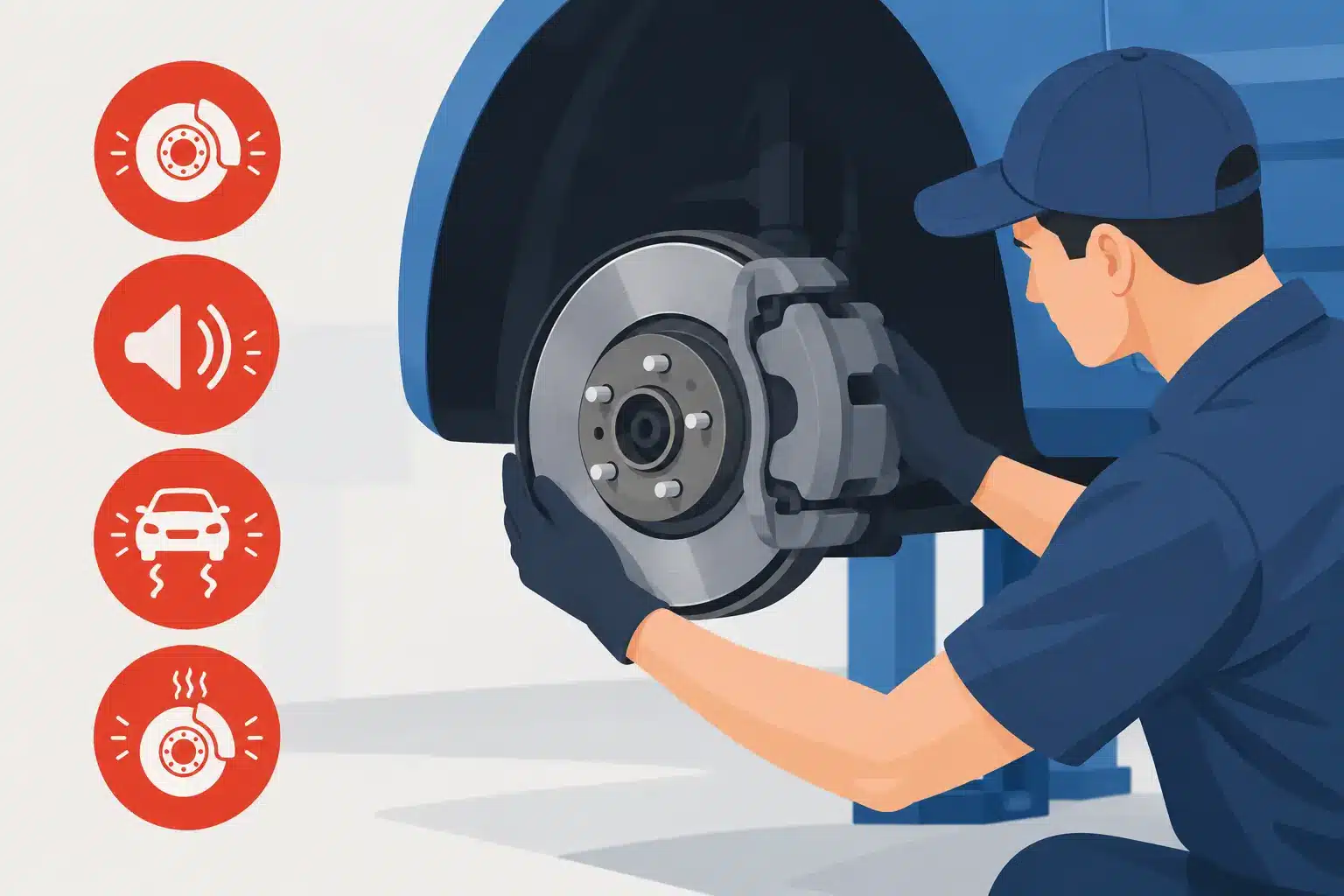
Wheel alignment is about angles. It adjusts the position of the wheels so they sit correctly relative to the road and to each other. When alignment is off, the vehicle may pull to one side, the steering wheel may not return properly, and the tires can wear unevenly.
Wheel balancing is about weight distribution. It makes sure the tire and wheel assembly spins evenly by correcting heavy spots with small balance weights. When a wheel is out of balance, you usually notice vibration through the steering wheel, seat, or floor, especially as speed increases.
That is the core wheel alignment and wheel balancing difference. Alignment deals with how the wheels are pointed and positioned. Balancing deals with how the wheel and tire rotate.
Why drivers often confuse them
The confusion is easy to understand because both services affect ride quality, tire life, and general drivability. If your car does not feel right, both can sound like they belong to the same job. In a busy local workshop, it is common for customers to ask for a wheel alignment when the real issue is wheel balance, or to ask for balancing when the car is actually scrubbing through tires because the alignment is out.
There is also some overlap in symptoms. Both problems can make a car feel rough, unsettled, or just not quite right. The difference is in how those symptoms show up.
Signs your car needs a wheel alignment
A car with poor alignment usually tells on itself in everyday driving. The vehicle may drift left or right on a straight road even when tire pressures are correct. The steering wheel may sit crooked when you are driving straight. You might also notice the car feels less stable in corners or under braking.
Tire wear is another big clue. If the inside or outside edge of the tire is wearing faster than the rest of the tread, alignment should be checked. This kind of wear often happens gradually, so many drivers do not spot it until they rotate tires or replace them.
Alignment issues can happen after hitting a pothole, clipping a curb, replacing suspension parts, or driving on worn steering and suspension components. For tradies, family SUVs, trailers, and work utes that carry varying loads, alignment can shift over time from normal use alone.
Signs your car needs wheel balancing
An out-of-balance wheel usually shows up as a vibration that gets worse at certain speeds. You may feel it through the steering wheel if the front wheels are affected, or through the seat and cabin if the rear wheels are the issue. The car may drive straight enough, but it will not feel smooth.
Balancing problems are often more noticeable at highway speed than around town. If the shake starts around a particular speed range and then changes as you go faster or slower, balancing is a strong suspect. Sometimes a balance issue appears after new tires are fitted, after a weight falls off, or when mud and debris build up inside the wheel.
Unlike alignment, balancing does not usually cause the car to pull to one side. It is more about vibration than directional control.
How each service is done
Wheel alignment is performed using alignment equipment that measures wheel angles such as toe, camber, and caster. These angles are adjusted to match manufacturer specifications, or the most appropriate setting for the vehicle’s setup and use. On some cars, there is a wide range of adjustment. On others, limited adjustment can point to worn parts or damage that needs to be addressed first.
Wheel balancing is done by mounting the wheel and tire assembly on a balancing machine. The machine detects heavy spots, and a technician fits small weights in precise locations so the assembly spins evenly. If a tire or wheel is damaged, balancing may improve things only to a point. In those cases, repair or replacement may be the better fix.
Can one service fix the other problem?
No, and this is where a lot of wasted time and money can happen. If your steering wheel is shaking because a wheel is out of balance, an alignment will not fix the vibration. If your tires are wearing on one edge because alignment is out, balancing will not stop that wear pattern.
Sometimes a vehicle needs both, especially after fitting new tires or after suspension work. That is not unusual. But they are separate services with separate purposes.
When you should get alignment, balancing, or both
A practical rule is this: get wheel balancing whenever new tires are fitted or when vibration starts. Get wheel alignment when the car pulls, the steering wheel is off-center, you have uneven tire wear, or you have replaced steering or suspension components.
There are also times when doing both makes sense. After installing new tires, many drivers want the full setup done properly from the start. If you have hit a major pothole or curb, both alignment and balance should be checked because impact can affect more than one area. If you run a 4WD, work ute, trailer, or family vehicle that sees rough roads, kerbs, and regular load changes, staying on top of both services is a smart move.
Why this matters for tire life and running costs
Tires are not cheap, and poor alignment is one of the fastest ways to wear them out before their time. If the wheel angles are wrong, the tire is dragged across the road instead of rolling cleanly. That means faster wear, more road noise, and less value from every set you buy.
Poor balancing creates a different kind of cost. The constant vibration can make driving unpleasant, but it can also add stress to suspension and steering components over time. It may not destroy a tire as dramatically as bad alignment, but it still affects comfort, component life, and driver confidence.
For local drivers who rely on one vehicle for work, school runs, deliveries, or weekend trips, that matters. A smooth, straight-tracking car is easier on fuel, easier on tires, and easier to live with.
It depends on the vehicle and how you use it
Not every car shows the same symptoms in the same way. A small commuter car may make an alignment issue obvious through the steering almost immediately. A heavier ute or SUV may hide the problem longer, especially if the tires are more aggressive or the suspension is already built for tougher use.
The same goes for balancing. A vehicle with large wheels or low-profile tires can feel balance issues more sharply than one with taller tire sidewalls. Mud-terrain tires, commercial vehicles, and trailers can also behave differently from a standard passenger car.
That is why proper inspection matters. A vibration is not always just balancing. A pull is not always just alignment. Tire condition, suspension wear, brake issues, and damaged wheels can all play a part. An experienced workshop will look at the full picture instead of guessing.
A simple way to think about it
If the car shakes, think balancing. If the car pulls or chews through tires unevenly, think alignment. If you have fitted new tires, hit something hard, or had suspension work done, it may be worth checking both.
At a one-stop workshop, that makes life easier because you do not have to bounce between a tire shop and a mechanic to get a clear answer. For drivers around Kingswood and Penrith, practical service matters just as much as the technical side. You want the problem identified properly, fixed without fuss, and done at a fair price.
Ryan Automotive and Tyres works with drivers who need exactly that – straightforward advice, quality care for all vehicle types, and the convenience of getting tires, balancing, alignment, and mechanical checks handled in one place, open 7 days.
If your car is vibrating, pulling, or wearing through tires faster than it should, do not wait for the problem to get more expensive. A quick check now can save a set of tires later and make every drive feel safer and smoother.