What Is Wheel Alignment and Wheel Balancing?
You usually notice tire problems before you know what to call them. The steering wheel sits a little off-center. The car pulls left on a straight road. At highway speed, the cabin starts to shake through the seat or steering wheel. If you have ever asked what is wheel alignment and wheel balancing, those are exactly the kinds of issues these services are meant to fix.
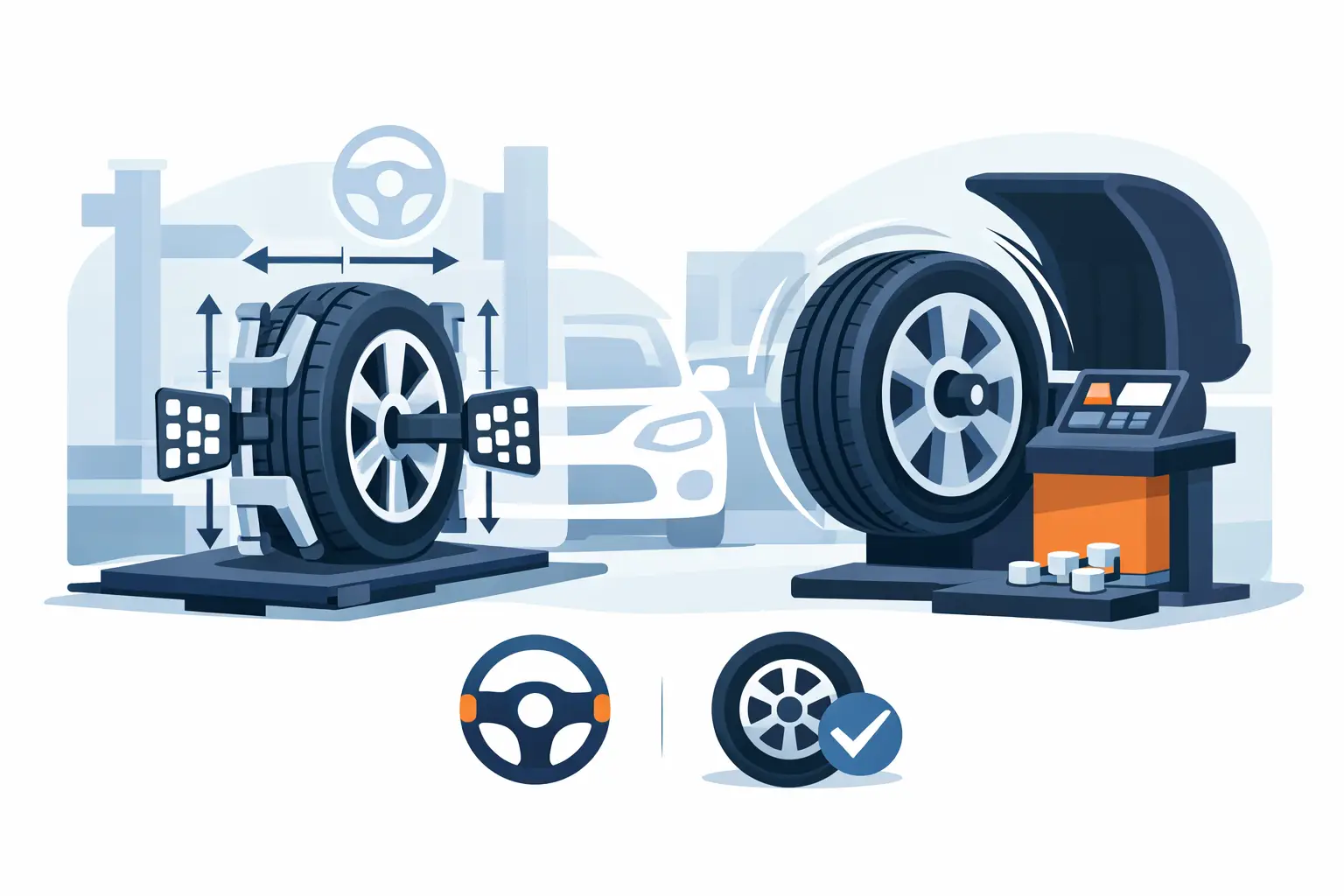
They sound similar, but they solve different problems. Alignment is about the angles of your wheels and how they point relative to the road and each other. Balancing is about weight distribution around the tire and wheel assembly. Both matter for safety, tire life, ride comfort, and fuel economy, and both are worth fixing early before they turn into more expensive wear.
What is wheel alignment and wheel balancing?
Wheel alignment adjusts the suspension angles so the tires meet the road correctly. It does not mean physically moving the tire on the rim. It means setting angles like camber, caster, and toe to the vehicle maker’s specifications. When alignment is off, the tires can scrub against the road instead of rolling cleanly, which wears them down faster and can make the vehicle drift or feel unstable.
Wheel balancing is different. It corrects uneven weight around the tire and wheel. Even a brand-new tire can have slightly heavier and lighter spots. A technician uses a balancing machine to find where the assembly is out of balance, then adds small weights so it spins smoothly. When balancing is off, you usually feel vibration, especially at certain speeds.
The easiest way to think about it is this: alignment affects direction and tire wear, while balancing affects smooth rotation and vibration. A vehicle can need one service, the other, or both at the same time.
Why alignment matters more than many drivers realize
A small alignment issue can create a bigger tire bill than most people expect. If the front wheels are pointed slightly inward or outward, the tread gets dragged across the road every time you drive. That extra friction shortens tire life and can make a fairly new set of tires wear unevenly long before they should.
It also changes how the vehicle feels on the road. You may find yourself constantly correcting the steering wheel, especially on longer drives or at freeway speeds. In wet conditions, poor alignment can make the vehicle feel less planted because the tire contact patch is not working as it should.
Alignment can be thrown off by common things, not just major accidents. Hitting potholes, clipping curbs, worn suspension parts, and everyday road impacts can all shift angles over time. That is why alignment is not only for damaged vehicles. It is a normal maintenance item for cars, SUVs, trucks, trailers, and work vehicles that spend a lot of time on rough roads.
The main alignment angles
You do not need to memorize alignment specs, but it helps to know what is being adjusted. Toe is the direction the tires point in relation to each other when viewed from above. Camber is whether the tire leans inward or outward when viewed from the front. Caster affects steering stability and how the wheel returns to center after a turn.
When any of these angles move out of spec, you can get uneven wear, pulling, wandering, or a crooked steering wheel. The exact symptoms depend on the vehicle and how far things are out, which is why a proper alignment check is more useful than guessing.
What wheel balancing actually fixes
Balancing is about how the tire and wheel spin. If one area is heavier, the assembly can wobble as speed builds. That wobble may be small at low speed and very noticeable on the freeway. Some drivers feel it in the steering wheel, others through the floor or seat, depending on whether the front or rear wheels are affected.
An out-of-balance wheel does more than make the ride annoying. It adds stress to tires, shocks, bearings, and suspension parts. Over time, that vibration can contribute to irregular tread wear and extra strain on components that already take enough punishment from daily driving.
Balancing is especially relevant after new tires are installed, after a puncture repair, or if a weight falls off the wheel. Mud buildup inside a wheel can also create a balance issue, which is something 4WD owners and tradies often run into after job site or off-road use.
Signs you may need alignment, balancing, or both
Some symptoms point strongly to one service, but there is overlap. That is where a workshop check helps. If your car pulls to one side, the steering wheel is off-center, or the tires are wearing more on one edge, alignment is the likely issue. If the vehicle feels smooth around town but vibrates at 55 to 70 mph, balancing is a common cause.
Sometimes both are needed. A driver might install new tires because the old ones wore unevenly from poor alignment, then still feel vibration because one wheel also needs balancing. Fixing only one part of the problem leaves the other one behind.
A few warning signs are worth taking seriously: feathered tread, cupping, steering shimmy, poor straight-line tracking, and a general feeling that the vehicle is not settled on the road. Even if the car is still drivable, waiting usually means more tire wear and more money spent later.
When should you get wheel alignment and balancing?
There is no single rule that fits every vehicle, because usage matters. A family SUV doing school runs on decent roads will have different needs than a work truck hitting potholes and carrying loads every day. Still, there are some common times when checking both makes sense.
Alignment is smart after replacing suspension or steering parts, after hitting a major pothole or curb, when fitting new tires, or anytime the steering feel changes. Balancing should be done whenever new tires are installed and checked if vibration starts. Rotating tires is also a practical time to inspect for balance-related wear.
For drivers who want a simple habit, have alignment checked periodically and anytime unusual tire wear appears. Have balancing checked when you notice vibration or after tire service. It is a small maintenance step compared with the cost of replacing tires early.
Why new tires do not fix the underlying issue
A lot of people replace worn tires and expect the problem to disappear. Sometimes it does, but not always. If the old tires wore unevenly because of alignment, the new tires can start wearing the same way unless the angles are corrected. If the old set caused vibration because of an imbalance, the new set still needs proper balancing during installation.
That is why a one-stop workshop approach matters. Tire replacement, balancing, alignment, and suspension inspection all work together. If one part gets skipped, the job is only half done.
Does every vibration mean wheel balancing?
Not necessarily. This is one of those areas where it depends. Tire balance is a common reason for vibration, but not the only one. Bent wheels, damaged tires, worn suspension parts, brake issues, and driveline faults can create similar symptoms. That is why a proper inspection matters instead of just adding weights and hoping for the best.
The same goes for pulling or uneven wear. Alignment is often the answer, but low tire pressure, brake drag, or worn components can also play a part. A good workshop checks the whole picture rather than treating alignment and balancing as isolated jobs.
What happens during the service?
During an alignment, the vehicle is placed on an alignment rack and measurements are taken against factory specifications. The technician adjusts the relevant suspension settings where the vehicle design allows it. On some vehicles, if parts are worn or bent, alignment cannot be set correctly until those issues are fixed first.
During balancing, each wheel and tire assembly is spun on a machine to detect uneven weight distribution. Small weights are then attached to the wheel to correct the imbalance. The process is straightforward, but accuracy matters. Good equipment and experienced technicians make a noticeable difference.
If you use your vehicle for commuting, family driving, trade work, towing, or weekend 4WD trips, these services are not extras. They are part of keeping the vehicle safe, comfortable, and economical to run. For local drivers around Kingswood and Penrith, having tires, wheel work, and mechanical checks handled in one place also cuts down the back-and-forth that wastes half your day.
The best time to deal with alignment or balancing is when the first signs show up, not when the tires are already ruined. If the steering feels off or the ride has started to shake, trust what the vehicle is telling you and get it checked before a small issue turns into a full set of tires and more downtime.