How to Spot Brake Wear Before It Becomes Dangerous
Your brakes rarely fail without giving you a warning first. A squeal when backing out, a steering wheel shake at highway speed, or a brake pedal that feels different from last month can all point to a problem that needs attention. Knowing how to spot brake wear helps you book repairs before a straightforward pad replacement turns into damaged rotors, calipers, or a much bigger safety concern.
For commuters, family vehicles, work utes, trailers, and 4WDs, brakes deal with more than most drivers realize. Stop-start traffic, hills, towing, heavy loads, muddy tracks, and long highway runs all affect how quickly brake components wear. There is no fixed mileage that suits every vehicle, so the better approach is to watch for changes in how your vehicle sounds, feels, and stops.
How to Spot Brake Wear While You Drive
The most useful brake warning signs show up in normal driving. Do not wait for a warning light or a failed inspection if the vehicle is already behaving differently under braking.
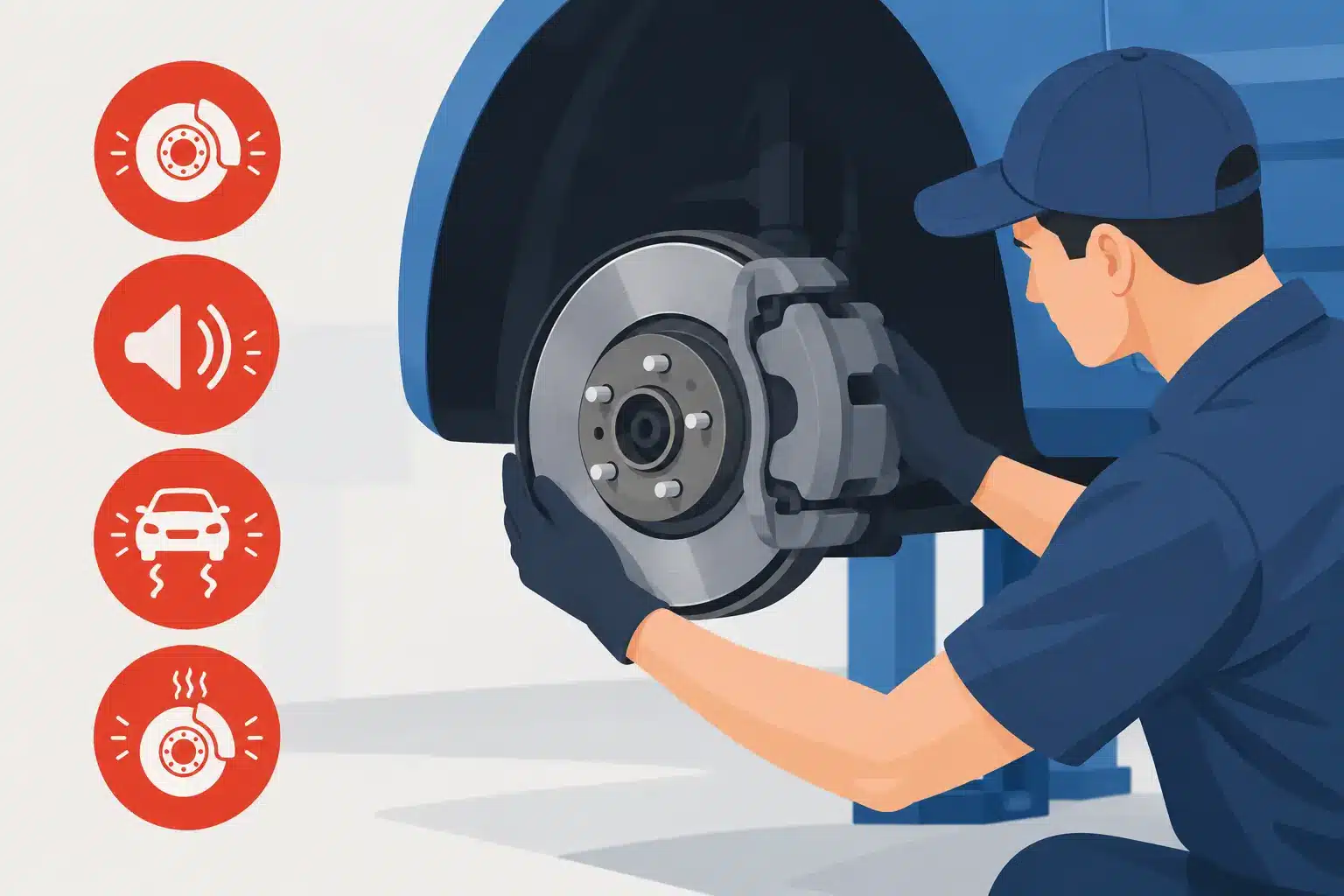
Squealing, squeaking, or grinding noises
A high-pitched squeal when you apply the brakes is one of the most common signs of worn brake pads. Many pads have a small wear indicator designed to make noise once the friction material gets low. It is not always an emergency that same minute, but it is a clear signal to arrange an inspection soon.
Grinding is more urgent. It can mean the pad material has worn away and metal is contacting the brake rotor. Continuing to drive this way can score or overheat the rotor, reduce braking performance, and raise the cost of the repair. A light squeak after rain may simply be surface rust clearing from the rotors, especially if it disappears after a few stops. Persistent noise is different and should not be ignored.
Longer stopping distances
If your vehicle needs more room to stop than it used to, take it seriously. You may notice this at a familiar intersection, in traffic, or when braking downhill. Worn pads are one possible cause, but longer stopping distances can also come from worn tires, contaminated brake components, low brake fluid, a hydraulic issue, or brake fade from excessive heat.
The key is the change. A vehicle that once stopped confidently but now feels slow to pull up needs a professional check rather than guesswork.
Vibration through the pedal or steering wheel
A pulsing brake pedal or steering wheel shake under braking often points to rotor problems. Heat, heavy braking, uneven deposits on the rotor surface, or excessive rotor runout can create a vibration that becomes more obvious as speed increases.
Do not assume new pads alone will fix the issue. Depending on rotor thickness and condition, the rotors may need machining or replacement alongside the pads. Installing fresh pads on badly worn rotors can lead to noise, poor bedding-in, and uneven braking.
Pulling to one side
Your vehicle should brake in a straight, controlled line on a flat road. If it pulls left or right when you press the pedal, there may be a sticking caliper, uneven pad wear, a brake hose issue, contaminated pads, or a tire and suspension problem contributing to the feeling.
A mild pull can be easy to put off, but it becomes more dangerous in wet conditions or during emergency braking. This is particularly important for tradies carrying tools, drivers towing trailers, and families loading up for a weekend away.
A soft, spongy, or unusually hard brake pedal
Brake pedal feel matters. A soft or spongy pedal may indicate air or moisture in the brake fluid, a fluid leak, or a hydraulic fault. If the pedal sinks toward the floor while holding pressure, do not keep driving and hope it improves.
A very hard pedal can also signal a problem, including an issue with the brake booster or vacuum system. Either change deserves prompt diagnosis. Brake fluid is not a lifetime fluid, either. Over time it absorbs moisture, which lowers its boiling point and can affect braking when the system gets hot.
What You Can Check Safely at Home
You do not need to remove wheels or work under the vehicle to catch every brake issue. A quick visual check and a few observations can help you describe the problem clearly when you book service.
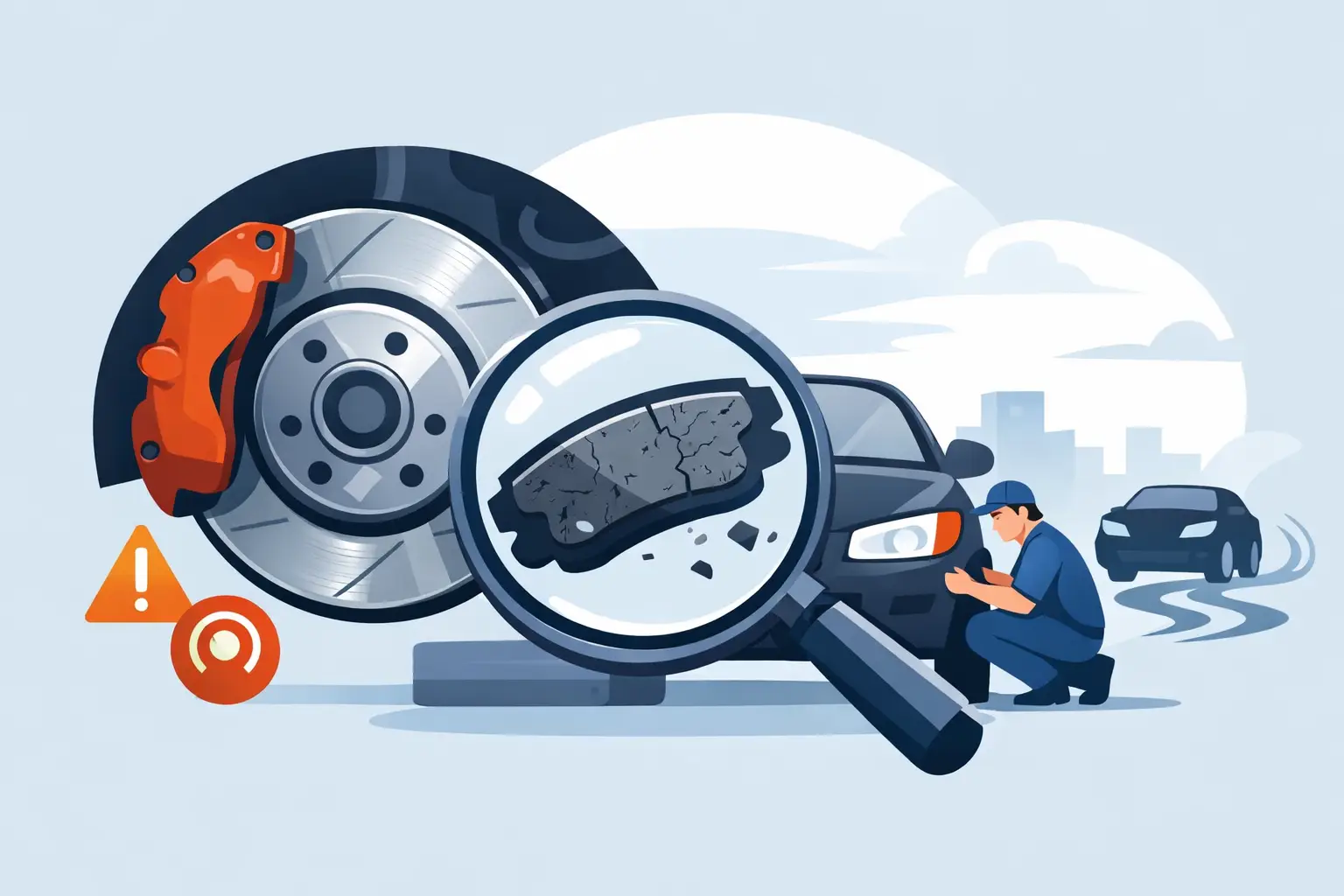
Look through the wheel spokes if the design allows it. You may be able to see the outer brake pad against the rotor. A healthy pad has visible friction material between its backing plate and the rotor. If it looks very thin, uneven, cracked, or close to metal, arrange an inspection. Inner pads can wear differently from outer pads, however, so a visible outer pad is not a complete diagnosis.
Check the brake fluid reservoir under the hood only when the engine is cool and the vehicle is parked level. The fluid should sit between the marked minimum and maximum lines. A low level can happen as pads wear, but it can also indicate a leak. Do not simply top it up and move on without finding out why it is low.
Also pay attention to what is on your wheels. Heavy black brake dust is normal on many vehicles, but one wheel coated far more heavily than the others can suggest uneven wear or a caliper that is not releasing properly. A burning smell after ordinary driving, or one wheel that feels much hotter than the others, may also indicate a sticking brake. Avoid touching hot wheels or brake parts.
Brake Wear Does Not Always Look the Same
Front brakes usually wear faster because they handle more of the vehicle’s braking force. That said, rear brake wear can be significant on vehicles with electronic brake-force distribution, rear disc brakes, heavy loads, or frequent towing. Some vehicles also use drum brakes at the rear, where wear is harder to see without removing the drum.
Driving habits make a major difference. Constant stop-start driving, riding the brake pedal downhill, carrying heavy loads, and towing can shorten pad and rotor life. On the other hand, a vehicle that sits for long periods can develop rusty rotors, seized calipers, or binding hardware even if its mileage is low.
Tires matter as well. Even perfect brake components cannot deliver their best stopping performance through worn, damaged, or poorly inflated tires. If your vehicle pulls, vibrates, or feels unstable under braking, it may need a brake inspection along with a tire, wheel alignment, or suspension check.
When Brake Wear Needs Immediate Attention
Some symptoms can wait for the next available workshop appointment. Others mean you should stop driving as soon as it is safe and arrange assistance or urgent inspection.
Treat these signs as urgent:
- Grinding or harsh metal-on-metal brake noise
- A brake warning light, especially with a low or sinking pedal
- Brake fluid leaking beneath the vehicle
- Smoke, a strong burning smell, or a wheel that is excessively hot
- Severe pulling, shaking, or loss of stopping power
- A pedal that goes close to the floor before the brakes engage
Do not test a suspected brake problem by driving faster or braking harder. A short, cautious trip to a nearby workshop may be possible for a minor squeal, but a serious symptom needs a safer plan.
What a Proper Brake Inspection Should Cover
A complete brake check is more than a quick look at pad thickness. A technician should assess pad condition, rotor thickness and surface, caliper operation, brake hoses, fluid level and condition, hardware, and signs of leaks or uneven wear. On drum brake systems, the shoes, wheel cylinders, springs, and adjustment should also be checked.
The right repair depends on what is worn and why. Replacing pads early may be enough. If the rotors are below specification, heavily scored, cracked, or heat damaged, they should be replaced rather than reused. If one pad is much thinner than the other, the underlying cause – often caliper or slide hardware trouble – needs repair, or the new pads may wear out quickly.
At Ryan Automotive and Tyres, brake work can be checked alongside tires, wheel alignment, suspension, and general servicing, which helps identify related issues in one visit. That is useful when a brake complaint is actually being made worse by worn tires, a damaged suspension component, or an alignment problem.
Do Not Wait for the Noise to Get Worse
Brake wear is normal. Delaying repairs is optional, and it is usually where costs rise. Booking an inspection when the first signs appear gives you more repair options, better stopping confidence, and less chance of unexpected downtime.
If your brakes squeal, shake, pull, or simply do not feel right, trust that change and have the vehicle checked. Safe brakes should feel predictable every time you press the pedal.