How to Inspect Shock Absorbers Before They Fail
A vehicle that suddenly feels loose through corners, dives hard when braking, or starts bouncing after a speed bump is not just uncomfortable to drive. Those are common signs that it is time to inspect shock absorbers. These parts help keep your tires planted on the road, so worn shocks can affect braking, steering, tire wear, and control when the road gets rough.
For commuters, family vehicles, work utes, trailers, and 4WDs, suspension wear often builds gradually. Drivers get used to the change until wet roads, a heavy load, or an emergency stop makes the problem obvious. A quick visual check can reveal a lot, but knowing what to look for can help you book repairs before a minor issue turns into uneven tires or unsafe handling.
What Shock Absorbers Actually Do
Shock absorbers control the movement of the springs in your suspension. When you hit a pothole, travel over a driveway, or carry tools in the back of a work vehicle, the springs compress and rebound. The shocks slow that movement so the vehicle settles quickly instead of continuing to bounce.
Many modern cars use struts rather than separate shock absorbers at the front. A strut combines damping with a structural suspension component, which means wear can have a bigger effect on steering and wheel alignment. The warning signs are similar, but replacement work and parts can differ.
Good shocks do more than make the ride smoother. They help maintain tire contact with the pavement. That matters when you brake hard, change lanes, tow a trailer, or drive over uneven local roads. If the tires are skipping or losing contact, your brakes and steering cannot perform as they should.
Signs You Should Inspect Shock Absorbers
Start with how the vehicle behaves on the road. A single symptom does not always prove the shocks are worn, since tires, wheel alignment, ball joints, bushings, and brakes can cause similar concerns. Still, these changes are worth checking promptly:
- Excessive bouncing after speed bumps, dips, or rough patches
- A front end that dives noticeably under braking
- A rear end that squats when accelerating or carrying a load
- Leaning, swaying, or a floating feeling through turns
- Steering that feels less precise than usual
- Cupped, scalloped, or patchy tire wear
- Knocking sounds over bumps or rough roads
- Fluid streaks or wetness around the shock body
Pay attention to when the symptom appears. A loaded work vehicle that feels unsettled may have shocks that are no longer suited to the load. A 4WD that has recently been lifted may need correctly matched shocks and springs, not just replacement parts fitted to factory height. Trailer use also puts extra demand on the rear suspension, tires, brakes, and towing setup.
How to Inspect Shock Absorbers at Home
Park on level ground, apply the parking brake, and make sure the vehicle is secure before looking underneath. Do not crawl under a vehicle supported only by a jack. Use ramps or correctly rated jack stands if access is required.
Check the Vehicle’s Stance
Walk around the vehicle from a short distance. Look for one corner sitting lower than the others or a rear end that sags with a normal load. A low corner can point to a broken spring, damaged strut, or another suspension fault. Shocks themselves do not usually hold vehicle height, but a stance issue should never be ignored.
Also look at the tires. Uneven wear is not always a shock problem, but cupping can occur when a wheel repeatedly loses and regains contact with the road. Run your hand lightly around the tread surface. If it feels high and low in patches, have the tires and suspension checked together.
Look for Leaks and Physical Damage
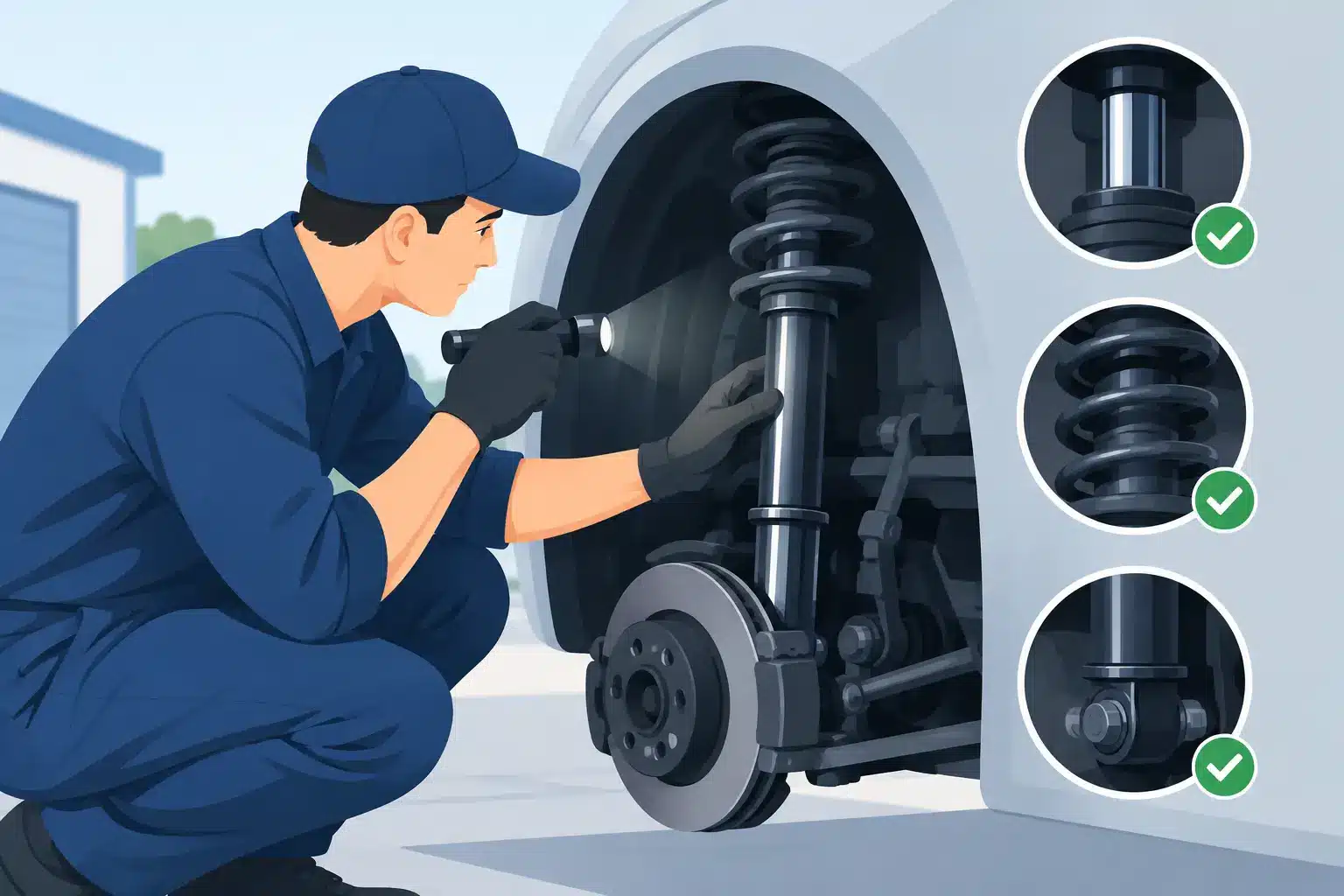
With the wheels turned or removed where safe, inspect the visible shock or strut body. A light film of dust is normal. Fresh oil, wet streaks, or oily dirt sticking to the unit can indicate a failed seal. Once damping fluid is leaking, the shock’s ability to control movement is reduced.
Check for dents in the shock body, damaged or split dust boots, corroded mounting points, loose hardware, and worn rubber bushings. On struts, look at the upper mount area under the hood for cracked rubber, rust, or signs that the mount is moving. A clunk over bumps may come from a mount, sway bar link, bushing, or ball joint rather than the shock itself, which is why a complete inspection is the smart move.
Try the Bounce Test, but Do Not Rely on It Alone
Push down firmly on one corner of the vehicle and release it. A healthy suspension should rise and settle quickly. If it continues bouncing several times, the shocks may be weak.
This test is useful as a basic warning check, not a final diagnosis. Modern suspensions can be difficult to assess by hand, and some worn shocks still pass a bounce test. A vehicle can have reduced damping, poor tire contact, or leaking seals even if it only bounces once in the driveway.
Notice Changes During a Test Drive
On a familiar road, listen for rattles and notice how the vehicle reacts after bumps. It should settle promptly and track straight without repeated body movement. During normal braking, the nose should not plunge sharply. Through a gentle corner, the vehicle should feel controlled rather than wallowy or delayed in its response.
Do not test suspension problems by speeding, swerving, or braking aggressively. If handling has become unpredictable, especially in rain or while towing, arrange a professional inspection instead of trying to diagnose it at the limit.
When Worn Shocks Become a Bigger Problem
Ignoring shocks does not usually leave you stranded the way a flat battery or broken belt might. That is why suspension wear can be easy to put off. The cost often shows up elsewhere first: tires wear out early, braking distances can increase on rough surfaces, and other suspension components work harder.
Poor damping can be particularly costly when new tires have just been fitted. Even premium tires cannot deliver their intended grip if the suspension allows them to bounce across the road. If you are seeing unusual tread wear, combining a tire inspection, wheel balance, alignment check, and suspension assessment can prevent replacing tires before their time.
Replacement is generally best done in pairs across the same axle. Replacing only one front shock can create uneven damping from side to side, affecting stability and ride quality. The right choice also depends on the vehicle and how it is used. A family SUV, a tradie’s loaded work vehicle, and an off-road 4WD may need very different suspension options.
Get a Full Suspension Check When the Signs Add Up
A workshop inspection can confirm whether the fault is in the shocks, struts, springs, top mounts, bushings, control arms, or steering components. A technician can check for play and damage with the vehicle safely raised, inspect tire wear closely, and assess whether wheel alignment has been affected.
At Ryan Automotive and Tyres, a suspension concern can be checked alongside your tires, brakes, wheel alignment, and general vehicle condition in one visit. That is often faster and more affordable than replacing parts based on a guess, then finding the real cause of the problem later.
If your vehicle feels less settled than it used to, do not wait for a serious handling moment to confirm something is wrong. A practical inspection now can protect your tires, reduce downtime, and help keep every trip controlled and comfortable.