Engine Repair After Overheating – Key Checks
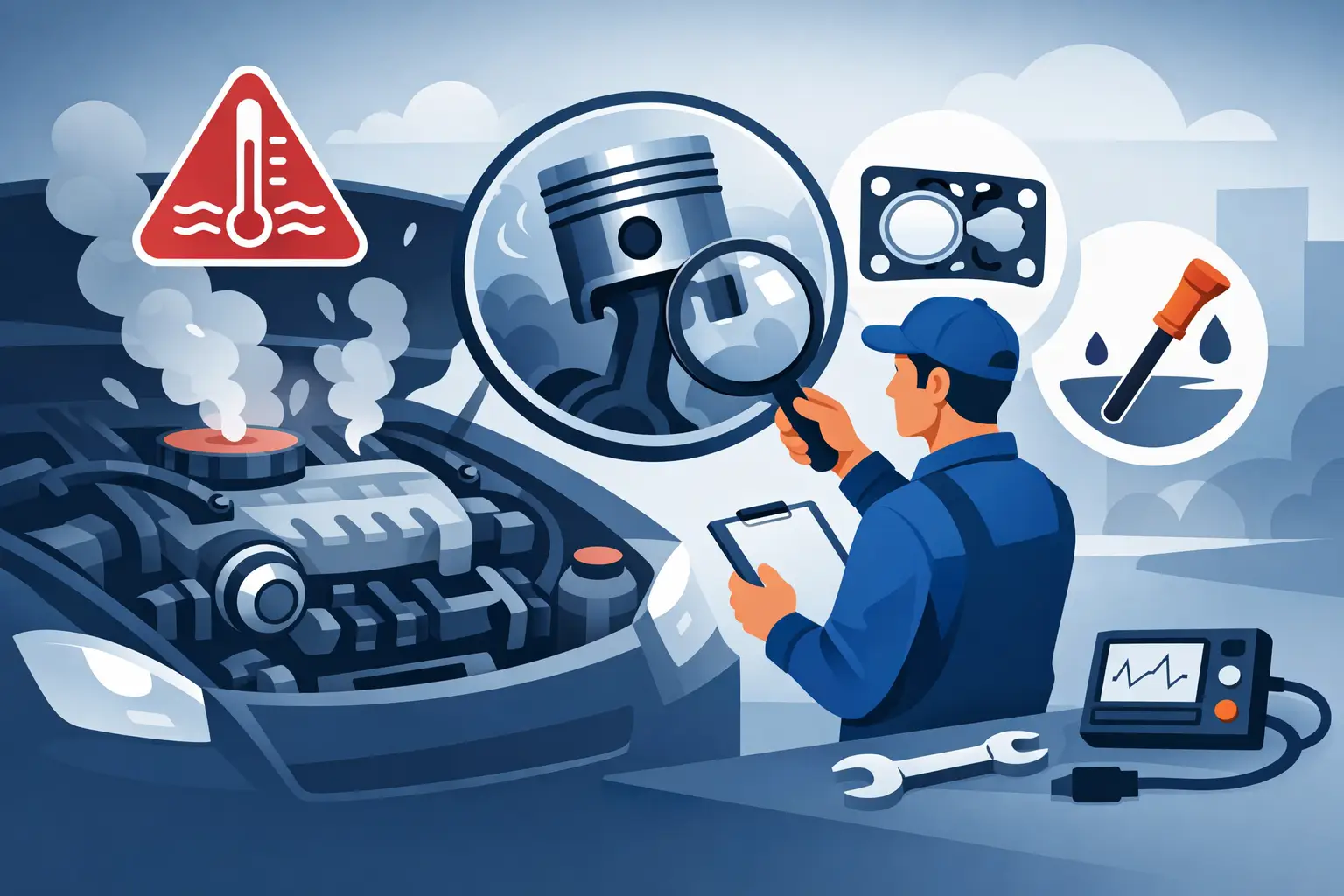
A temperature gauge in the red, steam from under the hood, or a warning light that will not go away can turn an ordinary drive into a serious repair. Engine repair after overheating is not always a major engine rebuild, but treating it as a minor issue without proper testing can turn a failed hose or thermostat into expensive internal damage.
The right next step depends on how hot the engine became, how long it was driven, and what caused the cooling system to fail. A workshop should find the original fault first, then check whether the heat has damaged the engine. That approach protects your car, your budget, and the reliability you depend on every day.
What to Do Right After an Engine Overheats
If the temperature gauge climbs into the red or you see steam, pull over safely and switch the engine off. Do not continue driving to “see if it comes down.” Every extra minute at extreme temperature raises the chance of warping the cylinder head, damaging the head gasket, or scuffing internal engine parts.
Do not remove the radiator cap while the engine is hot. The cooling system is pressurized, and hot coolant can cause severe burns. Let the vehicle cool completely before checking anything under the hood. If coolant has spilled, there is a visible leak, or the engine will not restart normally, arrange a tow rather than driving it to a repair shop.
It can be tempting to top up the coolant with water and head back on the road. In an emergency, that may get a vehicle out of immediate danger only after it has cooled, but it does not fix the cause. A leak, failed fan, blocked radiator, stuck thermostat, weak water pump, or combustion leak can make the engine overheat again quickly.
Why an Overheating Engine Needs More Than a Coolant Refill
An engine is designed to run within a controlled temperature range. Coolant carries heat away from the engine, while the radiator, cooling fan, thermostat, hoses, and water pump keep that heat moving out of the system. When one part fails, the temperature can rise fast.
Modern engines often use aluminum cylinder heads, which are efficient but vulnerable to severe heat. If the head warps, it may no longer seal properly against the engine block. The head gasket can then fail, allowing coolant, oil, and combustion pressure to go where they should not. That is why a vehicle can seem fine after it cools down, then develop misfires, coolant loss, white exhaust smoke, or repeat overheating days later.
The outcome is not the same for every vehicle. An engine that briefly ran hot and was shut down quickly may need a cooling-system repair and fresh coolant. An engine driven while boiling over may need cylinder-head work, a head gasket replacement, or more extensive engine repair. Proper diagnosis separates these situations before parts are replaced.
Engine Repair After Overheating: The Checks That Matter
A reliable diagnosis starts with the cooling system, not a guess about the engine. A technician will inspect for obvious leaks around hoses, the radiator, water pump, thermostat housing, heater hoses, and coolant reservoir. They should also look for damaged belts, loose clamps, a blocked radiator core, and cooling fans that are not operating when required.
Cooling system pressure test
A pressure test checks whether the system can hold pressure. Small leaks are not always obvious when the engine is cold or parked. Pressure can reveal a split hose, leaking radiator, failing reservoir, or water-pump leak before it becomes a larger problem.
Thermostat, fan, and water pump operation
A thermostat stuck closed restricts coolant flow. A failed electric fan may allow the car to run normally at highway speed but overheat in traffic or while idling. A damaged water pump can reduce coolant circulation, sometimes without leaving a major external leak. These faults need to be confirmed, because replacing the wrong part wastes time and money.
Head gasket and combustion-gas testing
If overheating was severe, the engine needs testing for combustion gases entering the cooling system. This can point to a failed head gasket or cracked cylinder head. Other warning signs include bubbles in the coolant reservoir, unexplained coolant loss, a hard upper radiator hose shortly after startup, white smoke from the exhaust, or oil that looks milky.
A compression or leak-down test may also be needed where there is a rough idle, misfire, low power, or concern about internal sealing. These tests help determine whether the repair is limited to the cooling system or whether the cylinder head must come off for inspection and machining.
Oil condition and engine operation
Overheating can thin engine oil and reduce its ability to protect moving parts. If coolant has mixed with the oil, the oil and filter should be changed only after the source of contamination is repaired. A technician may also inspect for abnormal engine noise, low oil pressure, or signs that bearings and internal components have been affected.
Common Repairs and What They Mean
The least serious overheating repairs usually involve a hose, clamp, radiator cap, thermostat, cooling fan, sensor, or coolant leak. These are still worth repairing promptly. A small leak can empty the system enough to create a major failure on the next long drive.
A radiator replacement may be necessary when the core is cracked, blocked, or corroded. A water-pump replacement is common when the pump leaks or its impeller no longer circulates coolant properly. On some vehicles, reaching the water pump involves significant labor, so it makes sense to inspect related belts and components at the same time.
Head gasket repair is more involved. The cylinder head normally needs to be removed, checked for warping or cracks, and machined if it is still within specification. Reassembly requires new gaskets, correct bolt procedures, fresh fluids, and careful cooling-system bleeding. If the engine was badly overheated, a cracked head, damaged block, or worn lower-end components can change the repair decision. At that point, comparing repair cost against a replacement engine may be the sensible move.
No honest shop should promise a final price before understanding the cause and extent of damage. The fair approach is to explain what testing shows, identify urgent work versus recommended work, and give you clear options.
Signs the Repair May Be More Serious
Pay attention to what the vehicle does after the initial cooling-system fault is repaired. Repeat overheating is never normal. Neither is coolant disappearing without a visible leak.
You should arrange inspection promptly if the engine misfires, runs rough on startup, loses power, produces sweet-smelling white exhaust, has creamy residue under the oil cap, or repeatedly pushes coolant out of the reservoir. These symptoms do not automatically mean the engine is beyond repair, but they do justify proper testing before more driving.
A check-engine light matters here as well. Modern vehicles can store fault codes related to coolant temperature, misfires, fan control, and sensor readings. Diagnostics can help connect the warning light to the overheating event instead of treating them as separate problems.
How to Reduce the Chance of Another Overheat
Cooling systems often give warning signs before they fail completely. Check the coolant level only when the engine is cold, and investigate any recurring drop in level. Watch the temperature gauge, particularly when towing, carrying heavy loads, driving in stop-and-go traffic, or running a work vehicle through hot conditions.
Use the correct coolant for the vehicle and avoid mixing types unless the product is confirmed compatible. During routine service, ask for the hoses, belts, radiator condition, coolant strength, and fan operation to be inspected. Preventive maintenance costs far less than repairing an overheated engine.
For drivers around Kingswood and Penrith, quick access to a workshop can make the difference between a contained cooling-system repair and major engine work. Ryan Automotive and Tyres can inspect the cause, explain the repair options clearly, and help get your vehicle back to dependable daily use. If the gauge rises again after any repair, stop safely and have it checked before one more short trip becomes the expensive one.