Mud Tyres vs All Terrains: Which Fits Your 4WD?
A set of tires can completely change how your 4WD behaves on the highway, a wet access road, or a deeply rutted trail. In the mud tyres vs all terrains decision, the right answer is not about buying the most aggressive tread available. It is about matching the tire to where the vehicle spends most of its time, how much load it carries, and how much road comfort you are willing to trade for off-road grip.
For many drivers, all-terrain tires deliver the best balance. For dedicated off-road vehicles, farm work, muddy job sites, or regular trail driving, mud-terrain tires can be worth the compromises. Knowing those compromises before fitting a new set helps avoid expensive disappointment.
Mud Tyres vs All Terrains: The Core Difference
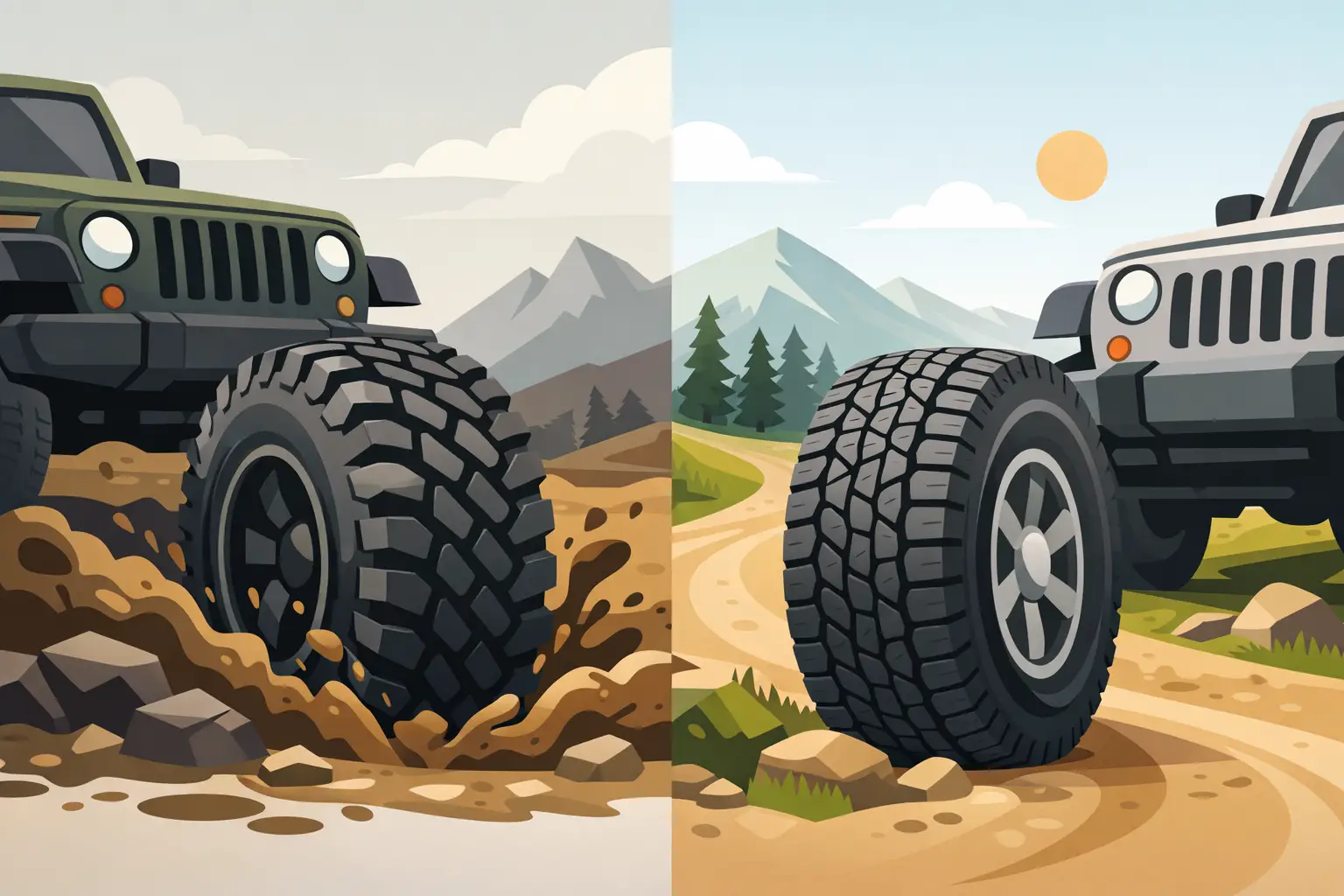
Mud-terrain tires are built to clear loose ground. Their tread blocks are large and widely spaced, with deep voids between them. As the tire turns, mud, clay, and stones have more room to escape instead of packing into the tread. Stronger sidewalls and more aggressive shoulder lugs also help when a vehicle is climbing out of ruts or running at lower tire pressures off-road.
All-terrain tires use a tighter, more versatile tread pattern. They still have open shoulders, tougher construction, and bite for gravel, dirt, sand, and light mud, but they retain more tread contact on sealed roads. That generally means better everyday manners, including lower noise, steadier braking, and a smoother ride.
Neither design is automatically better. A mud tire that rarely leaves pavement may wear faster and make every commute louder. An all-terrain tire can be excellent on a fire trail but may struggle once wet clay fills the tread blocks and the surface becomes slick.
Where Mud-Terrain Tires Earn Their Keep
Mud tires are the clear choice when traction in soft, slippery terrain is the priority. The large gaps in the tread create a self-cleaning effect, especially when wheel speed and terrain allow the tire to shed mud. Their sidewall lugs can also provide useful grip when the tire is pressed against a rut wall, rock, or uneven bank.
They suit 4WD owners who regularly drive challenging tracks, work around paddocks or unsealed sites, tow through loose ground, or build a vehicle mainly for weekend off-road use. A light truck or work 4WD that sees wet construction access roads may benefit from the extra bite as well.
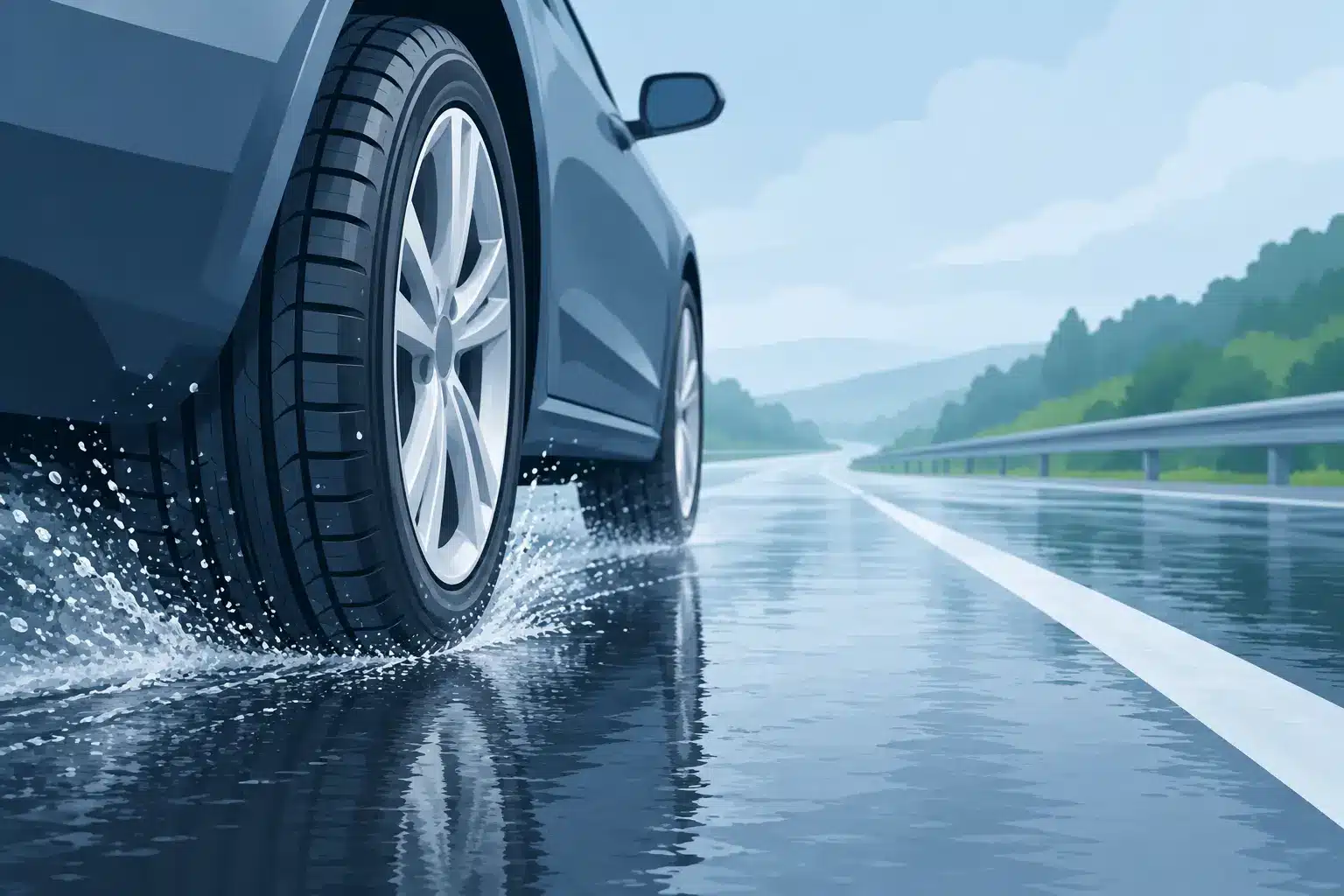
The trade-off is clear on the street. Mud tires are often noisier, can feel less precise in corners, and may affect fuel consumption because of their weight and rolling resistance. Wet-road braking and handling can vary significantly by brand and tread design, but an aggressive mud pattern usually cannot match a good all-terrain tire on cold, wet pavement.
Mud tires also need realistic maintenance expectations. Rotations, correct pressures, wheel balancing, and regular alignment checks are important. Uneven wear can quickly make an already noisy tire louder and shorten its service life.
Mud Tires Are Not Just for Mud
Despite the name, mud-terrain tires are often strong performers on rocky tracks because their sidewalls and shoulder blocks offer protection and grip. They can also work well in loose dirt and deep sand when pressures are adjusted carefully. However, their performance depends on the specific tire, vehicle weight, tire size, and driver technique.
On hard-packed dirt roads, a mud tire may not offer a major advantage over a quality all-terrain. In fact, the all-terrain may feel more controlled at speed. Aggressive tread does not replace sensible tire pressures, proper recovery gear, or careful driving.
Why All-Terrain Tires Suit Most 4WDs
All-terrain tires are designed for drivers who need one set to cover daily commuting, school runs, towing, weekend trips, gravel roads, and occasional trails. They give more off-road ability than a highway tire without asking you to accept the full on-road compromises of a mud-terrain.
For a family SUV, dual-cab pickup, work truck, or touring 4WD, that balance matters. You may spend hours on the highway before reaching a campsite or trailhead. A quieter tire with stable handling, dependable wet grip, and reasonable tread life makes those miles easier and safer.
Modern all-terrain patterns are more capable than many drivers expect. A quality set can handle corrugated roads, loose gravel, shallow ruts, rocky tracks, and moderate mud when driven with appropriate tire pressure and momentum. They are also commonly available in load-rated options for vehicles carrying tools, canopies, trailers, or touring gear.
Their limitation appears in deep mud and sticky clay. Because the tread blocks sit closer together, the gaps can fill up. Once packed, the tire behaves more like a slick surface than an off-road tread. If this is a regular part of your driving, an all-terrain may leave you wanting more traction.
Compare the Road and Trail Trade-Offs
The most useful comparison is not which tire looks tougher. It is how each tire behaves during the driving you actually do.
| Driving factor | Mud-terrain tires | All-terrain tires | | — | — | — | | Deep mud and ruts | Excellent tread clearing and traction | Can clog in heavy mud | | Highway noise | Usually louder | Usually quieter | | Wet paved roads | Often less planted, depending on pattern | Generally stronger everyday grip | | Tread life | Can wear faster on pavement | Often longer-lasting for mixed driving | | Fuel use | May increase due to weight and resistance | Usually more economical | | Rocks and harsh tracks | Strong sidewalls and shoulder grip | Capable, with less extreme sidewall bite | | Daily commuting | A compromise | Best fit for most drivers |
Tire ratings and individual designs still matter. A premium mud-terrain with modern siping may be better on wet roads than an older or cheaper design, while an aggressive all-terrain may be closer to a mud tire off-road than a mild touring-focused option. Compare the exact tire, not only the category written on the sidewall.
Consider Your Vehicle, Load, and Tire Size
The tire type is only part of the decision. A tire must have the correct load rating, speed rating, dimensions, and clearance for your vehicle. This is particularly important for work vehicles, trailers, and 4WDs fitted with lifts, aftermarket wheels, bull bars, canopies, or heavy touring equipment.
Moving to a larger or heavier tire can change steering feel, braking distance, acceleration, gearing, and fuel use. It can also cause rubbing on suspension or bodywork if the wheel offset and tire size are not suitable. A larger tire is not always a better tire.
If you tow regularly, carry tools for work, or load the vehicle for trips, choose a tire construction that can handle the weight. Correct cold tire pressures are just as important. Underinflation creates heat and unstable handling, while excessive pressure reduces grip and can make the ride harsh. Off-road pressures should be reduced only when conditions call for it, then restored before returning to sealed roads.
A Practical Way to Choose
Start with an honest split of your driving. If roughly 80 to 90 percent happens on pavement and your off-road trips are occasional, all-terrain tires are usually the sensible investment. They keep the vehicle comfortable and predictable for the driving that happens every day, while giving you meaningful capability when the road ends.
If your 4WD regularly faces deep mud, steep ruts, loose ground, or demanding tracks, mud tires may save time, reduce wheelspin, and provide greater confidence. This is especially true if the vehicle is not your main commuter or you accept extra noise and potentially faster road wear.
There is also a middle ground. Some aggressive all-terrain tires offer deeper tread and open shoulders for drivers who tour hard but still need dependable road behavior. This can be a practical option for a dual-purpose 4WD that works during the week and travels on weekends.
Before fitting a set, have the vehicle checked for alignment, worn suspension components, and uneven existing tire wear. Ryan Automotive and Tyres can help match tire size, load requirements, and tread type to the vehicle and the work it needs to do, then handle fitting, balancing, and alignment in one visit.
The best tire is the one that gives you confidence when the weather turns, the load goes on, and the road becomes less predictable. Choose for the conditions you face most often, then maintain that set properly so it is ready when the tougher ground arrives.