Why Is My Car Vibrating? Find the Cause Fast
A vibration that was not there last week is your car asking for attention. Sometimes the fix is as straightforward as balancing a wheel. Other times, vibration points to worn steering, brakes, suspension, or an engine problem that will become more expensive if it is ignored. If you are asking, “why is my car vibrating,” the key details are when it happens, where you feel it, and whether it is getting worse.
A steering wheel shake at highway speeds calls for a different check than a shudder through the brake pedal or a rough vibration while parked. Do not assume every shake means the same thing, and do not keep driving through a severe vibration just because the car still moves.
Why is my car vibrating at certain speeds?
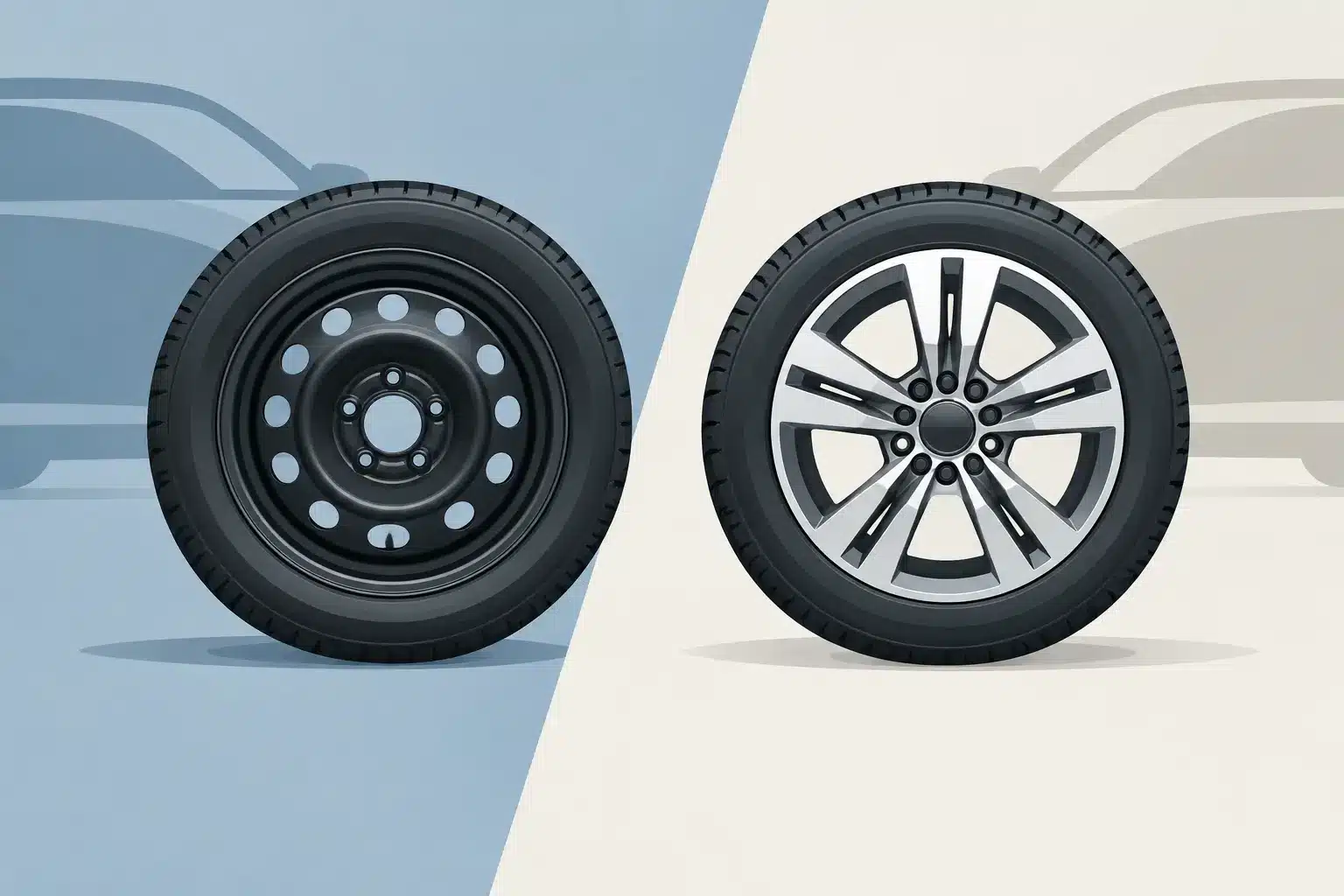
Vibration that starts or becomes more noticeable around a particular road speed often comes from the wheels and tires. A wheel that is out of balance can feel fine around town, then shake through the steering wheel between roughly 50 and 75 mph. It happens when the wheel and tire assembly has an uneven weight distribution. A proper wheel balance corrects that with small weights fitted to the wheel.
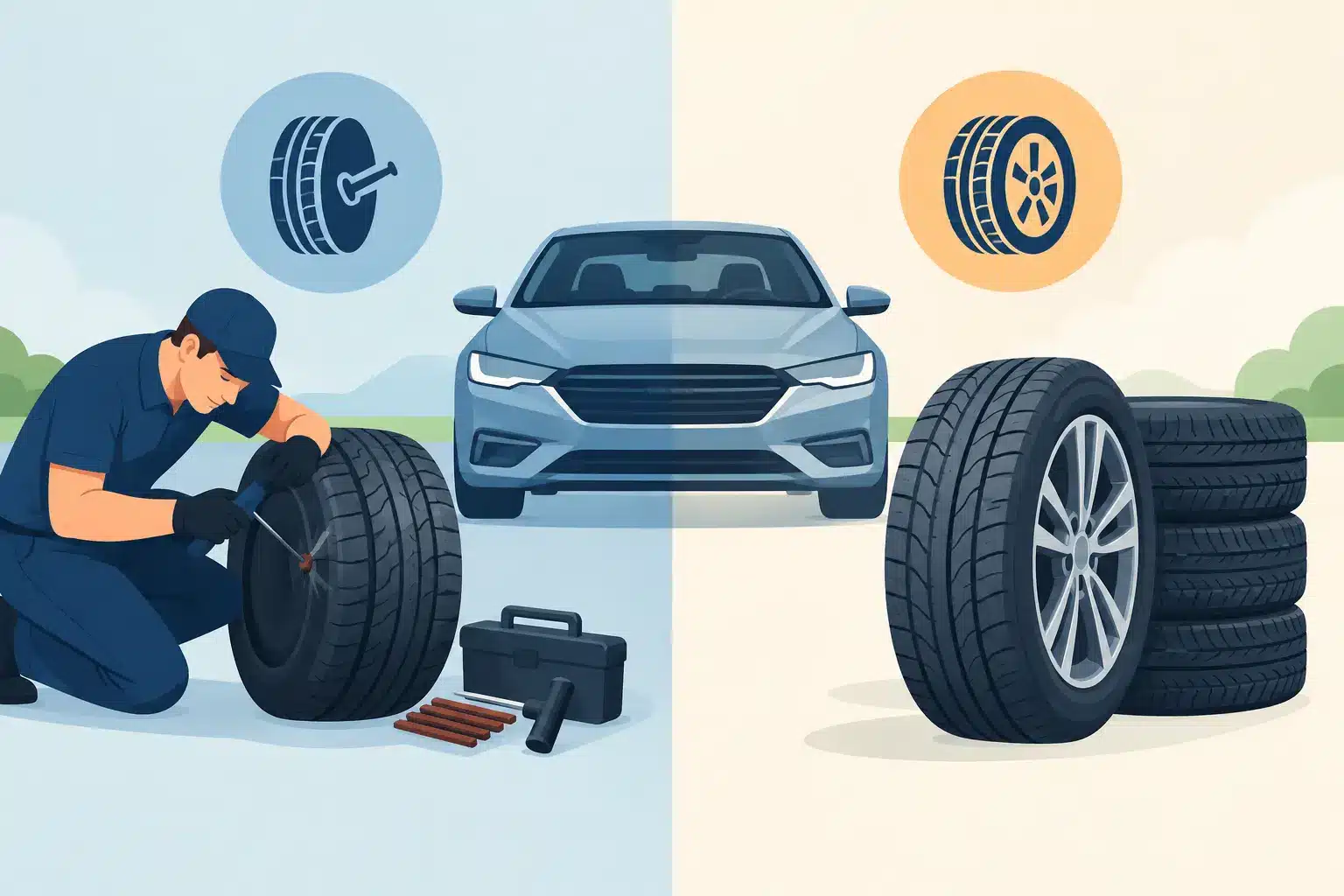
A bent wheel can create a similar symptom, especially after hitting a pothole, curb, or road debris. So can a tire with a damaged belt, uneven tread wear, a bulge in the sidewall, or a flat-spotted section. These faults do not always look obvious while the tire is fitted to the vehicle. A workshop can inspect the tire as it rotates and measure wheel runout to find the real cause.
Check tire pressure before anything else. One significantly underinflated tire can make a vehicle feel unsettled, while incorrect pressure across several tires can speed up uneven wear. Pressure alone does not usually cause a sharp steering wheel shake, but it can make an existing problem more noticeable.
Where you feel the shake matters
A vibration mainly through the steering wheel usually suggests an issue at the front wheels, front tires, or front suspension. A vibration felt more through the seat, floor, or rear of the vehicle may come from a rear tire, rear wheel, driveline, or rear suspension component.
This is a useful clue, not a final diagnosis. All-wheel-drive vehicles, trucks, and vehicles with larger tire packages can transfer vibration through the chassis in ways that make the source less obvious. That is why a road test and inspection are worth more than replacing parts based on a guess.
Vibration when braking is a brake warning
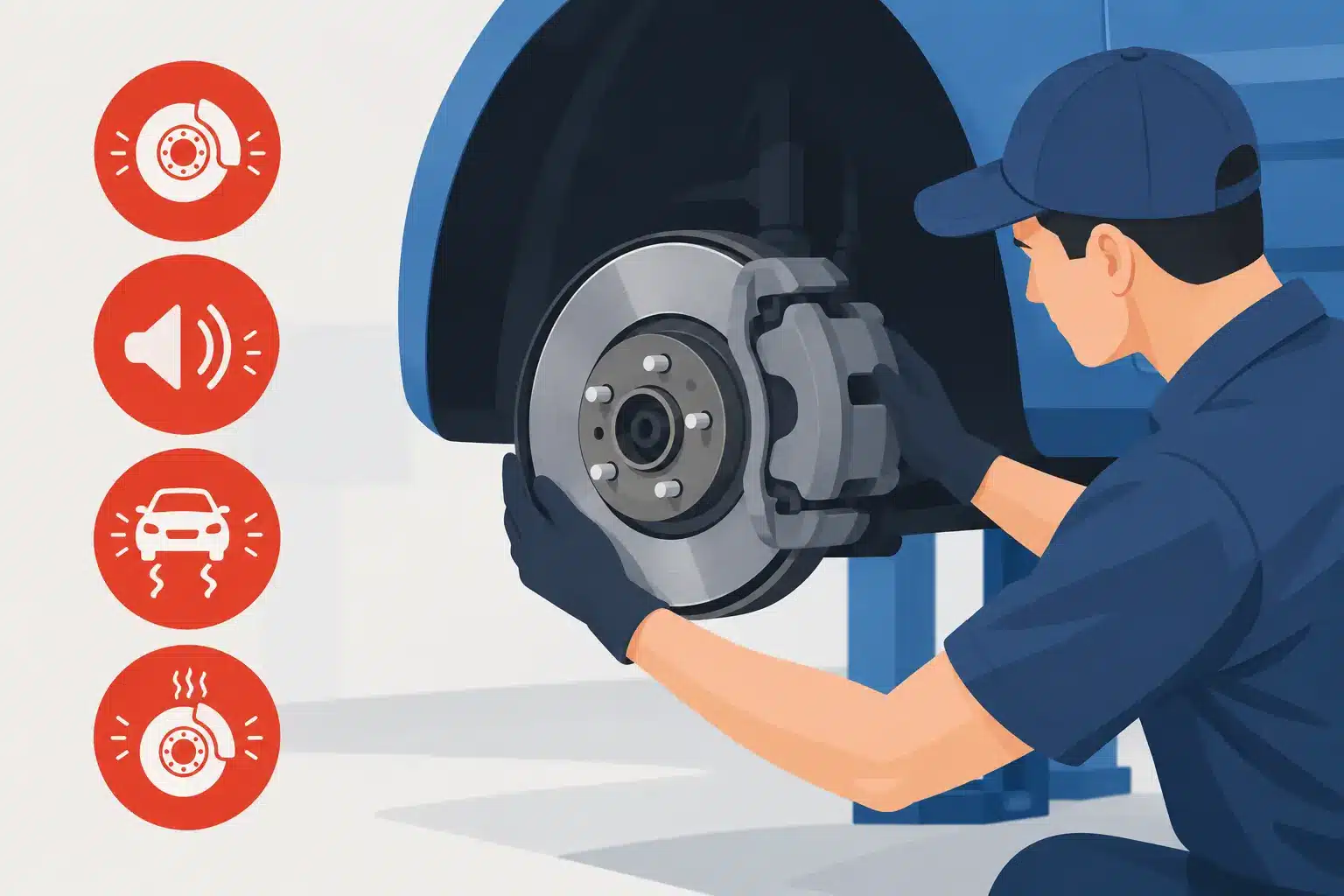
If the vehicle is smooth until you apply the brakes, pay attention. A pulsing brake pedal, steering wheel shake, or shudder through the car while slowing down can be caused by brake rotors with uneven thickness, excessive runout, worn brake components, or a sticking caliper.
People often call this “warped rotors,” but the cause can be more complicated. Heavy braking, towing, repeated stop-start driving, poor rotor fitment, or seized caliper hardware can create uneven braking surfaces and heat problems. Simply fitting new pads without checking the rotors, calipers, and hub surfaces may leave the vibration behind.
Do not put off a brake vibration. Brakes are a safety system, and a worsening shudder can affect stopping confidence, tire wear, and steering control. If the brake warning light is on, the pedal feels soft, the car pulls sharply, or you smell burning after braking, arrange an inspection promptly rather than continuing to drive it.
Rough at idle? The engine may be the source
A car that vibrates while stopped in Park, Neutral, or at traffic lights is less likely to have a wheel-and-tire issue. The engine may be running unevenly, or the engine and transmission mounts may no longer be isolating normal vibration from the cabin.
A misfire is a common reason for a rough idle. Worn spark plugs, failing ignition coils, fuel delivery issues, vacuum leaks, sensor faults, or air intake problems can make an engine shake. You may also notice a check engine light, reduced power, poor fuel economy, a fuel smell, or hesitation when accelerating.
If the check engine light flashes, stop driving when it is safe to do so and have the vehicle checked. A flashing light can indicate an active misfire that may damage the catalytic converter. A steady check engine light still needs diagnosis, but it is generally less urgent than a flashing one.
Worn engine or transmission mounts are another possibility. These mounts support the drivetrain and reduce movement. When rubber cracks, collapses, or separates, normal engine movement can become a strong vibration in the steering wheel, seats, and floor. You may notice a thump when shifting into Drive or Reverse as well.
Shaking while accelerating or turning
Vibration under acceleration can point to a driveline issue. On front-wheel-drive vehicles, worn CV joints or damaged drive axles can cause a shake or shudder as power is applied. A clicking sound on tight turns is another classic sign of an outer CV joint problem. On rear-wheel-drive trucks and some SUVs, driveshaft balance, universal joints, differential faults, or worn transmission mounts may be involved.
A vibration while turning may also come from tires, wheels, steering, or suspension. Low-speed shudder during tight parking-lot turns can occur with incorrect tire pressures, mismatched tires, alignment concerns, or drivetrain issues in certain all-wheel-drive systems. The correct repair depends on the vehicle and its drivetrain, so it is not a problem to solve by swapping parts at random.
For 4WDs, work trucks, trailers, and vehicles fitted with larger tires, wheel fitment matters just as much as tire condition. Incorrect offset, loose wheel nuts, unsuitable wheel hardware, or tires that rub under steering or suspension movement can create vibration and damage components over time.
Suspension and alignment can wear tires into a vibration
Tires often reveal suspension faults before the driver notices a handling problem. Cupped or scalloped tread can develop when shocks or struts are worn. Feathered tread may point to an alignment issue. Loose ball joints, tie-rod ends, control arm bushings, and wheel bearings can all allow unwanted wheel movement that creates noise, vibration, and uneven tire wear.
Alignment is not a cure for every vibration. It will not fix a separated tire belt or a bent wheel. However, once worn parts have been repaired and good tires are fitted, correct alignment helps the vehicle track straight and protects the new tread from premature wear.
A humming or growling noise that rises with road speed can suggest a wheel bearing, particularly if the sound changes as you gently load one side of the vehicle in a curve. This should be inspected soon. A severely worn bearing can affect wheel stability.
What to do before you book an inspection
Make a quick note of the conditions. Does the vibration begin at one speed? Is it only under braking, while accelerating, at idle, or when turning? Is it in the steering wheel, pedal, seat, or whole vehicle? Mention any recent pothole strike, curb contact, tire replacement, wheel change, towing, warning light, or brake work.
You can also look for obvious tire damage, loose-looking wheel covers, and uneven tread, but avoid placing yourself under the vehicle or touching hot brake components. Never continue driving on a tire with a visible bulge, exposed cords, major sidewall damage, or a wheel that appears loose.
If the vibration is severe, starts suddenly, comes with pulling, grinding, smoke, a flashing check engine light, or difficulty steering or braking, treat it as urgent. Pull over safely and arrange assistance. The cost of a tow is often less than the cost of damaging a tire, wheel, brake system, or drivetrain further.
Get the right check, not a guess
The best repair starts with confirming the source. A proper inspection may include a tire and wheel check, wheel balancing, brake measurement, steering and suspension assessment, alignment check, scan-tool diagnostics, and a road test. That approach avoids paying for a likely fix that does not solve the problem.
At Ryan Automotive and Tyres, drivers can have tires, wheels, brakes, suspension, diagnostics, and mechanical repairs checked in one workshop, helping reduce the back-and-forth between providers. For Kingswood and Penrith drivers, that matters when a family car, work vehicle, truck, or 4WD cannot afford unnecessary downtime.
A small vibration rarely improves on its own. Book the inspection while the symptom is still clear, and you give the technician the best chance of finding the fault before it turns into a bigger repair.