Why Your Car Pulls Left and What to Check
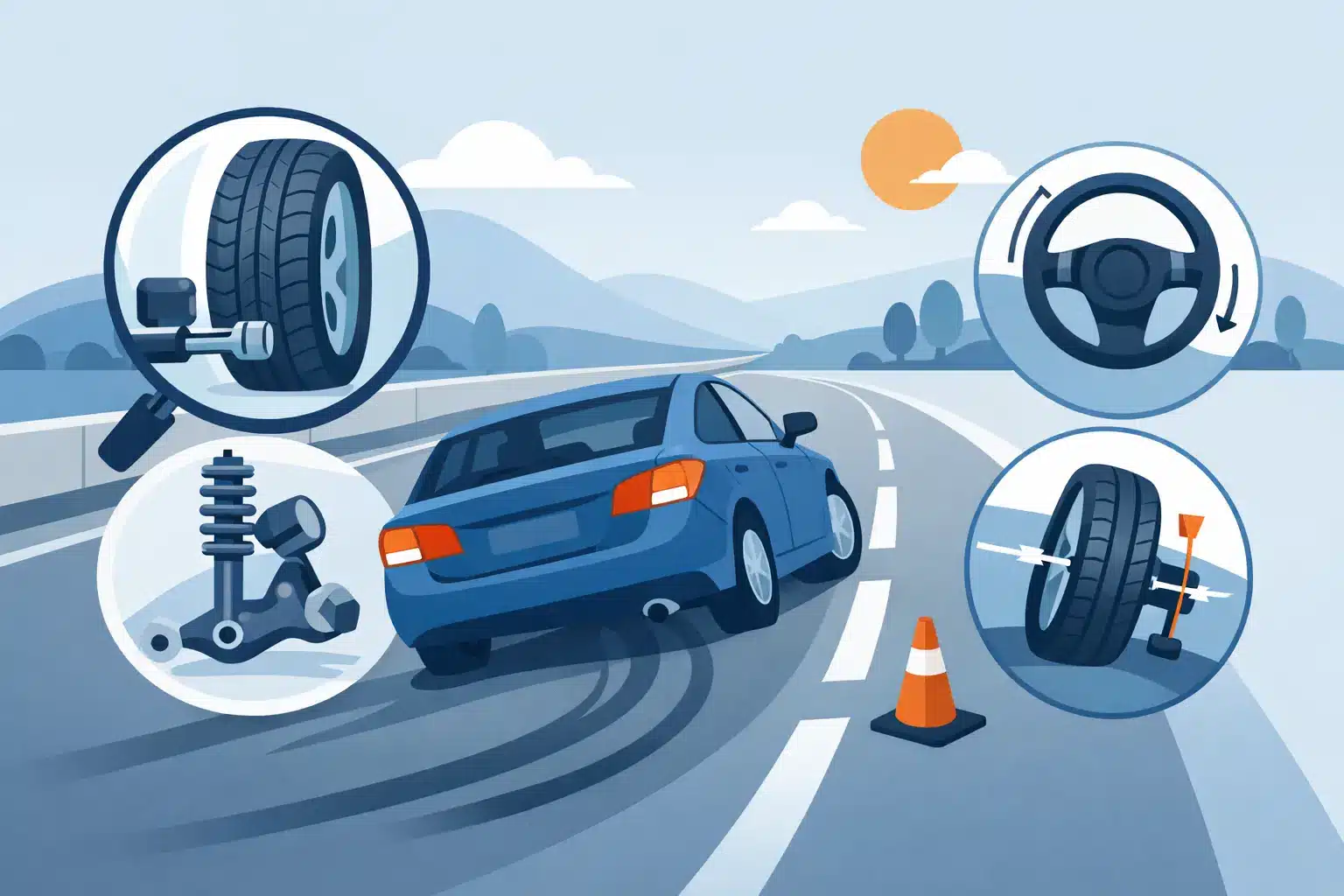
A car that drifts toward the left may seem like a small annoyance at first. Then you notice you are constantly correcting the steering wheel on the freeway, your tires are wearing unevenly, or the pull gets stronger when braking. When your car pulls left, it is worth taking seriously. The cause can be as simple as tire pressure, but it can also point to a brake, steering, suspension, or alignment problem that affects safe handling.
The useful question is not just, “Why does it pull?” It is, “When does it pull, how strongly, and what else has changed?” Those details help narrow down the fault and prevent replacing parts that are not actually the problem.
First, Rule Out the Road Surface
Many roads are built with a slight slope from the center toward the edge so water can drain away. This is called road crown, and it can make a vehicle drift slightly left or right depending on which lane you are in and the shape of the road. A mild drift that changes with the road surface is not the same as a consistent pull.
Test the vehicle only where it is safe to do so. On a flat, quiet section of road, drive at a steady speed with a light grip on the wheel. If the car repeatedly moves left despite a level road and calm conditions, there is a good reason to inspect it. Do not let go of the wheel to test the pull, and do not try this in traffic.
A strong pull, steering wheel vibration, burning smell, clunking noise, or a pull that becomes worse under braking should be checked promptly. Those symptoms can indicate a problem that is more urgent than a basic wheel alignment.
Check Tire Pressure and Tire Condition
Uneven tire pressure is one of the easiest causes to check. A tire with low pressure has more rolling resistance and can make the vehicle drift toward that side. If the left front tire is significantly underinflated, for example, the car may feel as though it wants to travel left.
Check pressures when the tires are cold and use the pressure listed on the vehicle’s door-jamb placard, not the maximum pressure printed on the tire sidewall. The placard recommendation is set for your vehicle’s weight, handling, and tire size.
Look closely at the tread while you are there. A damaged tire, separated belt, bulge in the sidewall, or uneven tread pattern can all affect the way the vehicle tracks. Cupping, feathered tread edges, or one tire worn far more than the others often points to an alignment or suspension issue behind the tire wear.
Tires can also create a pull even when they look normal. Some tires develop a condition sometimes called tire conicity, where the internal construction makes the tire roll slightly to one side. A technician can often confirm this by swapping tires from side to side or front to rear where the tire setup allows it. If the direction of the pull changes, the tire is a likely cause.
When a Car Pulls Left, Alignment May Be the Cause
Wheel alignment is a common answer, but it should not be the automatic answer. Alignment adjusts the angles of the wheels so the vehicle tracks straight, steers predictably, and uses its tires evenly. A pothole strike, curb impact, worn suspension component, or regular wear can put those angles out of specification.
Three main settings are involved: toe, camber, and caster. Toe describes whether tires point slightly inward or outward. Camber is the inward or outward tilt of the wheel. Caster relates to steering stability and the steering wheel’s return to center. Differences between the left and right sides, particularly in camber or caster, can contribute to a pull.
You may need an alignment if the steering wheel is off-center while driving straight, the vehicle wanders, or tire wear is uneven. However, a proper workshop should inspect the tires, brakes, steering, and suspension before completing an alignment. Aligning a vehicle with loose ball joints, worn control arm bushings, or damaged suspension parts can be a short-lived fix at best.
Pay Attention to Pulling During Braking
If the car drives reasonably straight until you press the brake pedal, the braking system moves to the top of the suspect list. A sticking caliper, seized slide pin, collapsed brake hose, contaminated brake pad, or uneven braking force can make the vehicle pull left when slowing down.
You may also notice a hot smell after driving, one wheel that feels much hotter than the others, reduced fuel economy, or the vehicle seeming reluctant to coast. Do not touch a wheel or brake component after a drive, as brakes can become extremely hot. These signs need a professional brake inspection, particularly if the pull is sharp or sudden.
Brake problems are not a situation to monitor for a few weeks. A dragging brake can damage pads, rotors, calipers, wheel bearings, and tires, while uneven braking reduces control when you need to stop quickly.
Steering and Suspension Wear Can Change the Way It Tracks
Your steering and suspension hold the wheels in the correct position while allowing the vehicle to absorb bumps. When components wear, the alignment angles can change as the car turns, brakes, or hits uneven pavement. That can cause a pull that comes and goes rather than one that feels exactly the same every trip.
Common items to inspect include tie rod ends, ball joints, control arm bushings, struts, shocks, sway bar links, wheel bearings, and steering rack components. A worn component may also produce a clunk over bumps, a loose or vague steering feel, vibration, or tire wear that returns soon after an alignment.
For work vehicles, trailers, 4WDs, and vehicles that regularly carry heavy loads, suspension condition matters even more. Extra weight and rougher use place more demand on components. Lifted 4WDs can also require specialized alignment adjustments and may have tire wear concerns that a standard passenger-car setup does not.
Recent Repairs and Impacts Offer Useful Clues
Think back to when the issue started. Did the car hit a pothole, scrape a curb, have new tires fitted, receive suspension work, or begin towing a trailer? The timing can help a technician find the cause faster.
A pull after new tires does not automatically mean the installation was poor. Tire pressures may be incorrect, the tires may need balancing, or a tire-related pull may be present. A pull after suspension repairs may indicate that an alignment was needed afterward or that another worn component was discovered under load.
If the vehicle has been in a collision, even a minor one, do not assume the issue is limited to a wheel alignment. Bent suspension parts, a damaged wheel, or structural changes can affect tracking and should be assessed properly.
What You Can Do Before Booking a Repair
Start by checking tire pressures against the vehicle placard and looking for obvious tire damage. Remove heavy items that may be shifting around in the cargo area, especially if the vehicle feels unstable as well as pulling. Make a note of whether the pull happens all the time, only under braking, at highway speeds, or after hitting bumps.
Avoid adjusting alignment settings yourself or continuing to drive long distances if the pull is strong. Also avoid assuming a cheap alignment is the full answer. If a worn component is causing the angles to move, the vehicle needs the underlying repair before an alignment can hold.
At Ryan Automotive and Tyres, a proper inspection can cover tire condition and pressure, wheel balance, alignment measurements, brakes, steering, and suspension in one visit. That one-stop approach is useful when the cause is not obvious and you do not want to visit separate tire and mechanical shops.
Know When to Stop Driving
Arrange an inspection as soon as practical for a mild but consistent pull. Stop driving and seek help sooner if the steering suddenly pulls hard, the brake pedal feels unusual, there is smoke or a burning odor, a tire has a bulge or visible damage, or the vehicle shakes heavily.
A car should track predictably so you can focus on traffic, not fight the steering wheel. Catching the cause early can protect your tires, reduce unnecessary repair costs, and make every trip feel safer and less tiring.