Brake Repair Signs You Should Never Ignore
A quick stop at a traffic light should feel ordinary. If your car shudders, pulls toward the curb, makes a harsh grinding sound, or needs more pedal pressure than usual, it is time to pay attention. These are brake repair signs that can turn a manageable workshop job into an unsafe drive if they are ignored.
Your brakes work hard every time you commute, haul tools, carry the family, tow a trailer, or head out with a loaded 4WD. Pads, rotors, fluid, calipers, brake hoses, and electronic systems all need to work together. A problem in one area can affect stopping distance, handling, tire wear, and the safety of everyone in the vehicle.
Brake Repair Signs That Need Fast Attention
Some brake symptoms mean you should book an inspection soon. Others mean the vehicle should not be driven until it has been checked. The difference often comes down to how the pedal feels, how the vehicle responds, and whether braking performance has changed.
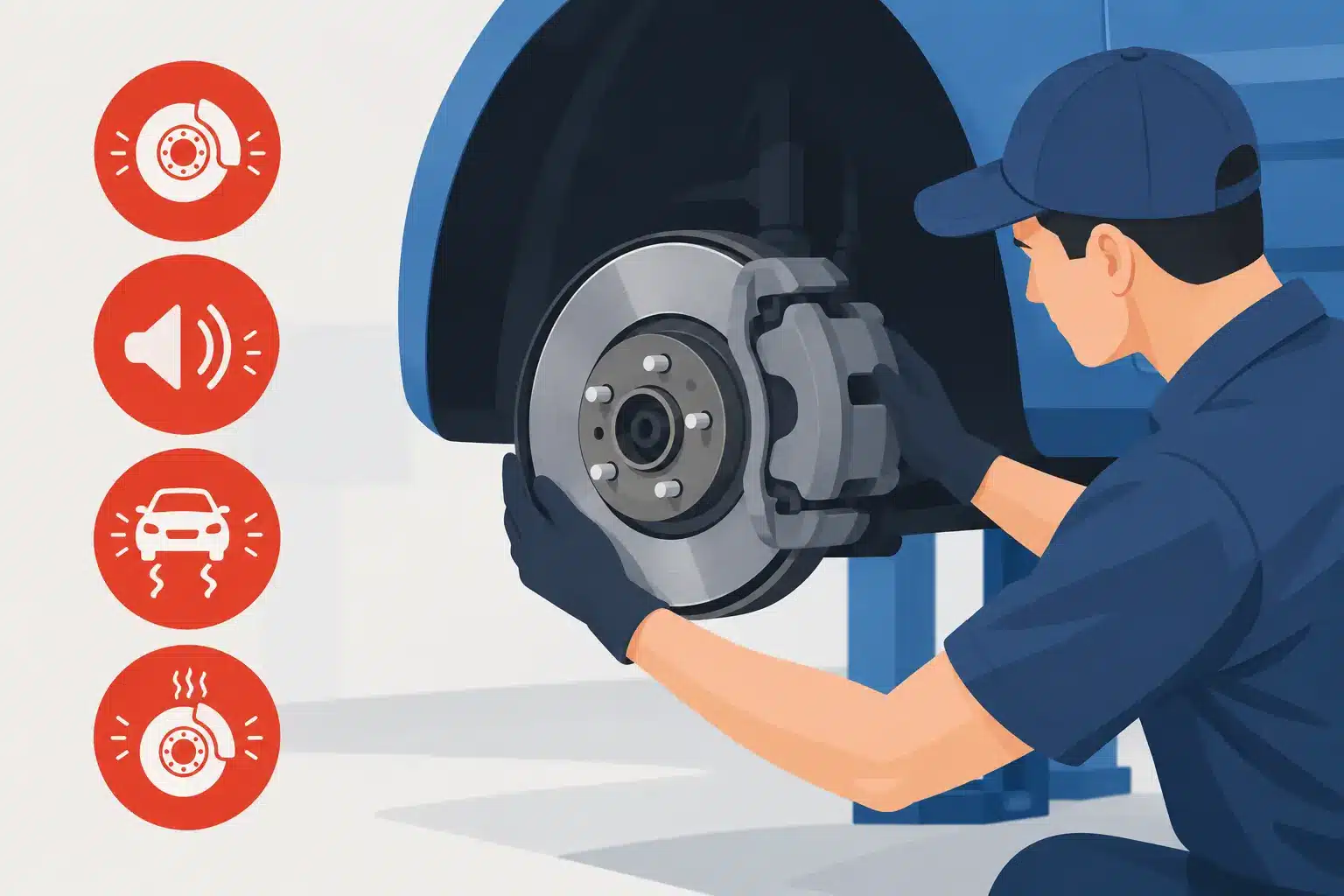
Squealing, scraping, or grinding noises
A high-pitched squeal when you apply the brakes often means the brake pads are wearing down. Many pads have a small wear indicator designed to make noise before the friction material becomes dangerously thin. It is an early warning, not something to wait out.
Not every squeal means immediate failure. Moisture after rain, overnight surface rust on the rotors, or dusty brake components can cause brief noise that disappears after a few normal stops. But noise that returns regularly, gets louder, or happens every time you brake needs attention.
Grinding is more urgent. It can mean the brake pad material has worn away and metal is contacting the brake rotor. Continuing to drive may damage the rotors, increase repair costs, and reduce braking performance. Have the vehicle inspected as soon as possible rather than trying to get a few more days out of the pads.
A soft, spongy, or sinking brake pedal
Your brake pedal should feel firm and predictable. If it feels soft, spongy, or travels much closer to the floor before the vehicle slows down, there may be air or moisture in the brake fluid, a fluid leak, worn components, or a fault in the hydraulic system.
A pedal that slowly sinks while you are holding steady pressure is especially concerning. Do not assume pumping the pedal is a fix. It may temporarily change the feel, but it does not address the cause. If the pedal suddenly goes very low or braking power is reduced, pull over safely and arrange an inspection instead of continuing your trip.
The vehicle pulls left or right under braking
If your car pulls to one side when you brake, the issue may be uneven pad wear, a sticking caliper, contaminated brake components, a brake hose restriction, or a suspension and alignment concern. The harder the pull, the more urgent the inspection should be.
A pull that occurs only during braking is different from a vehicle that constantly drifts on a straight road. Tire pressure, worn tires, wheel alignment, and suspension can also cause drifting. That is why a proper inspection matters: the symptom may feel like a brake problem, but several systems can contribute.
Vibration through the pedal, steering wheel, or seat
A vibration or pulsing sensation while braking can point to uneven rotor surfaces, excessive runout, pad deposits, or loose and worn suspension components. You may feel it mainly in the steering wheel when the front brakes are involved, while vibration through the seat can sometimes relate to rear brake or rear-wheel issues.
Do not confuse normal anti-lock brake system operation with a repeating vibration. During hard emergency braking on a slippery surface, the ABS can pulse through the pedal as it helps prevent wheel lockup. That is normal. A shake during ordinary stops on dry roads is not something to ignore.
Brake warning lights on the dashboard
A brake warning light can indicate low brake fluid, a parking brake that has not fully released, an issue with the hydraulic brake system, or an electronic brake fault. An ABS warning light means the anti-lock system may not be operating correctly, even if the vehicle still has basic braking ability.
If a red brake warning light comes on while driving, especially with a soft pedal or reduced braking, stop in a safe place. Check that the parking brake is fully released, but do not rely on that as the answer. The vehicle needs professional diagnosis before regular driving resumes.
Burning smells, smoke, or a hot wheel
A sharp burning odor after normal driving can mean a brake caliper is sticking and keeping a pad in contact with the rotor. You may also notice one wheel feels unusually hot, the vehicle pulls, or fuel economy drops because the brake is dragging.
Do not touch the wheel or brake components after driving. They can be hot enough to cause injury. Let the vehicle cool, avoid driving it further if possible, and have it inspected. A dragging brake can quickly damage pads, rotors, bearings, and tires.
Less Obvious Brake Repair Signs
Brake trouble is not always noisy. A longer stopping distance is one of the most serious warning signs, even when there is no sound or dashboard light. If you find yourself pressing harder than normal or leaving extra room because the car does not stop with the same confidence, book a brake check.
A parking brake that no longer holds the vehicle securely is another issue worth addressing. Whether it is a hand lever, foot pedal, or electronic parking brake, it should keep the vehicle stationary on an incline. Weak operation may be caused by adjustment needs, worn rear brake components, stretched cables, or an electronic fault.
You should also pay attention to brake fluid. Low fluid can be a sign that pads are worn, but it can also indicate a leak. Brake fluid is not a routine top-off item in the way windshield washer fluid is. Adding fluid without finding out why it is low can hide a fault and delay the repair.
Why Waiting Can Cost More
Brake repairs are usually more affordable when caught early. Replacing worn pads before they grind into the rotors is a straightforward maintenance job. Waiting until metal contacts metal can mean new rotors, additional hardware, and possible caliper repairs as well.
There is also a safety cost. Braking issues can become more noticeable when the vehicle is loaded, traveling downhill, driving in wet weather, or towing. A work vehicle, truck, trailer, or family SUV may place more demand on the braking system than a lightly used commuter car. The right service schedule depends on vehicle use, mileage, driving conditions, and the condition of the parts, not mileage alone.
What a Proper Brake Inspection Should Check
A useful brake inspection goes beyond a quick look at the pads. A technician should assess pad thickness and wear patterns, rotor condition, caliper movement, brake hoses, fluid condition and level, hardware, and signs of leaks. They should also road test the vehicle when appropriate and consider tires, wheel bearings, steering, and suspension if the symptoms point beyond the brakes.
This approach matters because replacing parts without diagnosing the cause can lead to repeat problems. For example, changing pads alone will not solve uneven wear caused by a seized caliper, and new rotors will not correct vibration caused by loose suspension components.
When to Stop Driving and Call for Help
Do not keep driving if the brake pedal goes close to the floor, the vehicle has severely reduced stopping power, you hear continuous grinding, a red brake warning light appears with poor brake feel, or you see smoke from a wheel. Find a safe place to stop and arrange assistance.
For milder symptoms such as occasional squealing, slight vibration, or a parking brake that needs adjustment, schedule an inspection promptly rather than waiting for your next major service. Ryan Automotive and Tyres can inspect brake concerns alongside tires, wheel alignment, suspension, and general mechanical work, helping local drivers avoid multiple workshop visits.
A brake issue rarely improves by itself. Paying attention to the first change in sound, feel, or stopping performance gives you the best chance of keeping the repair simple, the vehicle reliable, and every trip safer.