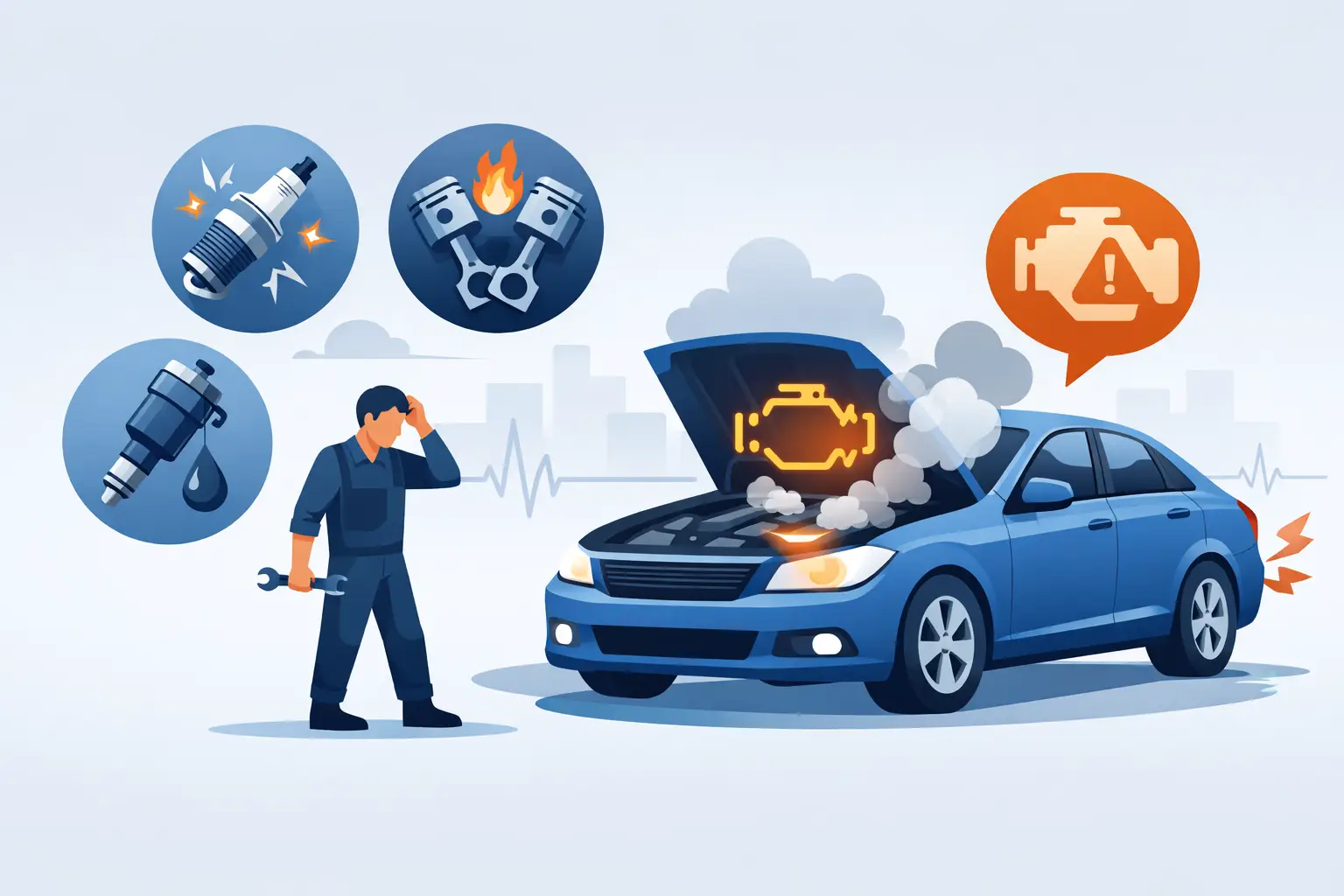
Car Misfire Causes You Should Never Ignore
A misfire is more than an annoying shake at a traffic light. When one or more engine cylinders do not burn fuel correctly, your vehicle can lose power, use more fuel, damage expensive components, and become less safe to drive. Knowing the likely car misfire causes helps you act early instead of waiting for a small fault to turn into a major repair.
A modern engine relies on precise timing between air, fuel, spark, and compression. If any one of those parts is missing, weak, or arriving at the wrong time, the cylinder may misfire. The check engine light may flash, the idle may turn rough, or the vehicle may feel like it is hesitating under acceleration. Those symptoms are your cue to get it checked.
What a Car Misfire Feels Like
Misfires do not always feel the same. A mild problem may only show up when accelerating onto the highway or towing a trailer. A more serious fault can make the whole vehicle shudder at idle, cause a noticeable loss of power, or create a popping sound from the exhaust.
You may also notice poor fuel economy, a strong fuel smell, difficult starting, or an engine light that comes and goes. On many vehicles, a flashing check engine light means there is an active misfire that could damage the catalytic converter. Pull over when safe, avoid hard driving, and arrange a diagnosis as soon as possible.
The way the problem occurs gives a technician useful clues. A misfire only when the engine is cold may point to ignition components or a fuel mixture issue. A misfire under load can indicate weak spark plugs, ignition coils, fuel delivery trouble, or an air leak. A constant misfire needs prompt attention because it can be caused by a mechanical issue inside the engine.
The Most Common Car Misfire Causes
Worn spark plugs or failed ignition coils
Spark plugs ignite the air-fuel mixture inside each cylinder. Over time, their electrodes wear down, gaps become too large, or deposits build up. The spark then becomes weak or inconsistent, especially when the engine is working hard.
Ignition coils provide the high voltage needed to fire the plugs. On many newer vehicles, each cylinder has its own coil. A failed coil can cause a single-cylinder misfire, while aging plugs may create misfires across several cylinders. Replacing plugs at the recommended service interval is a straightforward way to prevent avoidable problems.
It is worth using the correct plug type and gap for your vehicle. Cheaper or incorrect parts can create repeat faults, even if the engine initially seems to run better.
Fuel injector and fuel supply problems
Each fuel injector must deliver a measured amount of fuel at exactly the right time. If an injector is clogged, leaking, electrically faulty, or not receiving the correct signal, that cylinder may run too lean or too rich and misfire.
Poor fuel pressure can cause similar symptoms. A restricted fuel filter, weak fuel pump, faulty pressure regulator, or wiring issue may prevent enough fuel reaching the engine during acceleration. This is particularly noticeable in work vehicles, 4WDs, and vehicles that regularly carry heavy loads, because the engine needs more fuel under load.
Fuel-system faults need proper testing rather than guesswork. Replacing an injector without confirming the fault can be an expensive mistake.
Vacuum leaks and air intake faults
Your engine computer calculates fuel delivery based on the amount of air entering the engine. A split vacuum hose, leaking intake gasket, loose air duct, or damaged intake boot can let in air that has not been measured. The result is often a lean mixture, rough idle, hesitation, and a misfire.
A dirty or failing mass airflow sensor can also send inaccurate readings to the engine computer. On turbocharged engines, boost leaks and charge-air hose faults can create similar issues, often becoming obvious when you accelerate hard.
These leaks can be small and difficult to find by sight alone. A workshop diagnostic inspection can test the intake system and review fuel-trim data to identify whether unmetered air is the real cause.
Compression loss or internal engine damage
Not every misfire is an ignition or fuel problem. A cylinder also needs enough compression to burn its fuel mixture properly. Burned valves, worn piston rings, a damaged piston, timing-chain issues, or a blown head gasket can reduce compression and cause a persistent misfire.
Mechanical faults are more likely if the vehicle has overheated, lost coolant, used excessive oil, or developed a sudden loud engine noise. You may see white exhaust smoke, oil contamination in coolant, coolant loss, or a misfire that does not improve after ignition parts have been replaced.
This is where a compression test or leak-down test matters. It separates a service-related fault from an internal engine repair and prevents money being spent on parts that will not fix the issue.
Sensor, wiring, and timing problems
Modern engines depend on sensors to control spark and fuel timing. A faulty crankshaft position sensor or camshaft position sensor can cause intermittent misfires, stalling, no-start conditions, or a misfire that worsens as the engine warms up.
Damaged wiring, corroded connectors, poor grounds, and water intrusion can also interrupt signals to injectors and ignition coils. These faults can be frustrating because they may only occur over bumps, in wet weather, or once the engine reaches operating temperature.
Incorrect valve timing can create broader running problems as well. A stretched timing chain, failed timing-belt component, or variable valve timing fault may cause several cylinders to misfire and should not be ignored.
Why You Should Not Keep Driving With a Misfire
A vehicle may still move with a mild misfire, but continuing to drive it is a gamble. Unburned fuel can enter the exhaust and overheat the catalytic converter. That can turn a relatively affordable ignition repair into a much larger exhaust-system bill.
Misfires also reduce power when you need it most, such as merging into traffic, climbing a hill, or carrying tools and equipment. A rough-running engine places added stress on mounts and driveline components, while poor combustion can increase fuel use quickly.
If the check engine light is flashing, the engine is shaking heavily, there is a strong fuel smell, or the vehicle has very little power, do not keep pushing it. Stop driving if it is unsafe or likely to cause further damage, and have the vehicle assessed.
How a Proper Misfire Diagnosis Saves Money
The check engine light code is a starting point, not a final answer. For example, a code showing a misfire on cylinder three does not automatically mean cylinder three needs a new coil. The actual cause could be a plug, injector, compression issue, wiring fault, or intake leak affecting that cylinder.
A thorough diagnosis typically starts with a scan of fault codes and live engine data. From there, a technician may inspect ignition components, test coil output, check fuel pressure, examine injector operation, look for air leaks, and test compression where needed. The right order depends on the symptoms, vehicle history, and test results.
This approach matters for everyday cars and work vehicles alike. It reduces parts swapping, limits downtime, and gives you a clearer repair plan. At Ryan Automotive and Tyres, a practical diagnostic check can identify whether your misfire needs routine service parts, fuel-system work, electrical repair, or deeper engine attention.
Can You Prevent Most Misfires?
You cannot prevent every failure, but regular servicing gives you the best chance of catching problems early. Replace spark plugs on schedule, use quality fuel from reputable outlets, address engine warning lights promptly, and have oil or coolant leaks repaired before they affect wiring, coils, or sensors.
Pay attention after heavy rain, long trips, towing, or overheating. Those conditions can expose weak coils, aging hoses, marginal batteries, and wiring faults that were already developing. If your vehicle starts running rough, book it in while the symptoms are still clear and before a misfire creates damage elsewhere.
A smooth engine is not just more comfortable. It is a sign that the systems responsible for power, fuel economy, and reliable daily driving are doing their job.