Tyre Sidewall Damage Guide for Safer Driving
A sidewall mark can look minor in the driveway, then become a serious safety issue at highway speed. This tyre sidewall damage guide explains what to look for, why sidewall damage is different from a tread puncture, and when the safest answer is a replacement rather than a repair.
The sidewall is the flexible, reinforced area between the tread and the wheel rim. It carries the load of the vehicle, absorbs impacts, and flexes thousands of times every trip. Once its internal cords or rubber structure are compromised, a tire can lose strength without giving much warning. That matters whether you drive a family SUV, a work ute, a trailer, or a 4WD that spends time off-road.
Why tire sidewall damage is a bigger concern
A puncture through the center of the tread can sometimes be repaired if it meets the tire manufacturer’s repair limits. The tread area is thick and designed to handle the road surface. The sidewall is different. It continually bends as the tire rotates, so a patch or plug in this area is not generally considered a safe or permanent repair.
The risk is not just losing air. Damaged sidewall cords can separate under load, especially during cornering, towing, carrying tools, or driving at higher speeds. A weakened tire may develop a bulge, split further, or fail suddenly. That is why a tire that still holds pressure can still be unsafe to use.
There is some judgment involved. A light surface scuff that has only rubbed the outer rubber may be cosmetic. A cut deep enough to expose fabric, steel, or damaged rubber underneath is not cosmetic. If you cannot confidently tell the difference, have it inspected before your next longer drive.
Tyre sidewall damage guide: what to check
Park on level ground, engage the parking brake, and turn the steering wheel so you can see the front tire sidewalls clearly. Check both the outside and inside sidewalls where possible. Damage on the inside is easy to miss after hitting a pothole or curb.
Look for these signs:
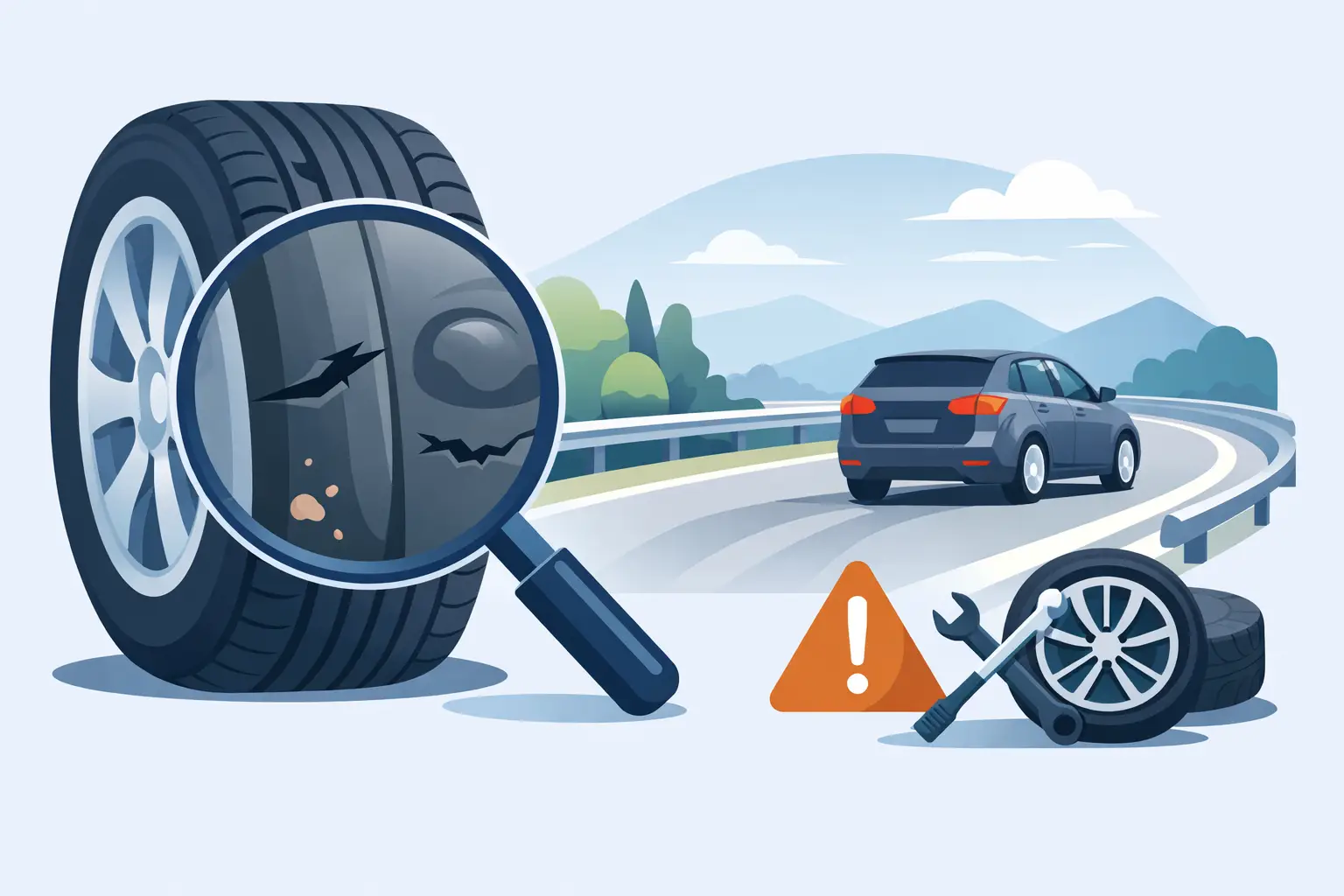
- A bubble or bulge in the sidewall, even if it is small
- Cuts, tears, cracks, or deep scrapes in the rubber
- Exposed cord, fabric, or metal beneath the rubber
- A sidewall that looks pinched, crushed, or split near the rim
- Repeated pressure loss with no obvious tread puncture
- Vibration, thumping, or a change in steering after an impact
A bulge deserves immediate attention. It usually means the internal reinforcing cords have broken after an impact, allowing the rubber to balloon outward. Do not try to deflate the tire, glue the area, or keep driving until your next scheduled service. Fit the spare if it is safe to do so, or arrange assistance.
Small cracks need context. Fine, shallow cracking can occur as tires age, particularly when a vehicle sits outside for long periods, but cracking that is widespread, deep, or close to the rim should be assessed. Tires with age-related deterioration may not be dependable even if their tread depth appears acceptable.
The fingernail check is not enough
Drivers often run a fingernail over a scrape to decide whether it is deep. That can help identify a superficial mark, but it cannot show whether the internal structure has been bruised. A curb strike can damage cords without leaving a dramatic cut. If the impact was hard enough to bend a wheel, knock out the alignment, or cause an immediate pressure drop, treat the tire as suspect.
Common causes of sidewall damage
Curb contact is one of the most common causes. Low-profile tires offer less rubber between the wheel and the road, so a parking scrape or tight turn can damage both the sidewall and the rim. Larger wheels can look great, but they bring a trade-off: less sidewall protection and less tolerance for potholes.
Potholes, broken road edges, and construction debris can pinch the sidewall between the wheel and a sharp surface. This type of impact is particularly common when tire pressure is low. An underinflated tire flexes more and leaves the wheel closer to the road hazard.
Overloading is another issue for work vehicles, trailers, and vehicles towing regularly. Every tire has a load rating, and exceeding it increases heat and sidewall stress. The same applies when a trailer has aging tires or the wrong tire type fitted. A tire that suits a lightly loaded car may not suit a loaded trailer or a work vehicle carrying equipment.
Off-road driving adds its own risks. Rocks, ruts, and sharp sticks can slice a sidewall, while airing down too far can increase the chance of the tire rolling or pinching against the wheel. Suitable all-terrain or mud-terrain tires, the correct pressure for the conditions, and a careful line choice all help reduce the risk.
Can a damaged sidewall be repaired?
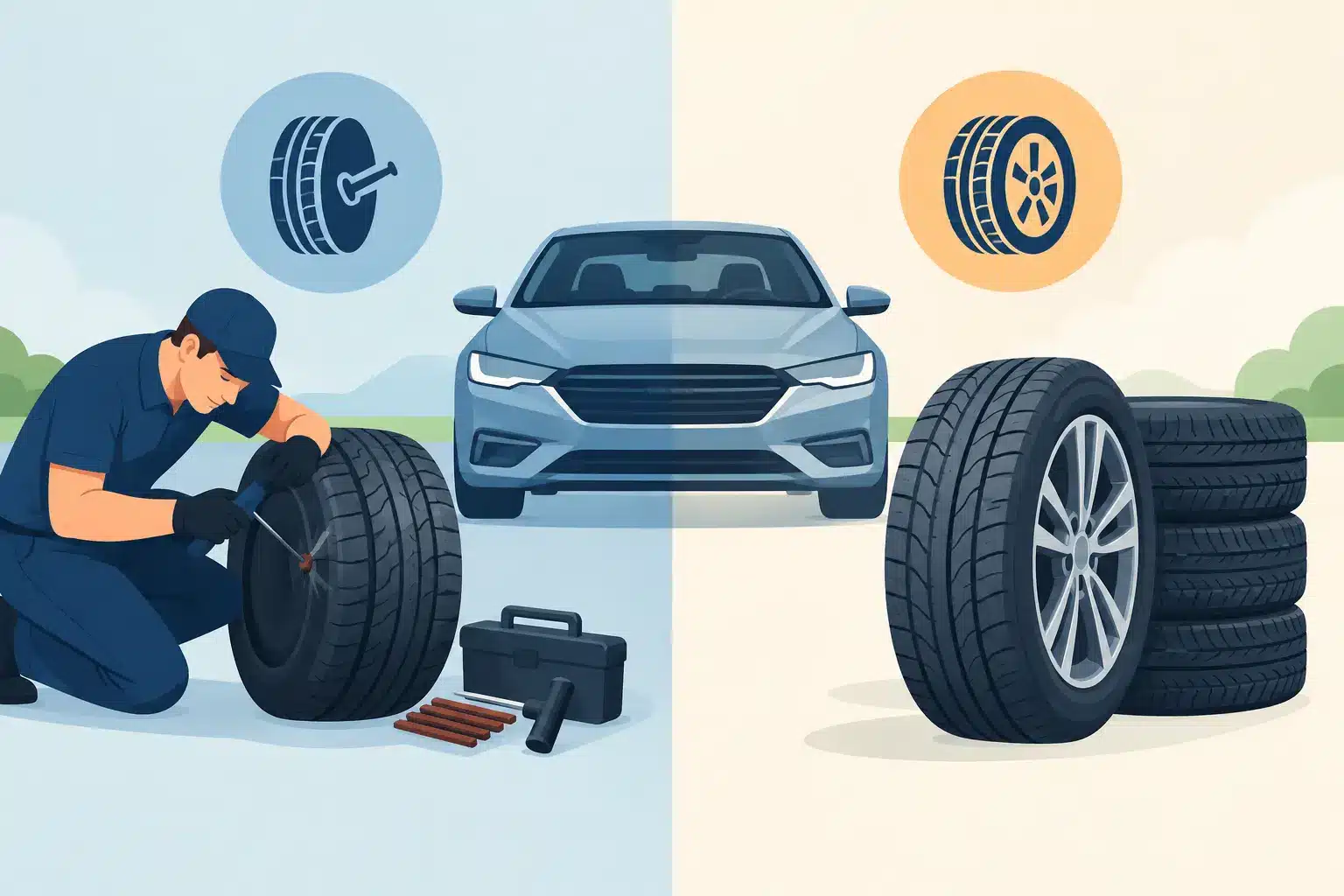
In most cases, no. A puncture repair is generally limited to the repairable area of the tread, not the shoulder or sidewall. Sidewall repairs cannot reliably restore the tire’s original strength because the area continues to flex under the vehicle’s weight.
Do not rely on an aerosol sealant, plug kit, or external patch for sidewall damage. These products may temporarily slow an air leak, but they do not repair broken cords or a split casing. They can also make a later inspection more difficult and create extra cleanup inside the tire.
Replacement is normally required when there is a bulge, exposed cords, a deep cut, a split, or evidence of impact damage. If only one tire needs replacing, the right choice depends on the vehicle, tire size, tread depth on the remaining tires, and whether the vehicle is all-wheel drive. On some AWD vehicles, a significant difference in rolling circumference can place extra strain on the drivetrain. A tire professional can measure the existing tires and advise whether one, two, or a full set is the sensible option.
What to do after you find damage
If the sidewall has a bulge, exposed cords, or a deep cut, do not continue driving on it. Install a correctly inflated spare if you have one and know it is safe to use. If the damage is uncertain or you do not have a suitable spare, arrange for the vehicle to be inspected rather than taking chances on a long drive.
For a light scrape with no visible splitting, cords, or pressure loss, check the tire pressure and keep an eye on the area. Still, have it looked at if the scrape followed a hard impact. A workshop can remove the wheel, inspect the inner liner, check the rim for damage, and confirm whether the tire is safe to remain in service.
It is also worth checking wheel alignment after a substantial pothole or curb hit. If the steering wheel is off-center, the vehicle pulls to one side, or the tire begins wearing unevenly, an alignment check can prevent a new tire from wearing out early. Wheel balancing may also be needed if an impact has damaged the wheel or knocked off a balance weight.
Preventing future sidewall problems
The simplest protection is correct tire pressure. Check pressures when the tires are cold and use the vehicle placard recommendation unless a tire professional advises a different setting for a specific load or off-road condition. Do not use the maximum pressure printed on the tire sidewall as your everyday target – that figure is a tire limit, not usually the vehicle’s recommended operating pressure.
Avoid mounting curbs, slow down for potholes where safe, and leave room when parking beside a curb. For tradies, trailer owners, and families heading away loaded up, confirm that tire load ratings match the real weight being carried. Include passengers, cargo, tools, towing loads, and any accessories that add weight.
When choosing new tires and wheels, consider how the vehicle is actually used. A very low-profile setup may suit a show-focused build, while a taller sidewall can provide more impact protection for rough roads, towing, or daily work use. There is no single best setup – the practical choice balances appearance, handling, comfort, load capacity, and durability.
At Ryan Automotive and Tyres, sidewall concerns can be checked alongside tire replacement, wheel inspection, balancing, and alignment in one visit. If a mark, bulge, or cut has you second-guessing your tire, getting it assessed early is usually cheaper and far less stressful than dealing with a failure on the road.