When Should Timing Belts Change? Mileage and Signs
A timing belt can look perfectly fine right up until it fails. That is what makes it different from a noisy brake or a worn tire. When should timing belts change? Usually before the vehicle gives you any obvious warning – based on the manufacturer’s mileage and time interval, not on how the belt looks from the outside.
For family cars, commuter vehicles, work vans, and 4WDs, timing belt replacement is preventive maintenance that can save an engine from major damage. Put it off too long and a relatively planned repair can turn into a breakdown, a tow, and potentially a very expensive engine repair.
When should timing belts change on your vehicle?
Most timing belts need replacement somewhere between 60,000 and 105,000 miles, depending on the make, model, engine, and year. Some vehicles have intervals expressed in kilometers, commonly around 100,000 to 180,000 km. The correct figure is in your owner’s manual or factory service schedule.
The key point is that there is no single timing belt interval for every vehicle. One engine may require replacement at 60,000 miles, while another is designed for 100,000 miles or more. Guessing based on a mate’s car, the belt’s appearance, or a general rule of thumb is not worth the risk.
Age matters as much as mileage. A car that has only covered low miles but is 7 to 10 years old may still be due for a belt. Rubber degrades with heat, cold, oil contamination, and time. This is particularly relevant for second cars, weekend vehicles, trailers tow vehicles, and cars that spend long periods parked.
If you have bought a used vehicle and there is no clear invoice showing the timing belt was replaced, treat it as due until proven otherwise. A sticker under the hood can be helpful, but a detailed service receipt that identifies the mileage, date, and parts replaced is better.
Why changing a timing belt on time matters
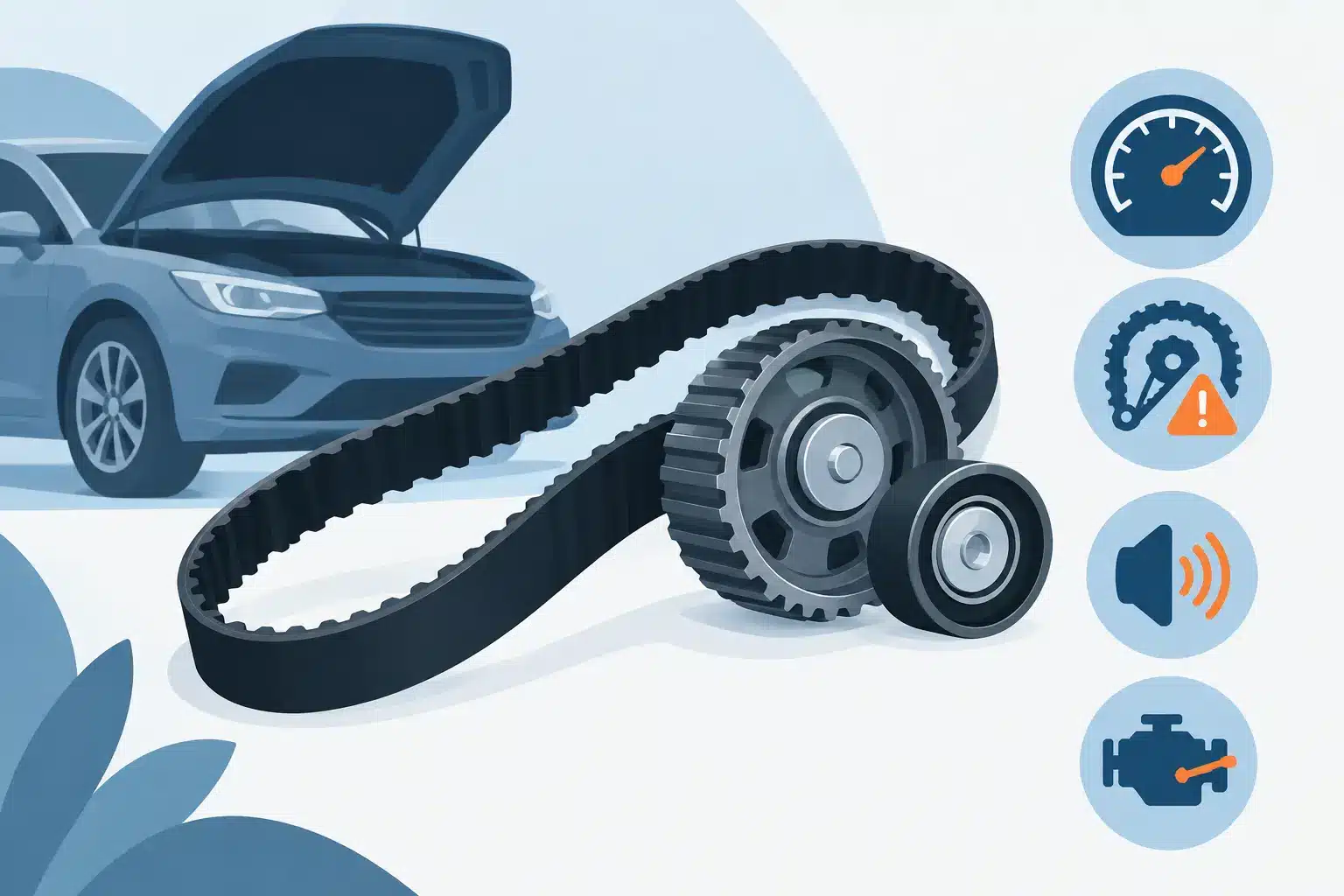
The timing belt keeps the crankshaft and camshaft turning in the correct sequence. In simple terms, it makes sure the pistons and valves move at the right time. If the belt breaks or jumps teeth, that timing is lost immediately.
On many engines, known as interference engines, the pistons and valves can collide when the belt fails. Bent valves, damaged pistons, cylinder head repairs, and in severe cases engine replacement can follow. On a non-interference engine, a failed belt may only stop the engine, but it can still leave you stranded and facing an urgent repair.
The difference between a scheduled timing belt job and a failure is usually not subtle. Planned work lets you choose a suitable time and arrange transport if needed. A broken belt tends to happen when you are heading to work, towing equipment, or halfway through a trip.
Signs your timing belt may need attention
A timing belt is not a part to monitor by waiting for symptoms. It can fail without warning. Still, a few signs should be checked promptly, especially if the belt’s service history is unknown.
A ticking or slapping sound from the front of the engine, rough running, difficult starting, misfires, or a sudden loss of power can all point to a timing issue. An engine that will not start after cranking normally may also have a broken belt, although several other faults can cause the same symptom.
Oil leaks near the timing cover deserve attention too. Oil can contaminate rubber belts and shorten their service life. Likewise, a coolant leak around the water pump can be more than a cooling-system concern if the pump is driven by the timing belt.
Do not assume a squeal means the timing belt is worn. Accessory belts, pulleys, and tensioners are more commonly responsible for squealing noises. Proper diagnosis matters because the timing belt is often hidden behind covers and cannot be inspected fully without disassembly.
What if the engine is running normally?
A smooth-running engine does not mean the belt is safe. Timing belts are replaced by schedule because their internal reinforcement can weaken before obvious symptoms appear. If your service interval is approaching, booking the job before trouble starts is the sensible move.
What should be replaced with the timing belt?
A proper timing belt service is more than fitting a new belt. The labor to access the belt is significant, so it makes practical sense to replace related wear items while everything is apart.
A complete timing belt kit commonly includes the belt, tensioner, and idler pulleys. Depending on the engine, the water pump may also be replaced at the same time. If the pump is driven by the timing belt, replacing it during the job can avoid paying much of the same labor again later.
Your mechanic may also inspect or replace camshaft and crankshaft seals if there is evidence of leakage. Drive belts, coolant, and other components removed for access may need attention as well. The exact scope depends on the vehicle and the condition of the parts, but choosing the cheapest belt-only repair can be false economy if an old tensioner or water pump fails soon afterward.
Ask what is included in the quote. A clear quote should explain whether the price covers the belt kit, water pump where appropriate, coolant, seals if required, and labor. That makes it easier to compare like for like.
Timing belt or timing chain: know the difference
Not every vehicle has a timing belt. Many newer engines use a timing chain, which is metal and generally designed to last longer. However, chains are not maintenance-free forever. Chain stretch, worn guides, tensioner faults, and poor oil service history can all create problems.
Some engines also use a belt running in oil, often called a wet belt. These have their own service intervals and oil requirements. Using the wrong engine oil or extending oil changes can contribute to belt deterioration on affected engines.
If you are not sure what your vehicle uses, check the service schedule or have a workshop confirm it from the vehicle identification details. Do not book a timing belt replacement based solely on an online forum or a similar-looking model. Engine variations within the same vehicle range can have different systems and intervals.
How driving conditions can affect timing belt service
The factory interval is the starting point, but hard use can justify being cautious. Frequent stop-and-go driving, high temperatures, dusty roads, extended idling, heavy loads, and regular towing all place extra demand on engines and their supporting components.
For tradies and owners who tow trailers or carry heavy loads, avoiding unexpected downtime is often worth more than stretching a service interval to its final mile. The same applies to vehicles used for long regional trips, where a breakdown is more than an inconvenience.
A quality inspection during regular servicing can also pick up oil leaks, cooling-system problems, or unusual noises before they affect the timing system. It will not replace the scheduled belt change, but it helps protect the new parts after the work is done.
Book before the due date, not after it
If your vehicle is close to its timing belt interval, has reached its age limit, or has an uncertain service history, arrange an inspection and quote before it becomes urgent. At Ryan Automotive and Tyres, drivers in Kingswood and Penrith can get practical advice on the correct service schedule for their vehicle and what the job should include.
A timing belt replacement is one of those jobs you hope never to think about again once it is done properly. Keep the invoice with your service records, note the next due mileage and date, and enjoy the confidence of driving without an overdue belt in the back of your mind.