Why Is Your Steering Wheel Crooked While Driving?
A steering wheel crooked while you are driving is more than an annoyance on the daily commute. If the car tracks straight only when the wheel sits off-center, something in the steering, suspension, tires, or wheel alignment needs attention. It may be a simple alignment correction, but it can also be the first sign of worn parts that should not be ignored.
What a Crooked Steering Wheel Usually Means
When the steering wheel is correctly centered, the vehicle should travel straight on a level road with only small steering corrections. If you have to hold the wheel to one side to keep the car in its lane, the front wheels are no longer pointing in the intended direction relative to the steering wheel.
Most often, this happens after an alignment has shifted. Hitting a pothole, clipping a curb, driving over rough road edges, or carrying heavy loads can knock alignment angles out of specification. It does not take a major crash to create a noticeable change, especially on vehicles with low-profile tires, larger wheels, or suspension that has already seen plenty of use.
A crooked wheel does not always mean the car will pull hard left or right. Some vehicles can still feel reasonably stable while the steering wheel is off-center. That is why it is easy to put off. The problem is that incorrect alignment can wear tires faster, affect handling, and place extra strain on steering and suspension components over time.
Common Causes of a Steering Wheel Crooked Problem
Wheel alignment is out of adjustment
This is the most common cause. Wheel alignment sets the angles at which the tires meet the road. Camber, caster, and toe all affect how the vehicle tracks, turns, and returns to center after a corner.
Toe settings are particularly relevant when the steering wheel sits crooked. If the tie rods have been adjusted unevenly, the wheels may point straight ahead while the steering wheel is no longer centered. A proper alignment checks the full setup, adjusts angles where possible, and centers the wheel as part of the process.
A pothole, curb strike, or road impact
One sharp impact can move an adjustment point or bend a component. You may notice the issue immediately after the hit, or it may become obvious a few days later as the vehicle starts pulling or the tires begin to wear unevenly.
If the steering wheel became crooked after an impact, do not assume an alignment alone will fix it. A technician should inspect the wheels, tires, tie rods, control arms, ball joints, struts, and suspension mounting points first. Aligning a vehicle with a bent or loose part can produce a temporary result at best.
Worn steering or suspension parts
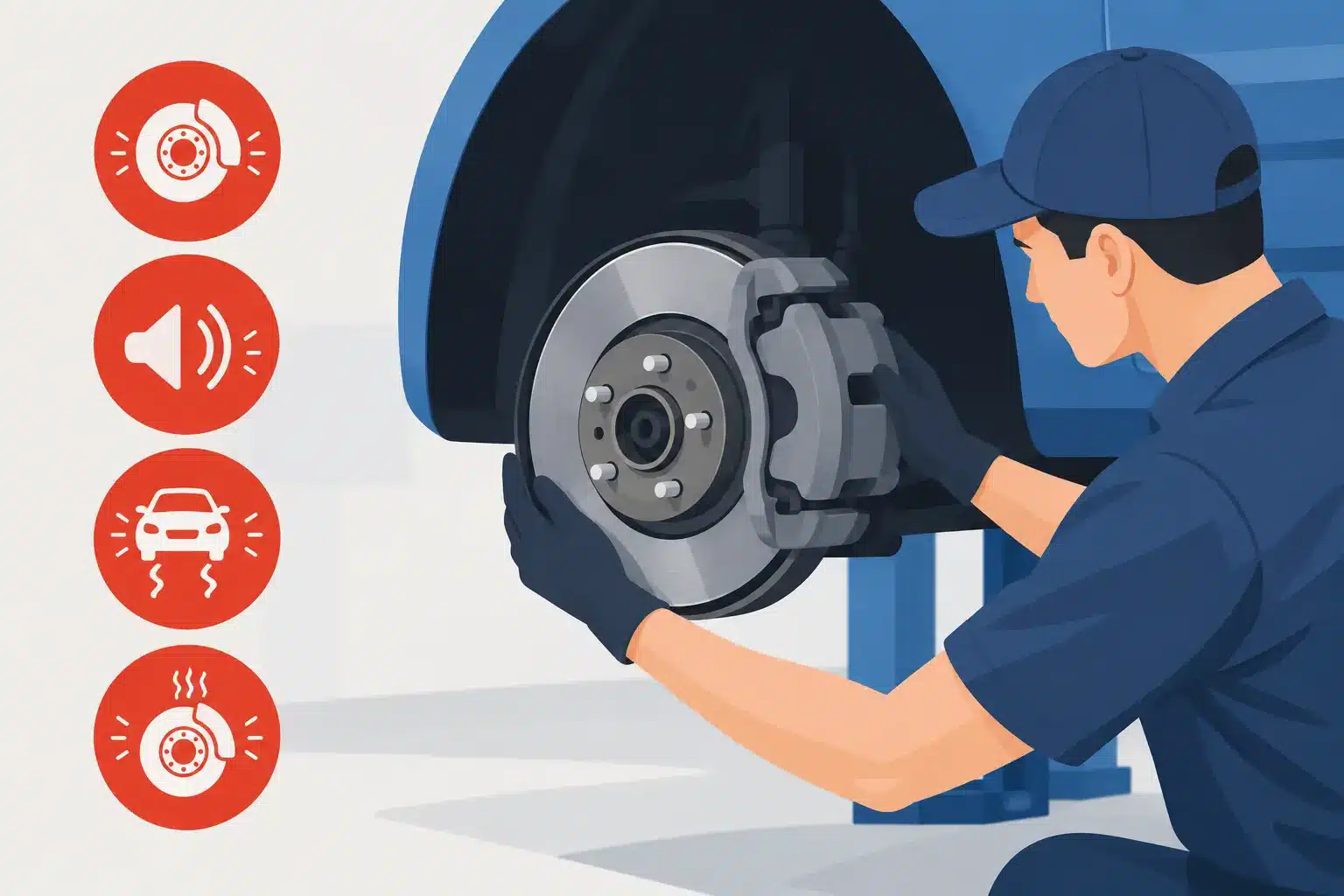
Tie-rod ends, ball joints, control-arm bushings, wheel bearings, and steering rack components all help keep the wheels positioned correctly. As these parts wear, alignment can shift and the car may feel vague, wander on the road, or clunk over bumps.
This is especially relevant for work vehicles, older family cars, and 4WDs that regularly travel rough roads. Heavy loads and frequent towing also put more demand on suspension parts. Replacing worn components before completing the alignment is usually the right order of repair.
Incorrect installation after steering or suspension work
A crooked steering wheel can appear after new tires, steering repairs, lifted suspension, lowering springs, or other front-end work. The vehicle may need an alignment any time parts affecting ride height or wheel position are replaced.
It can also happen if alignment was performed without properly locking and centering the steering wheel. The numbers on an alignment report may look acceptable, but the wheel can still be off-center. A quality final road test helps catch this before the vehicle leaves the workshop.
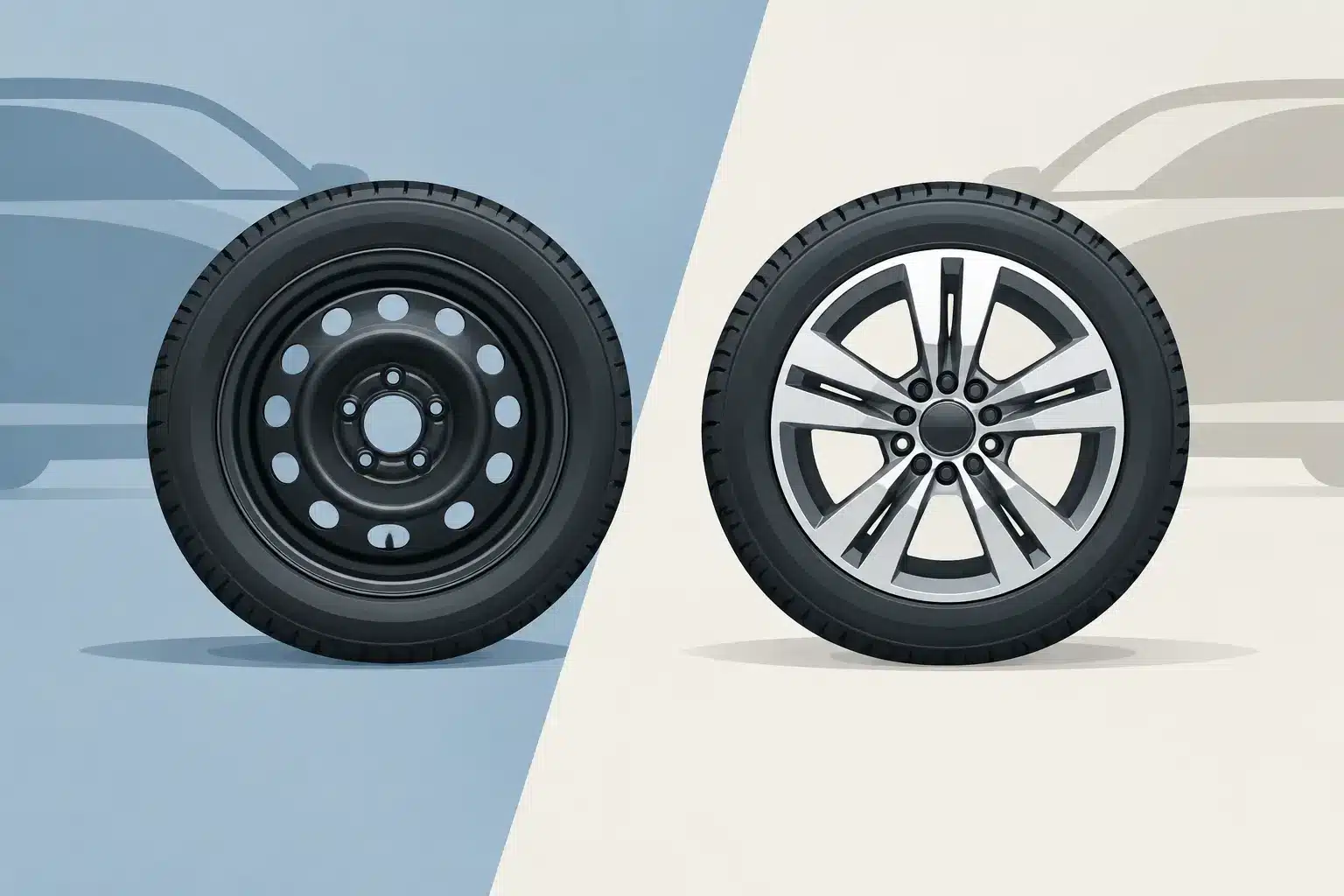
Tire or wheel problems
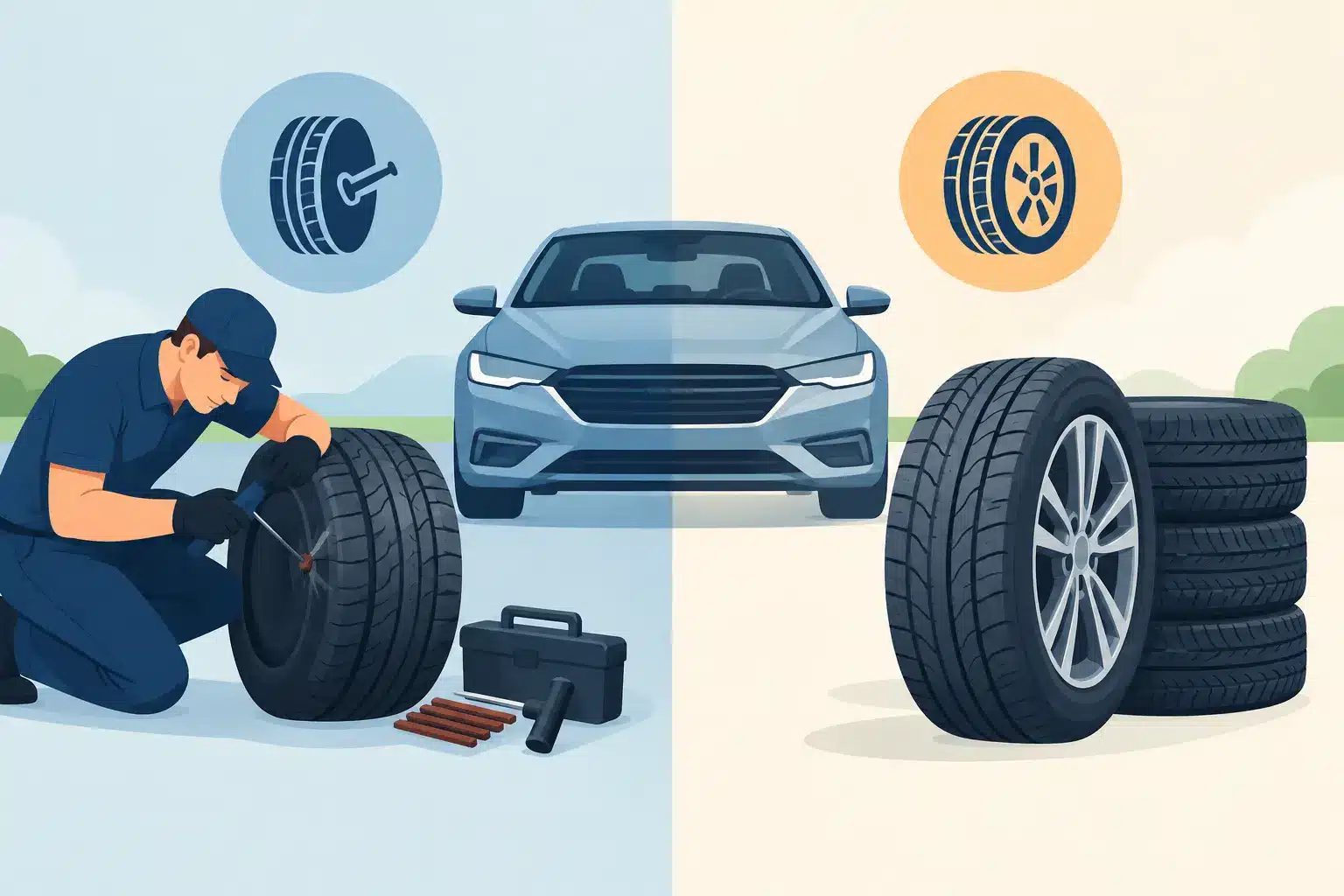
Tires do not usually make the steering wheel sit permanently crooked by themselves, but they can create similar symptoms. Uneven tire pressure, irregular tire wear, a damaged tire, or a bent wheel can cause drifting, vibration, and a steering feel that seems off.
Check tire pressures when the tires are cold and use the pressure listed on the vehicle placard. If one tire is badly worn on the inside or outside edge, that wear pattern can help identify an alignment or suspension issue. Replacing tires without correcting the cause may simply ruin the new set early.
When a Crooked Steering Wheel Is Urgent
A slightly off-center wheel with no other symptoms should still be inspected soon, but it is not always an emergency. The situation changes if the vehicle pulls strongly, shakes through the steering wheel, makes knocking noises, feels loose, or has visible tire damage.
Book an inspection promptly if you notice any of the following:
- The car suddenly pulls to one side or needs constant correction.
- The steering wheel shakes at highway speed or while braking.
- A tire has a bulge, cut, exposed cords, or rapid uneven wear.
- You hear clunks, clicks, or grinding when turning or driving over bumps.
- The steering feels unusually heavy, loose, or slow to return to center.
If the vehicle is difficult to control, do not keep driving it just to see whether it improves. A damaged tire, loose steering part, or major suspension fault can affect safety far more than a simple alignment issue.
Why Tire Wear Matters
The cost of an alignment is usually small compared with replacing tires before their time. When toe is out of adjustment, tires can scrub across the road rather than roll cleanly. This often wears the tread in a feathered pattern that can be felt by running a hand across the tire surface.
Excess negative or positive camber tends to wear one shoulder of the tire faster. On a daily driver, this can shorten tire life without the driver noticing until an inspection. On a truck, trailer tow vehicle, or 4WD with larger tires, uneven wear can become expensive quickly.
A wheel alignment is not a one-size-fits-all job. Ride height, tire size, load use, suspension modifications, and the condition of the vehicle all matter. A standard commuter car needs stable, even tire wear. A lifted 4WD may need a technician who understands the limits of its suspension geometry and can identify when adjustable parts are required to bring alignment back within range.
What Happens During an Alignment Inspection
A proper inspection starts before adjustment. The technician checks tire condition and pressures, wheel damage, ride height, steering play, suspension wear, and obvious signs of impact damage. There is little value in setting alignment angles if a worn ball joint or loose tie-rod end will let them move again.
Once the vehicle is safe to align, computerized equipment measures the wheel angles against manufacturer specifications. Adjustments are made where the vehicle design allows, and the steering wheel is held in the straight-ahead position while toe is set. The vehicle should then be road tested to confirm it tracks properly and the steering wheel is centered.
Some vehicles cannot be fully corrected with factory adjustments if parts are bent, the suspension has been modified, or the ride height has changed significantly. In those cases, the best repair may involve replacing damaged components or fitting suitable adjustment hardware. A trustworthy workshop should explain that clearly rather than forcing an alignment that will not hold.
Can You Drive With the Steering Wheel Off-Center?
You may be able to drive a short distance to a workshop if the vehicle feels stable, the tires are undamaged, and there are no warning signs such as vibration or severe pulling. However, it is not a condition to leave for months. The longer an alignment issue continues, the more likely it is to affect tire life and handling.
Do not try to straighten the steering wheel by adjusting tie rods at home unless you have the right equipment and training. A small adjustment changes toe, and incorrect toe can create rapid tire wear. Moving one side without understanding the full alignment can also make the vehicle track worse.
For drivers in Kingswood, Penrith, and nearby areas, Ryan Automotive and Tyres can inspect the cause, check the condition of your tires and front-end parts, and carry out wheel alignment as part of a one-stop repair. That is particularly useful when the issue turns out to involve more than an adjustment, such as worn suspension parts, damaged wheels, or tires that need replacement.
A straight steering wheel is a useful sign that your vehicle is tracking as it should. If yours has shifted after a pothole, curb strike, tire change, or suspension repair, arrange an inspection before uneven tire wear turns a manageable fix into a larger bill.