How to Diagnose Transmission Slipping Early
A transmission that revs without properly moving the vehicle is not a problem to put off until the next service. When you diagnose transmission slipping early, you have a better chance of limiting damage, avoiding a breakdown, and keeping repair costs under control. The key is to notice when the engine speed, gear changes, and road speed stop matching up.
Transmission slipping can feel different from one vehicle to the next. An automatic may hesitate before moving, flare in RPM between shifts, or drop out of gear under load. A manual may rev higher while climbing a hill even though the vehicle is not gaining speed as it should. CVT transmissions can make a steady droning sound while the vehicle struggles to accelerate.
What Transmission Slipping Feels Like on the Road
The most common sign is an increase in engine RPM without a matching increase in speed. For example, you press the accelerator to merge onto the highway, the tachometer jumps, but the vehicle takes too long to pick up speed. That is often described as a slipping or flaring transmission.
You may also notice delayed engagement when shifting from Park into Drive or Reverse. A healthy transmission should engage promptly and smoothly. A brief pause can happen in very cold conditions, but repeated delays, harsh engagement, or a need to raise the engine speed before the vehicle moves deserves inspection.
Pay attention to how the issue behaves under load. A vehicle that drives normally around town but slips while towing, carrying tools, climbing hills, or accelerating hard may have low or degraded transmission fluid, worn internal components, or a control problem. Work vehicles and trailers place extra heat and load on the drivetrain, so early diagnosis matters even more.
Other warning signs often appear alongside slipping:
- A burning smell, especially after highway driving, towing, or stop-and-go traffic
- Red, brown, or dark fluid leaks under the vehicle
- Rough, erratic, or unusually slow shifts
- A check engine or transmission warning light
- Shuddering, whining, grinding, or clunking during gear changes
One symptom does not automatically mean the transmission needs replacement. A low fluid level, failed sensor, damaged wiring connection, software issue, or engine misfire can create similar driving complaints. Proper testing prevents expensive guesswork.
How to Diagnose Transmission Slipping Safely
Start by thinking about when the problem occurs. Does it happen only after the vehicle is warm? Is it worse on hills? Does it occur in one gear, during every shift, or only when backing up? These details help narrow down whether the issue is hydraulic, electronic, internal, or possibly outside the transmission.
Check the transmission fluid condition
On vehicles with a serviceable transmission dipstick, fluid level and condition are useful first checks. Follow the manufacturer procedure exactly, as some vehicles must be checked at a specific temperature, with the engine running, and on level ground. An incorrect check can lead to an incorrect diagnosis.
Transmission fluid should generally look clean and should not smell burnt. Dark fluid, metallic debris, or a burnt odor can point to overheating or internal wear. Low fluid can allow air into the hydraulic system, reducing the pressure needed to apply clutches and bands. That can cause slipping, delayed engagement, and harsh shifts.
Do not simply top off fluid without finding the reason it is low. Transmission fluid does not normally disappear. A leak from a pan gasket, cooler line, axle seal, or case seal needs attention. Using the wrong fluid can also cause shift quality problems, particularly in modern automatic and CVT transmissions.
Rule out engine and driveline problems
An engine that misfires, has a throttle problem, or lacks power can feel like a transmission issue. If the vehicle shakes under acceleration, runs rough, or has a flashing check engine light, the engine should be tested before blaming the transmission.
A worn clutch is also different from an automatic transmission fault. In a manual vehicle, clutch slip often shows up most clearly in higher gears or under heavy acceleration. The engine RPM rises, but road speed does not follow. A workshop can check clutch operation, hydraulic components, and related driveline parts to confirm the cause.
On four-wheel-drive vehicles, u-joints, transfer cases, differentials, and damaged axle components can sometimes create driveline noises or loss of drive that owners mistake for transmission slipping. A full under-vehicle inspection is worth the time, especially after off-road use or heavy towing.
Scan for fault codes and live data
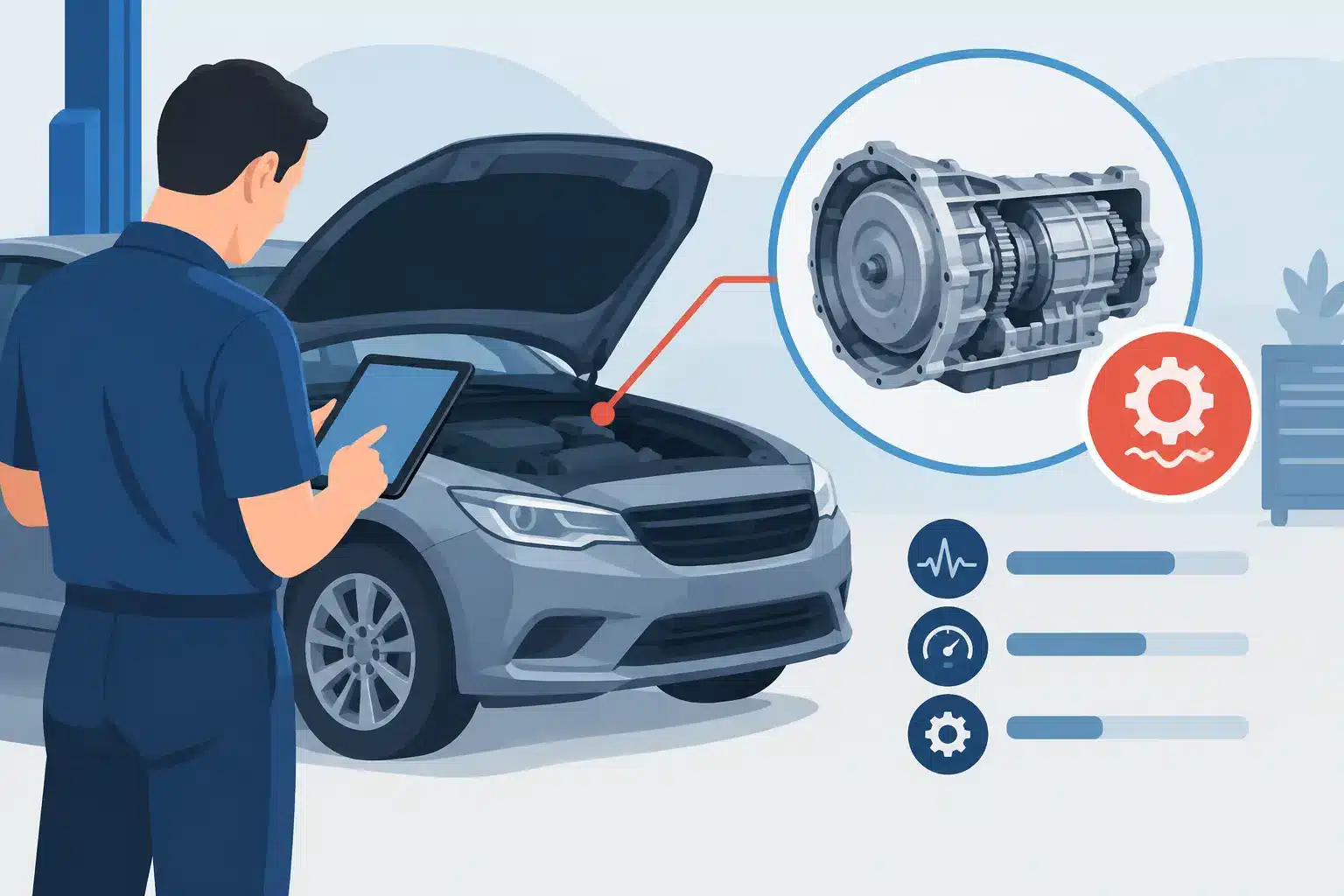
Modern vehicles rely on sensors, solenoids, control modules, and adaptive learning to manage gear changes. A warning light may be on, but not always. A professional scan tool can identify stored fault codes and show live information such as input and output shaft speeds, commanded gear, fluid temperature, and solenoid operation.
This matters because a failed speed sensor or shift solenoid may create a slipping sensation without the transmission being mechanically worn out. On the other hand, codes related to incorrect gear ratios can indicate internal clutch pack wear or pressure loss. Codes guide the next test, but they are not a complete diagnosis on their own.
Road-test with a clear purpose
A controlled road test lets a technician confirm the complaint and identify the conditions that trigger it. They may check engagement from a stop, light and heavy acceleration, shifting at operating temperature, deceleration, and reverse operation. The goal is not to push a damaged transmission harder. It is to gather useful information without causing further damage.
Avoid repeated hard acceleration to test a suspected slipping transmission yourself. Excessive slipping creates heat, and heat can quickly damage friction materials and fluid. If the vehicle barely moves, loses drive in traffic, makes grinding noises, or has a strong burning smell, arrange for it to be inspected rather than driving it further.
Common Causes and Why the Repair Can Vary
Transmission slipping is a symptom, not a single repair. The simplest cases may involve correcting a fluid leak, replacing a filter where applicable, repairing wiring, or replacing an external sensor or solenoid. These repairs are usually far less involved than internal transmission work.
If fluid is severely burnt or contains metal, the situation may be more serious. Worn clutch packs, damaged valve bodies, failed torque converters, and internal pressure problems can require transmission removal, rebuilding, or replacement. The right option depends on the vehicle’s age, mileage, overall condition, intended use, and the extent of internal damage.
A fluid service can help when maintenance has been neglected and there is no major internal damage, but it cannot restore worn-out friction material. It can also be the wrong first move if diagnosis has not confirmed the condition of the unit. A good repair plan starts with inspection and testing, then explains what is known, what still needs checking, and the realistic options.
When to Book a Transmission Inspection
Book an inspection as soon as slipping happens more than once, especially if there is a warning light, leak, burning smell, or delayed engagement. Acting early may turn a small leak or control fault into a straightforward repair instead of a major transmission job.
For drivers in Kingswood and Penrith, Ryan Automotive and Tyres can inspect the vehicle as part of a practical drivetrain diagnosis, checking for faults that affect performance, safety, and daily reliability. That is especially useful when you rely on your vehicle for commuting, family transport, work, towing, or weekend four-wheel-driving.
Keep a note of when the symptom occurs, whether the vehicle is hot or cold, and any warning lights or noises you notice. Those details give the technician a clearer starting point and can help get your vehicle back on the road with the right repair, not a guess.