Car Tyres: When to Replace and What to Choose
The difference between stopping safely and sliding through a wet intersection can come down to a few millimeters of tread. Car tyres are the only part of your vehicle that touches the road, so their condition affects braking, steering response, ride comfort, fuel use, and your confidence behind the wheel. They are easy to overlook until a puncture, vibration, or warning light forces the issue, but a little attention before then can save money and prevent an inconvenient breakdown.
For commuters, family vehicles, work utes, trailers, and 4WDs, the right tire is not always the most expensive one. It is the one that suits the vehicle, the load it carries, the roads it travels, and the way it is maintained.
Car Tyres Are Safety Equipment
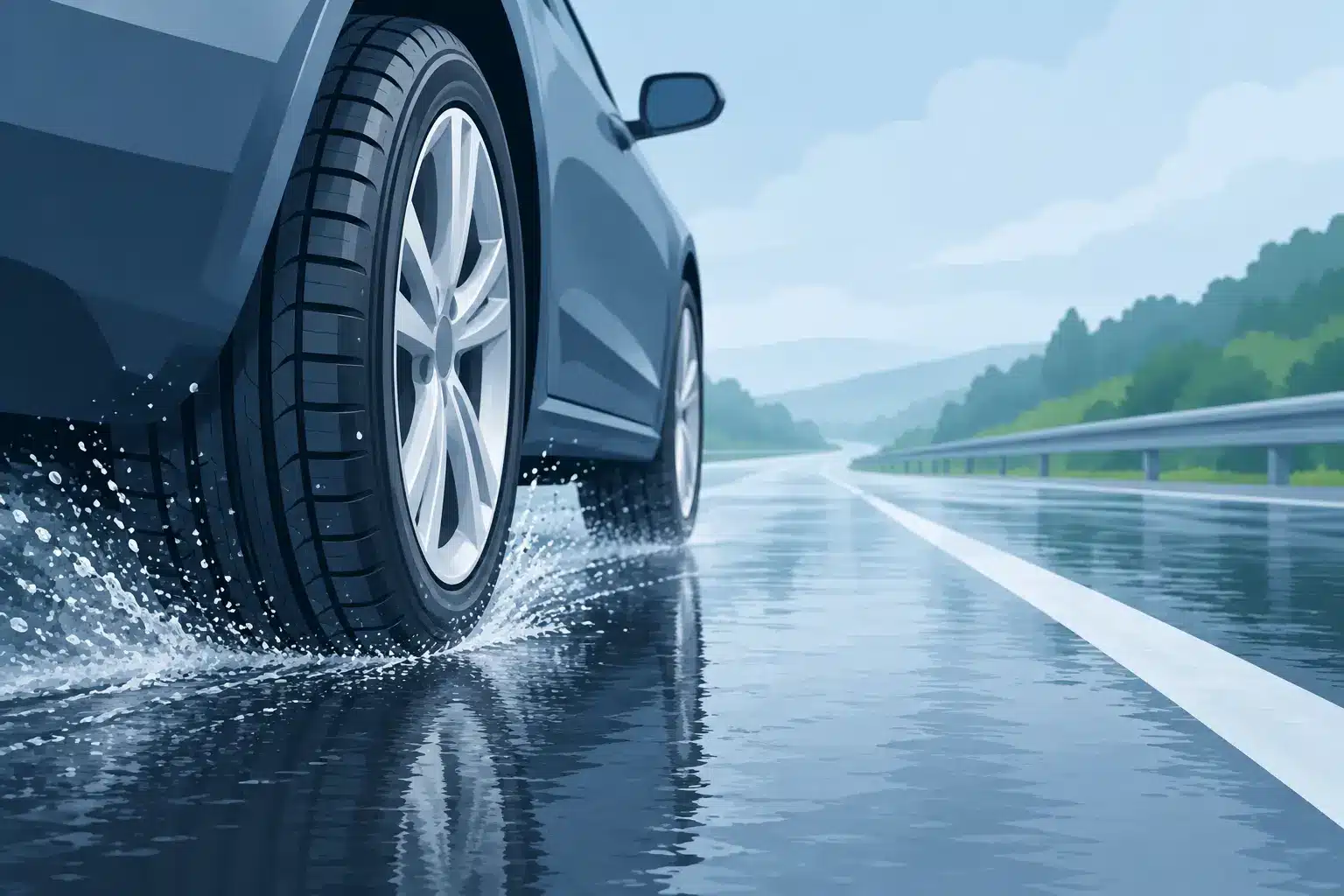
Tires have several jobs at once. They need to grip dry and wet pavement, channel water away from the contact patch, carry the vehicle’s weight, absorb bumps, and remain stable when braking or cornering. As tread wears down, those jobs become harder, particularly in rain.
A tire can look generally fine from a distance while having uneven wear, sidewall damage, or an internal problem. That is why a quick visual check should be part of regular vehicle care, especially before a long drive, towing a trailer, or heading away with a loaded work vehicle.
Pressure matters just as much as tread. Underinflated tires run hotter, wear faster on their outer edges, use more fuel, and can feel vague through the steering. Overinflation can reduce the contact area and lead to a harsher ride and faster center wear. Use the pressure listed on the vehicle placard, usually found inside the driver’s door opening or in the owner’s manual, rather than relying on the maximum pressure printed on the tire sidewall.
When Should You Replace Your Tires?
There is no single mileage figure that suits every vehicle. A set used for highway commuting may last far longer than one fitted to a loaded work vehicle, a stop-start family car, or a 4WD used on rough tracks. Driving style, alignment, tire pressure, road surfaces, and rotation intervals all affect service life.
Tread depth is the starting point. In many places, the legal minimum is 2/32 inch, but waiting until that point is not a good safety plan. Wet-weather grip falls away well before a tire reaches the legal limit. If the tread-wear bars are level with the surrounding tread, replacement is due. For regular wet-road driving, it makes sense to plan ahead rather than wait for the bars to show.
Look for these signs during a walk-around:
- Cracks, cuts, bulges, or exposed cords on the sidewall
- Uneven wear across the tread or one tire wearing much faster than the others
- Repeated pressure loss, slow leaks, or a puncture near the sidewall
- Shaking through the steering wheel, droning noise, or a pulling sensation while driving
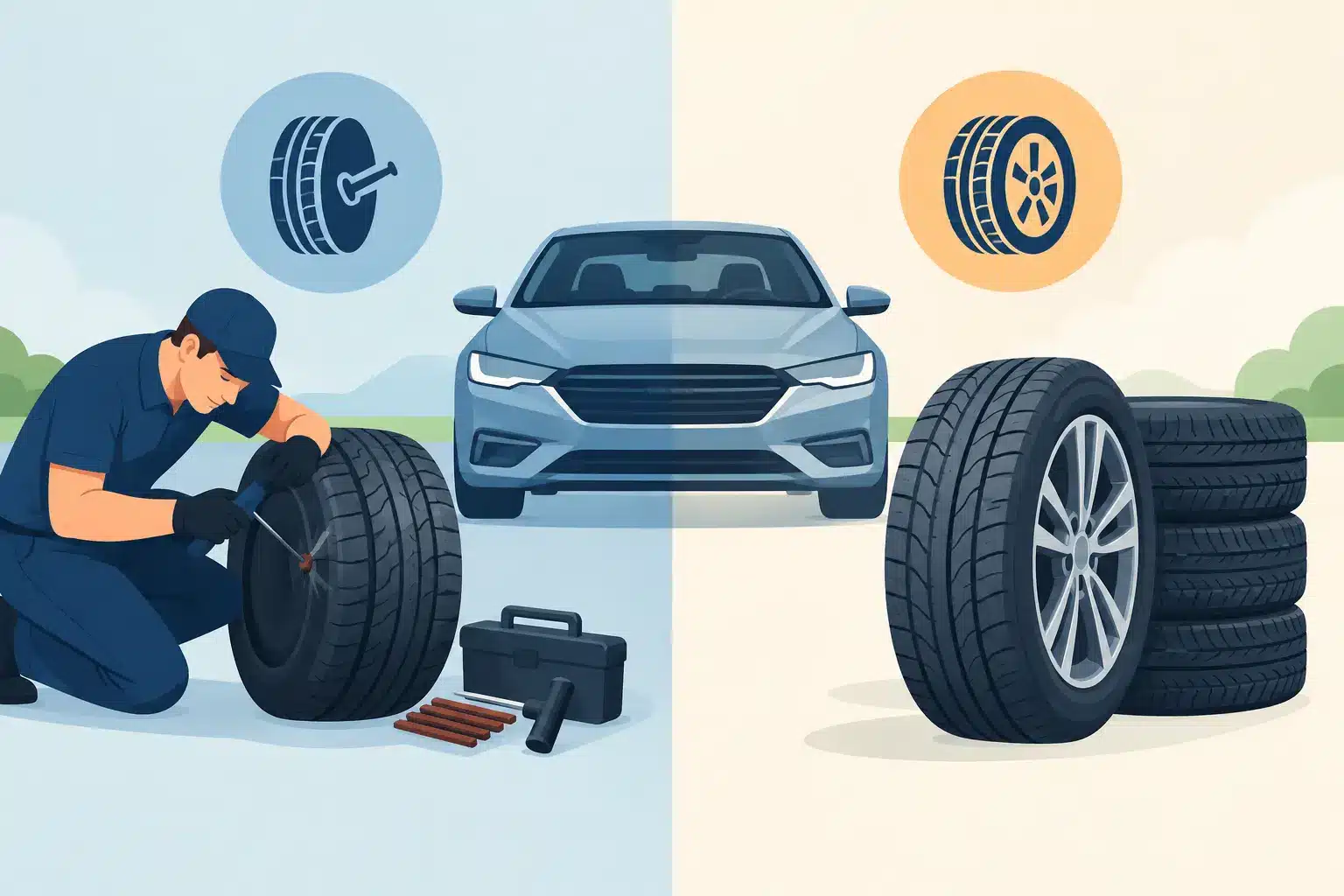
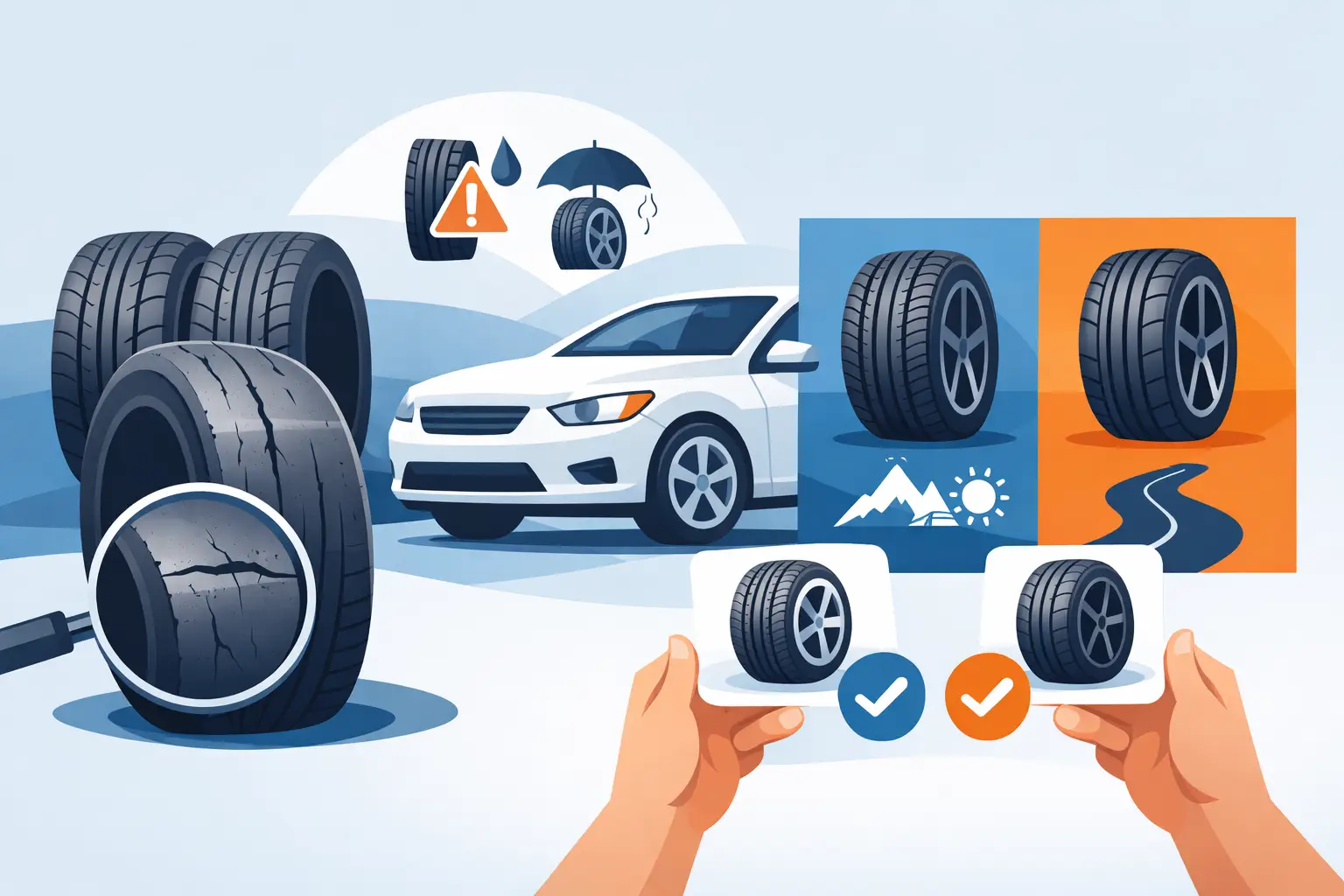
A bulge in the sidewall is particularly serious. It may mean the tire’s internal structure has been damaged, often after hitting a pothole or curb. It cannot be safely repaired. Likewise, not every puncture is repairable. A small puncture in the central tread area may be fixed if the tire has not been driven flat, while damage to the shoulder or sidewall usually means replacement.
Tire age deserves attention too. Rubber hardens and deteriorates over time, even when tread remains. Check the DOT date code on the sidewall. The final four digits show the week and year of manufacture. A tire that is several years old, visibly cracked, or fitted to a vehicle that sits unused for long periods should be professionally inspected.
Choosing Car Tyres That Fit the Job
Start with the size specified for your vehicle. A sidewall marking such as 225/45R17 gives key details: 225 is the tire width in millimeters, 45 is the sidewall height as a percentage of width, R means radial construction, and 17 is the wheel diameter in inches. The remaining markings cover load and speed ratings, which also need to meet the vehicle manufacturer’s requirements.
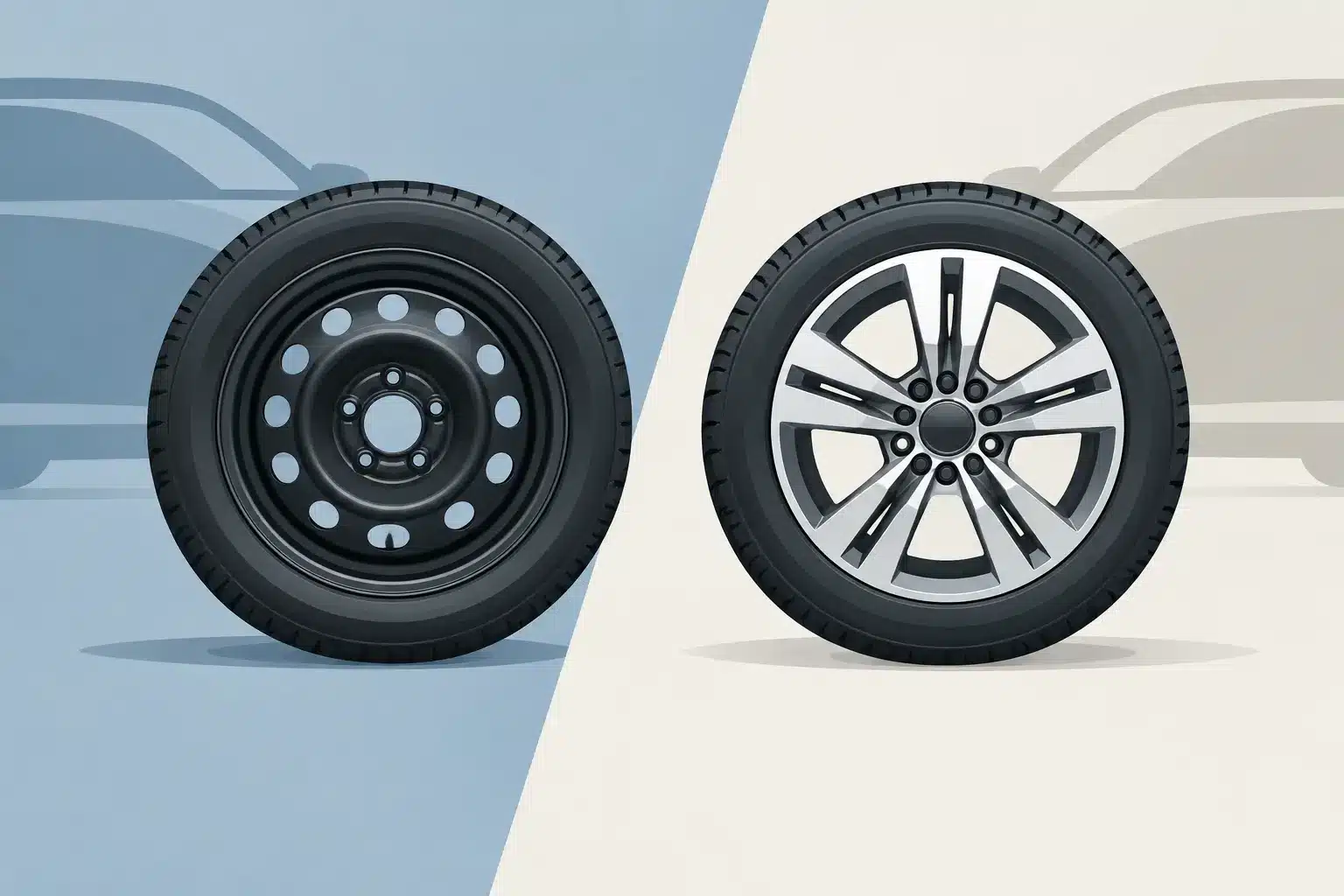
Changing tire size or fitting larger wheels can alter ride quality, speedometer accuracy, clearance, and handling. It can be done well when the overall rolling diameter and load ratings are considered, but it is not a decision to make based on appearance alone. A wheel-and-tire package should be checked for proper fitment before it goes on the vehicle.
For most passenger cars and SUVs, an all-season highway tire is the practical choice. It offers balanced road noise, wet grip, tread life, and fuel efficiency. Drivers who prioritize a quieter ride may prefer a touring tire. Those who enjoy more responsive cornering may choose a performance tire, accepting that it may wear sooner and be less comfortable over rough roads.
Work vehicles need a different calculation. A light-truck tire with a suitable load rating can be a smart investment for tradies carrying tools or towing regularly. It may have a firmer ride than a passenger tire, but the stronger construction and extra carrying capacity can better suit the job. Trailer tires also need their own correct specification. Do not assume an old passenger tire is suitable just because it fits the wheel.
For 4WD owners, all-terrain tires are often the middle ground. They provide more traction on gravel and dirt than a highway tire without the road noise and faster wear that can come with an aggressive mud-terrain pattern. Mud tires make sense for frequent off-road use in soft ground, but they are usually louder on pavement and may not be the best value for a vehicle that spends most of its time on the highway.
Brand matters, but it should not be the only factor. A quality tire from a recognized manufacturer can offer dependable performance, yet the best model still depends on your driving needs and budget. Compare wet grip, treadwear expectations, load rating, warranty support, and intended use. Buying the lowest-priced option may cost more later if it wears unevenly or does not handle your normal workload.
Fitting, Balancing, and Alignment Matter
Even the right tires will not perform properly if the fitting work is skipped or rushed. New tires should be mounted correctly, inflated to specification, and wheel balanced. Balancing reduces vibration at speed and helps protect suspension and steering components.
A wheel alignment sets the angles at which the wheels meet the road. If a vehicle pulls left or right, the steering wheel sits off-center, or the tread is wearing more on one edge, alignment should be checked. Potholes, curbs, worn suspension parts, and everyday road impacts can all knock alignment out over time.
Replacing tires in pairs is usually the sensible approach when only two are needed. Where the newer pair should be fitted depends on the vehicle and tire type, but placing the tires with deeper tread on the rear axle is commonly recommended to improve rear-end stability on wet roads. For all-wheel-drive vehicles, matching tire circumference can be particularly important. Significant differences in tread depth or tire type may place unnecessary strain on the drivetrain, so check the vehicle manufacturer’s guidance before mixing tires.
Simple Habits That Help Tires Last
Check tire pressures at least once a month and before longer trips, when the tires are cold. Include the spare if your vehicle has one. Inspect tread for nails, stones, and irregular wear while you are there. It takes only a few minutes and can catch a slow leak before it becomes a roadside problem.
Rotate tires at the intervals recommended for the vehicle, often during routine service. Rotation spreads wear more evenly, although the correct pattern depends on whether the tires are directional, staggered, or the same size front to rear. Avoid hard acceleration, late braking, and scraping curbs where possible. These habits are easier on tires, brakes, and suspension alike.
If you notice a new vibration, pulling, or uneven wear pattern, have it checked early. Waiting may turn a straightforward balance, puncture repair, or alignment into the cost of replacing tires before their time.
When it is time for new tires, bring the vehicle to Ryan Automotive and Tyres with a clear idea of how you use it every week. A practical conversation about load, towing, daily distance, road conditions, and budget will point you toward a set that keeps your vehicle safe, reliable, and ready for the next trip.