How to Check Tyre Tread Before It Costs You
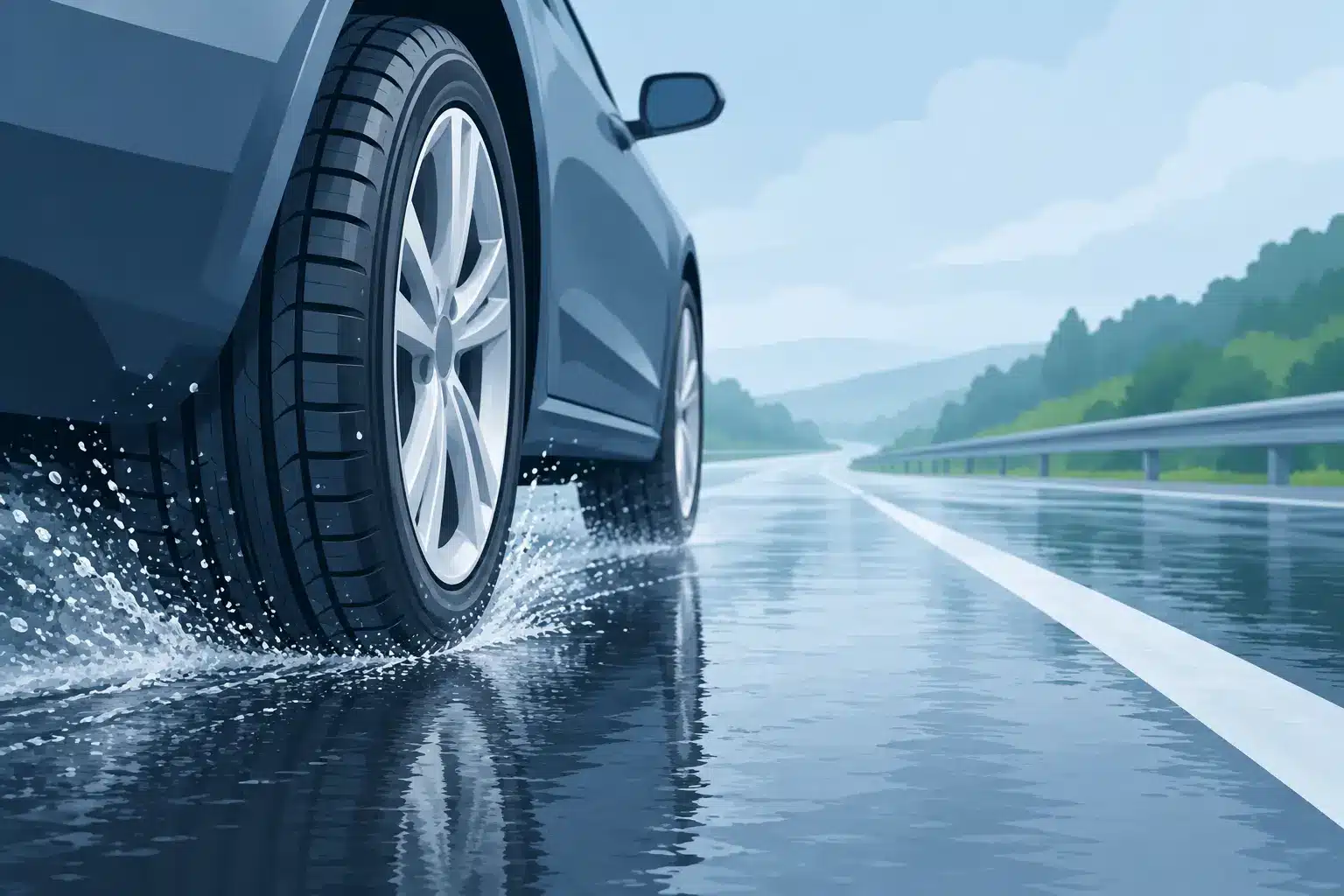
A tire can look perfectly fine from the driveway and still be close to losing grip when the road is wet. That is why knowing how to check tyre tread is not just a maintenance job for your next service. It is a quick safety check that can help you avoid longer stopping distances, poor handling, a failed inspection, and the cost of replacing tires after uneven wear has gone too far.
You do not need a workshop full of equipment to get a useful answer. A few minutes, good light, and a careful look across all four tires will tell you a lot. The key is checking more than one spot and knowing what the tread is trying to tell you about the vehicle.
How to Check Tyre Tread at Home
Start by parking on level ground, applying the parking brake, and turning the front wheels outward if you need better access. Check each tire across the inside edge, center, and outside edge. The visible outer shoulder is easy to inspect, but inner-edge wear is often missed and can point to an alignment or suspension issue.
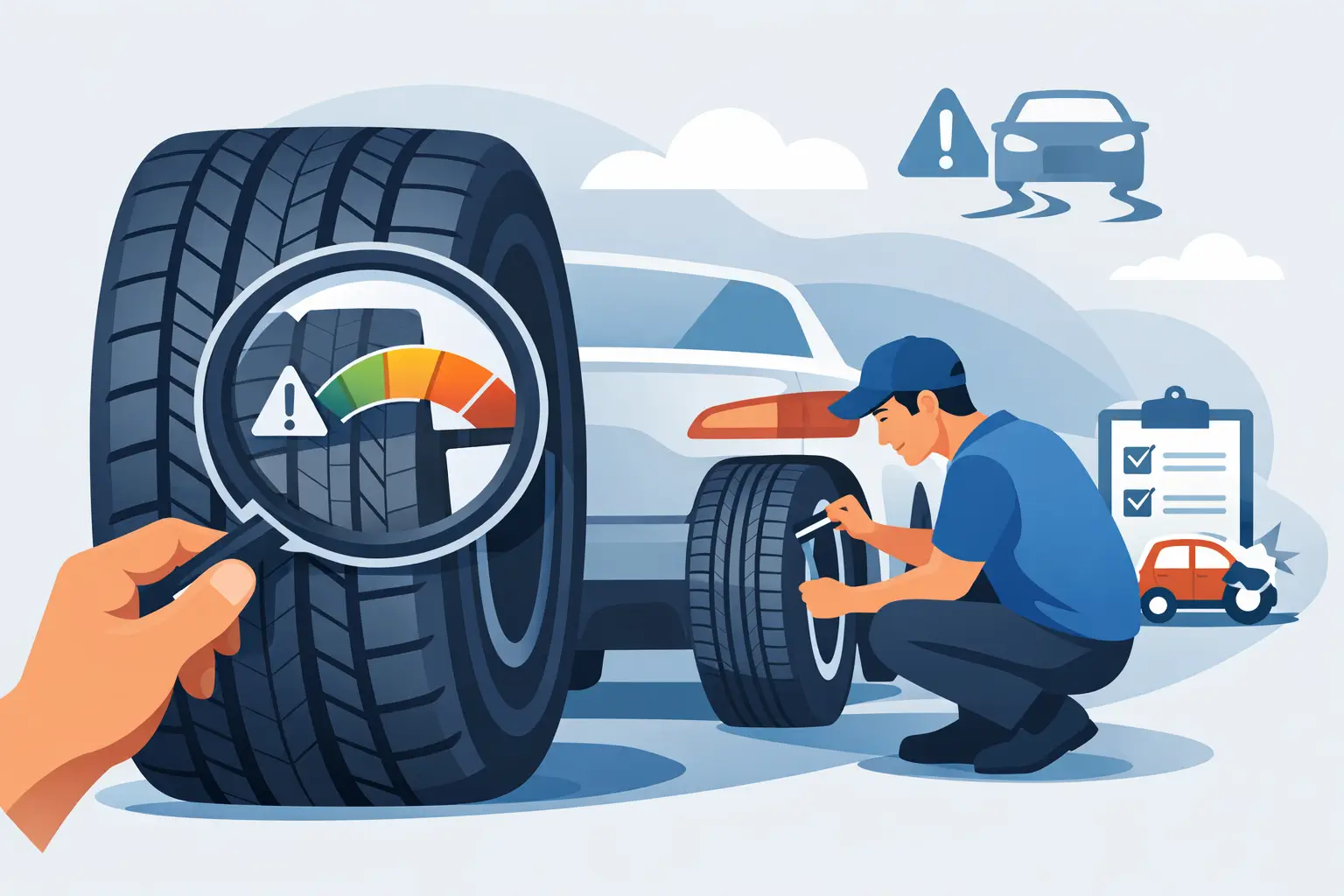
A tread-depth gauge is the most accurate and affordable tool for the job. Place the probe into a main tread groove, not on a raised wear bar, and press the base flat against the tread. Take readings at several points around each tire. One reading is not enough because tires rarely wear at exactly the same rate across their full surface.
If you do not have a gauge, the penny test gives you a basic indication. Place a penny head-first into the tread groove. If the top of Lincoln’s head is fully visible, the tread is at or below 2/32 inch and the tire should be replaced immediately. This is the legal minimum in many parts of the U.S., but it is not a target to aim for.
For better wet-weather safety, use a quarter as an earlier warning. If the tread does not reach the top of Washington’s head, the tire has around 4/32 inch or less remaining. At that point, it may still be legal, but water-clearing ability is reduced. For commuters, family vehicles, work trucks, and anyone who regularly drives in rain, planning replacement before the legal limit is the sensible call.
Find the Built-In Wear Bars
Every road tire has tread-wear indicator bars built into the main grooves. These are small raised bridges of rubber that run across the tread. When the surrounding tread is level with those bars, the tire is worn to 2/32 inch.
Wear bars are useful because they are always there, but do not rely on them alone. By the time they are flush with the tire surface, wet-road traction has already dropped noticeably. A gauge lets you make a replacement decision earlier, on your schedule rather than after a close call or a roadside problem.
Check More Than Tread Depth
Depth matters, but tread condition matters too. Run your hand carefully across the tire surface and look for cracks, cuts, bulges, exposed cords, nails, or embedded screws. A tire with plenty of tread can still be unsafe if its structure has been damaged.
Sidewall bulges deserve special attention. They often happen after a hard impact with a pothole, curb, or road debris and can mean the internal casing has been compromised. Do not keep driving on a tire with a sidewall bulge just because it is holding air. It needs professional inspection and will usually need replacement.
Also look for dry rot, which appears as small cracks in the sidewall or between tread blocks. This is more common on vehicles that sit for long periods, trailers, spare tires, and cars exposed to strong sun. Tire age, storage conditions, and heat all play a part, so a deep tread pattern does not automatically mean the tire is in good working condition.
What Uneven Tire Wear Means
Even tread wear across the tire is what you want. If one area is wearing faster, the tire may be highlighting a mechanical issue that should be fixed before fitting new rubber.
Wear along both outer edges usually suggests underinflation. The tire flexes excessively, putting more load on the shoulders and generating extra heat. Center wear often points to overinflation, where too much pressure makes the middle of the tread carry most of the load.
If the inside or outside edge is worn more than the rest of the tire, wheel alignment is a likely cause. Alignment angles affect how the tire meets the road, and a small issue can remove thousands of miles from a tire’s useful life. A vehicle that pulls to one side, has an off-center steering wheel, or has recently hit a pothole should be checked sooner rather than later.
Cupping or scalloped dips around the tire can indicate worn shocks, struts, suspension components, or an out-of-balance wheel. Feathering, where the tread blocks feel sharp in one direction and smooth in the other, can also point to alignment problems. These patterns are not always a tire-only issue. Replacing the tires without correcting the cause can lead to the same wear on the new set.
When Is the Right Time to Replace Tires?
The answer depends on the vehicle, where it is driven, and the weather it sees. At 2/32 inch, replacement is no longer optional. Before that point, consider how the vehicle is used. A lightly driven car in a dry climate may have a different replacement timeline than a daily commuter, a loaded work vehicle, or a family SUV that sees frequent heavy rain.
Many drivers choose to replace tires around 4/32 inch because wet braking and hydroplaning resistance decline as grooves become shallow. If snow is part of your regular driving, more tread is needed again. Tires that feel acceptable on dry pavement can lose confidence quickly in standing water, slush, or loose gravel.
For all-wheel-drive and four-wheel-drive vehicles, try to keep tread depth reasonably matched across all four tires. A large difference in circumference can put extra strain on drivetrain components. Depending on the vehicle manufacturer’s guidance, replacing one damaged tire may not be the best option. In some cases, replacing a pair or a full set is the safer and more cost-effective choice over time.
Make Tread Checks Part of Routine Maintenance
Checking tire pressure once a month is a good time to look at tread depth and condition. Do it before a road trip, before wet-season driving, and after any impact that felt harder than normal. Tires should be checked cold for the most accurate pressure reading, and the pressure on the driver’s door placard is the number to follow, not the maximum pressure printed on the tire sidewall.
Regular tire rotation also helps tires wear more evenly. The correct rotation pattern depends on whether the vehicle is front-wheel drive, rear-wheel drive, all-wheel drive, or fitted with directional or staggered tires. Rotating at the right interval can extend tire life, but it will not fix an alignment, balancing, or suspension problem already causing irregular wear.
If you are unsure what you are seeing, a tire inspection is usually quicker and cheaper than waiting for a problem to become obvious. A workshop can measure tread accurately, inspect inner edges, check tire pressures, and identify whether alignment, wheel balancing, or worn suspension parts are affecting the tires.
A quick tread check today can give you time to choose the right replacement tires, book work around your schedule, and keep the vehicle dependable for the trips that cannot wait.