Why Is Brake Pedal Soft? Causes and Fixes
A brake pedal should feel firm and predictable under your foot. If you are asking, “why is brake pedal soft,” you have noticed a change worth taking seriously. A pedal that sinks farther than usual, feels spongy, or needs pumping before the vehicle stops can point to a hydraulic brake problem. It is not a fault to put off until the next routine service.
Why Is Brake Pedal Soft?
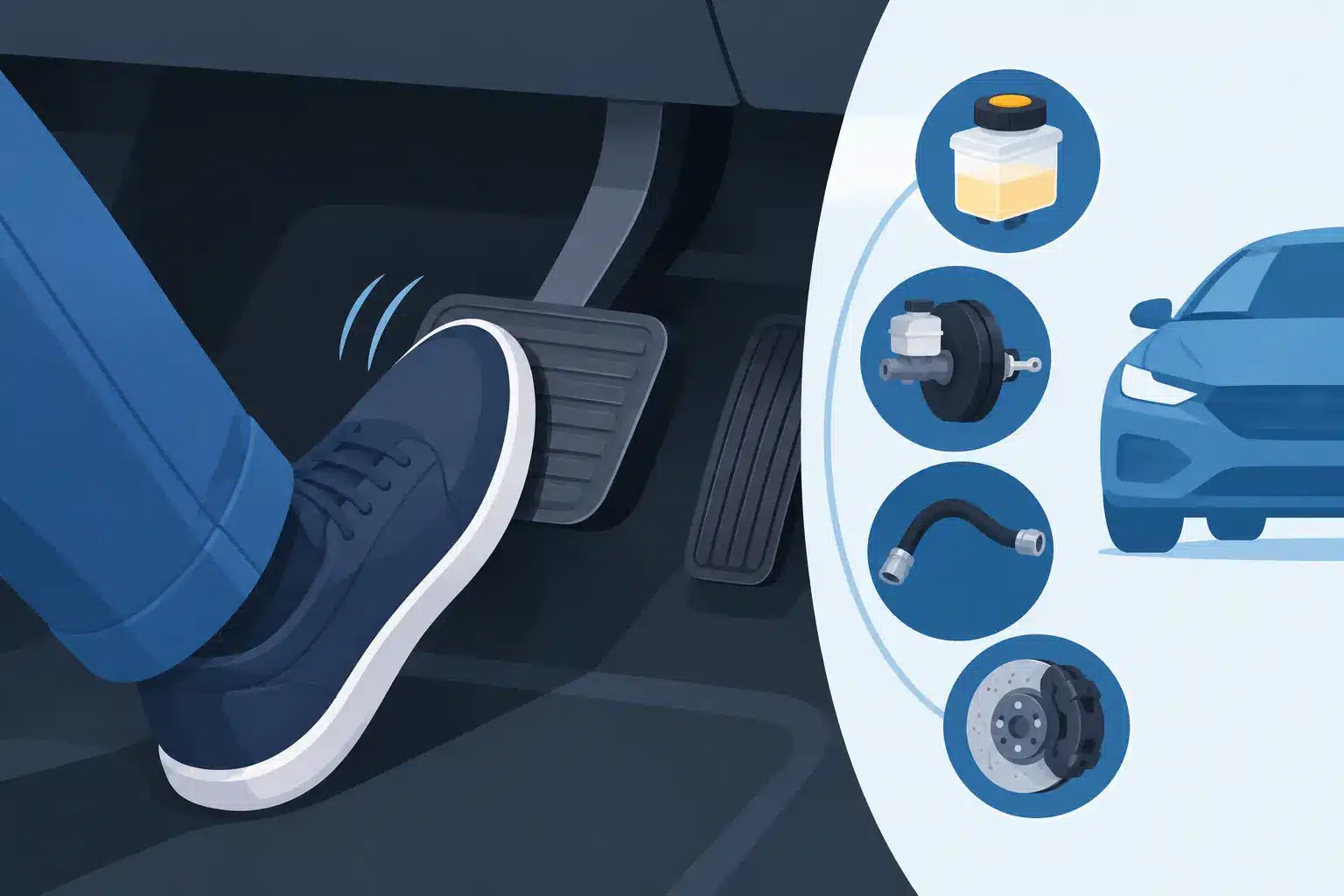
Most passenger vehicles use hydraulic brakes. When you press the pedal, the master cylinder pushes brake fluid through lines and hoses to the calipers or wheel cylinders. That pressure clamps the brake pads or shoes against the rotors or drums.
Brake fluid does not compress easily, so the pedal should transfer your foot pressure quickly and consistently. Air, leaking fluid, worn components, or a fault inside the master cylinder can reduce that pressure. The result is a pedal that feels soft, travels too low, or gradually sinks while you hold it down.
A soft brake pedal is different from a hard pedal. A hard pedal may be related to the brake booster or a vacuum issue. A soft pedal usually involves the hydraulic side of the braking system. Both can affect stopping performance, but they need different checks and repairs.
The Most Common Causes of a Soft Brake Pedal
Air trapped in the brake lines
Air in the brake system is one of the most common reasons for a spongy pedal. Unlike brake fluid, air compresses. Some of your pedal movement is then spent compressing air rather than applying braking force at the wheels.
Air can enter after a brake repair if the system was not bled correctly. It can also enter through a leak, a loose fitting, or a damaged hose. Proper brake bleeding removes air and restores hydraulic pressure, but the workshop should first identify why air entered the system. Simply bleeding the brakes without fixing a leak may only provide a temporary improvement.
A brake fluid leak
Low brake fluid is a warning sign, not a maintenance item to top up and forget. Fluid may leak from a brake line, flexible hose, caliper, wheel cylinder, master cylinder, or a connection between components.
Look for fresh, oily-looking fluid near a wheel, beneath the engine bay, or around the brake master cylinder reservoir. Brake fluid can damage painted surfaces, so avoid wiping it around with a rag or spraying it with household cleaners. A leak can worsen without much warning, especially when a corroded line or aging hose finally fails under pressure.
If the brake warning light is on and the reservoir is low, do not assume the issue is only worn brake pads. Pad wear can lower the fluid level gradually, but a sudden drop needs prompt inspection.
A failing master cylinder
The master cylinder creates the hydraulic pressure that operates the brakes. Its internal seals can wear over time. When that happens, brake fluid may bypass the seals inside the cylinder instead of being pushed through the brake lines.
One common symptom is a pedal that slowly sinks toward the floor while you hold steady pressure at a stop. The pedal may feel normal at first, then continue dropping. There may be no visible puddle because the fluid is leaking internally rather than out of the system.
A master cylinder fault needs professional diagnosis. Other brake issues can create similar symptoms, and replacing parts based on a guess is an expensive way to approach a safety repair.
Old or contaminated brake fluid
Brake fluid absorbs moisture over time. Heat from braking cycles and moisture contamination can lower its boiling point and reduce its effectiveness. Under heavy braking, such as towing, driving through hills, carrying a loaded work vehicle, or repeated stop-start traffic, overheated fluid can create a soft or fading pedal.
Old fluid does not always cause a soft pedal on its own, but it can contribute to poor brake feel and internal corrosion. A brake fluid flush replaces aged fluid with the correct type specified for your vehicle. The correct fluid matters – using the wrong specification can damage seals or create braking problems.
Worn calipers, wheel cylinders, or brake hoses
A sticking or leaking brake caliper can affect braking balance and pedal feel. On vehicles with rear drum brakes, leaking or worn wheel cylinders are another possible cause. Fluid can collect inside the drum, where it may not be obvious during a quick driveway check.
Flexible brake hoses also age from the inside. A hose can swell when pressure is applied, absorbing some of the hydraulic force that should be reaching the brakes. Externally, it may look acceptable. A proper inspection checks the condition of hoses, fittings, calipers, rotors, pads, drums, shoes, and the rest of the braking system rather than focusing on one visible part.
Rear drum brake adjustment
Some vehicles use drum brakes at the rear. When rear brake shoes are out of adjustment, the pedal can travel farther before the shoes contact the drum. The brakes may still work, but the pedal may feel low or require pumping.
This issue is more common on older vehicles, work vehicles, trailers, and cars with rear drums that have not been serviced for some time. Parking brake performance can also be affected. Adjustment may help, but worn shoes, damaged hardware, or leaking wheel cylinders need to be addressed at the same time.
ABS or electronic brake system faults
Modern vehicles have anti-lock braking systems and, in many cases, stability control. These systems use sensors, valves, and hydraulic control units. A warning light, unusual pedal behavior, or a soft pedal after brake work can sometimes involve the ABS system.
This is less common than air or a leak, but it is one reason accurate diagnostics matter. Some vehicles require a scan tool procedure to cycle the ABS hydraulic unit while bleeding the brakes. Skipping that process can leave air trapped where a standard bleed will not remove it.
What to Do When Your Brake Pedal Feels Soft
First, judge the severity. If the pedal goes close to the floor, braking response is poor, the brake warning light is on, fluid is visibly leaking, or the vehicle pulls heavily when stopping, do not keep driving it. Arrange a tow or mobile assistance. The risk is not worth trying to make it home.
If braking is still available but the pedal has clearly changed, drive only as necessary to get the vehicle inspected. Leave extra space, avoid towing or carrying heavy loads, and do not rely on pumping the pedal as a fix. Pumping may temporarily build pressure when air is present, but it does not repair the underlying problem.
Before moving the vehicle, check that the brake fluid reservoir is within the marked range. Do not open components or add random fluid unless you know the correct specification and understand why the level is low. Adding fluid can hide useful evidence of a leak, and overfilling can create its own mess when new pads are fitted later.
How a Workshop Finds the Actual Fault
A reliable brake inspection starts with the basics: brake fluid level and condition, warning lights, pedal feel, and visible leaks. From there, the technician checks brake lines and hoses, calipers or wheel cylinders, pad and rotor condition, rear brake adjustment where applicable, and master cylinder operation.
The vehicle may need to be raised so every wheel-end component can be inspected. Brake systems are interconnected, so the visible symptom is not always where the fault is located. For example, a rear wheel cylinder leak can create a soft pedal even though the front pads look worn but otherwise normal.
Once the cause is confirmed, repairs may include replacing a leaking component, repairing brake lines, fitting hoses, servicing calipers, replacing the master cylinder, adjusting drum brakes, flushing the fluid, and bleeding the system correctly. After repair, pedal feel and brake operation should be tested before the vehicle returns to the road.
Do Not Wait for the Pedal to Reach the Floor
Brake problems rarely become more convenient or less expensive with time. A small fluid leak can become a sudden loss of braking pressure, while contaminated fluid can damage more components inside the system. Early inspection often gives you more repair options and helps avoid bigger damage.
For drivers in Kingswood and Penrith, Ryan Automotive and Tyres can inspect the complete brake system, identify the cause of poor pedal feel, and handle the repair in one workshop. Whether you drive a family car, 4WD, work ute, truck, or trailer, a firm, dependable brake pedal is part of keeping every trip safe.
If your pedal feels different from last week, trust that change. Book a brake check before a short commute, school run, loaded job, or wet-weather stop turns a warning sign into an urgent problem.