Trailer Tyre Pressure Guide for Safer Towing
A trailer can look perfectly fine in the driveway and still be unsafe at highway speed if its tires are underinflated, overloaded, or inflated to the wrong pressure. This trailer tyre pressure guide explains how to find the right cold PSI for your setup, why trailer tires need different treatment from passenger-car tires, and when a quick pressure check can prevent a costly roadside problem.
For anyone towing a box trailer, camper, boat, car trailer, or work trailer, tire pressure is not a set-and-forget number. The correct pressure depends on the tires fitted, the trailer’s loaded weight, the wheel rating, and the manufacturer’s specifications.
Start With the Trailer Manufacturer’s Pressure Label
The best starting point is the tire and loading label or placard fitted to the trailer. It is commonly found on the drawbar, chassis, inside a storage compartment, or near the VIN plate. This label should state the recommended tire size, load range, and cold inflation pressure for the trailer as supplied by the manufacturer.
Follow that pressure if the trailer still has the specified tire size and type. It is based on the trailer’s axle capacity, suspension, and intended maximum loaded weight. If the placard is missing, unreadable, or the wheels and tires have been changed, do not simply copy the pressure used in your tow vehicle.
Trailer tires carry load differently. They generally have stiffer sidewalls and are designed to support a heavy, relatively fixed load rather than provide the ride comfort expected from a car tire. A pressure that feels firm on a passenger vehicle may be normal for a trailer tire.
Check the Tire Sidewall, but Read It Correctly
Every tire sidewall lists a maximum load and the cold pressure needed to carry that maximum load. For example, an ST trailer tire may state that it carries a certain weight at 50 PSI cold. That does not mean every trailer should automatically run 50 PSI, but it does tell you the pressure required for that tire to achieve its full rated capacity.
In many trailer applications, particularly with Special Trailer (ST) tires, the manufacturer may specify that the tires are run at their maximum cold inflation pressure. This helps the tire carry its rated load, limits sidewall flex, and controls heat buildup. However, the trailer placard still takes priority when it is available and matches the tire fitment.
If your trailer uses Light Truck (LT) tires instead of ST tires, the answer can be more dependent on load-and-inflation tables. LT tires may be fitted for durability or off-road use, but they still need enough pressure for the actual axle load. The right PSI is not a guess based on appearance.
Never exceed the lowest pressure rating of the tire, wheel, valve stem, or trailer manufacturer’s specification. A tire capable of 65 PSI is not safe to inflate to 65 PSI if the wheel is rated lower.
Trailer Tyre Pressure Guide: Check It Cold
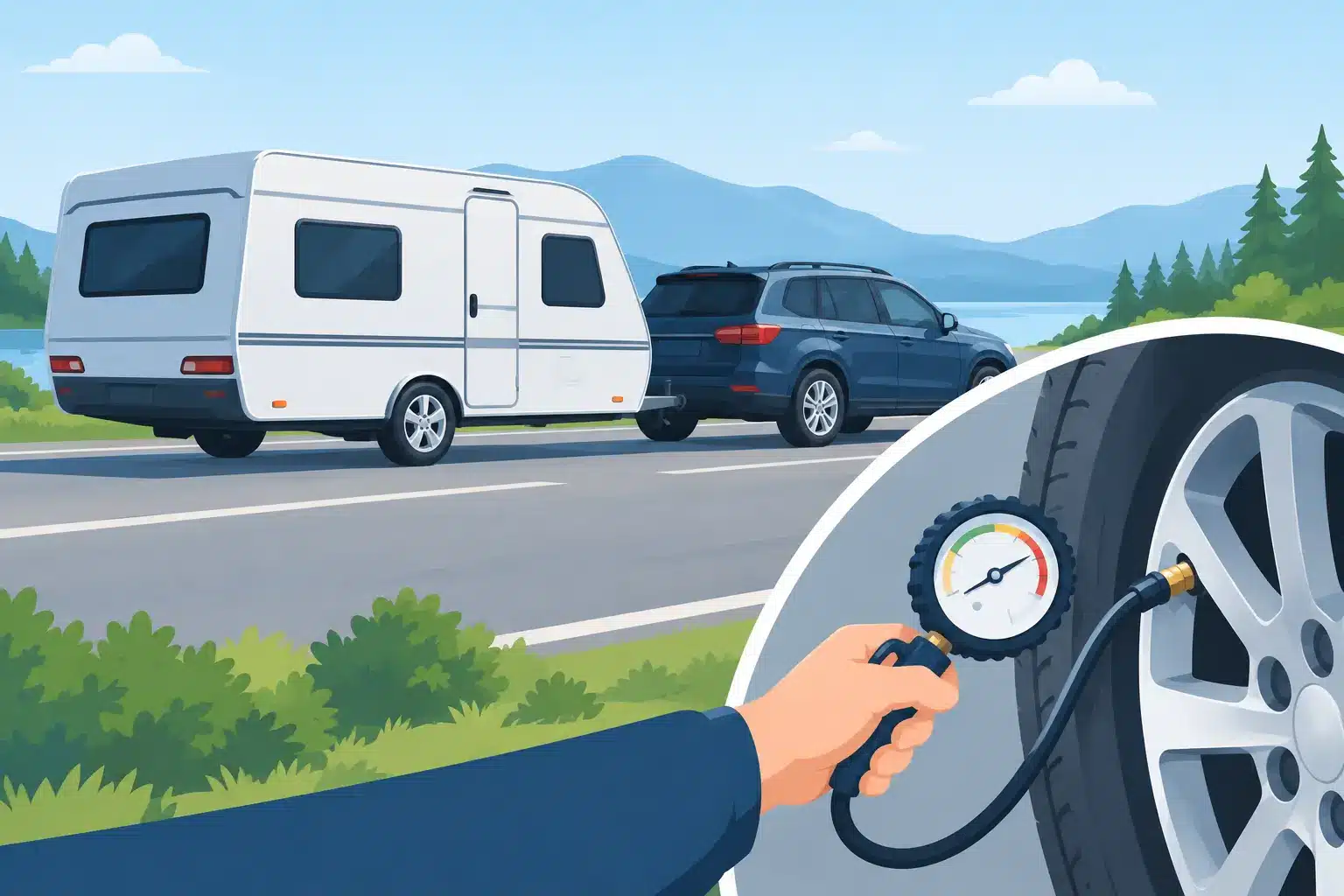
Check trailer tire pressure before setting off, when the tires have been parked for at least three hours and are out of direct heat where possible. This is called cold pressure. Checking after a long drive gives a higher reading because heat increases pressure, and bleeding air from a hot tire can leave it dangerously low once it cools.
Use a quality dial or digital gauge rather than relying on a service-station gauge. Keep the gauge in the tow vehicle so there is no excuse to leave without checking. A portable compressor is also worthwhile for regular towing, especially if you launch boats, travel on gravel roads, or carry changing loads for work.
Pressure should be checked before every significant trip and at least monthly when the trailer is parked. Trailer tires often lose air slowly while sitting, and a trailer can be stored for weeks before anyone notices a soft tire. Check the spare at the same time. A spare with no air is not a backup plan.
Why Underinflation Causes Most Trailer Tire Trouble
Low pressure is one of the main causes of trailer tire failure. An underinflated tire flexes more through its sidewall as it rolls. That flexing creates heat, and heat damages the internal structure of the tire. At highway speeds, a tire can fail long before it looks obviously flat from outside the trailer.
Underinflation also increases rolling resistance, accelerates shoulder wear, and can make the trailer less stable. In a tandem-axle trailer, one low tire may force the other tire on that side to carry more of the load. Tight turns make this even harder on the tires because trailer axles naturally scrub across the road surface.
Overinflation has its own drawbacks. It can reduce the tire’s contact patch, worsen center tread wear, and make an unloaded trailer ride harshly. But do not lower pressure simply to soften the ride unless the trailer manufacturer and tire load rating support it. A trailer that is lightly loaded one day may be fully loaded the next, and inadequate pressure leaves little safety margin.
Match Pressure to the Actual Load
The loaded trailer weight matters more than the empty trailer weight. A small utility trailer can be lightly loaded for a trip to the tip, then carry a heavy pallet of materials, a side-by-side, or landscaping equipment the following week. The tires need enough capacity for the heaviest legal load you plan to carry.
Start by knowing the trailer’s Gross Vehicle Weight Rating (GVWR) and axle ratings. Then weigh the loaded trailer if possible. A public scale is useful because it shows whether the total weight is within limits. Ideally, weigh individual axle loads too, as cargo placement can overload one axle even when the overall trailer weight appears acceptable.
Remember that tongue weight transfers some trailer weight to the tow vehicle, but it does not make tire capacity less important. Poorly balanced cargo can create sway, overload an axle, or put too little weight on the hitch. Load heavy items low and close to the axle area, following the trailer manufacturer’s loading guidance.
Do Not Forget the Wheels, Valves, and Spare
A pressure setting is only safe when the whole assembly is rated for it. Check the wheel stamping or documentation for its maximum load and PSI. Steel and alloy wheels can have different ratings, and aftermarket wheels should never be assumed suitable just because they fit the hub pattern.
Valve stems matter as well. Standard rubber valve stems may not be suitable for higher-pressure trailer applications. If you run high-pressure tires, ask for valve stems rated for the required PSI. Replace cracked valve stems, damaged caps, and leaking valve cores promptly.
Inspect the spare tire for age, cracking, tread separation, and correct pressure. Trailer tires can age out before the tread wears down, especially on trailers that sit outside. If the tire’s date code shows it is getting old, or the sidewall has cracking, have it inspected before a long trip.
Signs Your Pressure or Setup Needs Attention
Uneven wear tells a story. Wear on both outer shoulders often points to underinflation, while excessive center wear can indicate overinflation. One-sided wear may be an alignment, bent axle, worn suspension, or wheel-bearing issue rather than a pressure problem.
Other warning signs include repeated pressure loss, vibration, bulges, visible cracks, a trailer that pulls to one side, or a tire that feels unusually hot compared with the others after a short stop. Do not continue towing on a damaged tire in the hope it will make it home. A trailer tire failure can damage guards, wiring, brakes, and the trailer body in seconds.
If your trailer tires are wearing unevenly or you are unsure whether the wheels, tires, and load rating are matched correctly, Ryan Automotive and Tyres can inspect the setup and help you choose suitable replacements. Getting the pressure right takes only a few minutes, but it gives every trip a safer start.