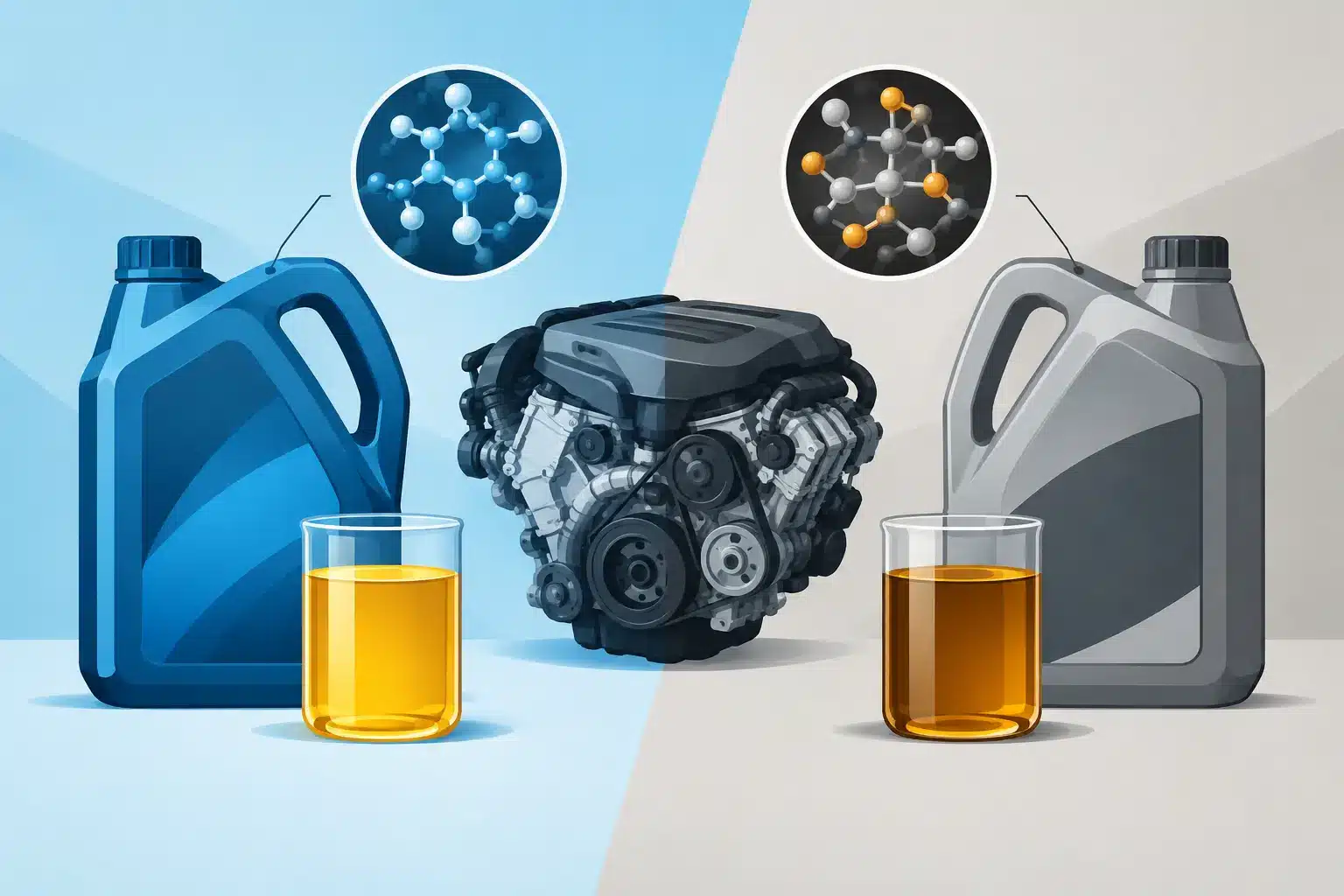
Synthetic Versus Conventional Engine Oil Explained
A low oil level or missed oil change can turn a reliable daily driver into an expensive repair job. Choosing between synthetic versus conventional engine oil is not just about paying more at the service counter. The right oil affects cold starts, engine cleanliness, towing performance, fuel economy, and how well your engine handles heat and stop-start driving.
For most late-model vehicles, the owner’s manual gives a clear starting point: use the oil grade and specification the manufacturer requires. From there, the decision comes down to how you use the vehicle, its age, its condition, and the service interval you want to follow.
Synthetic Versus Conventional Engine Oil: The Main Difference
Conventional engine oil is refined from crude oil. It provides dependable lubrication for many engines, particularly older vehicles and cars with straightforward driving demands. It is usually the lower-cost option and can be a sensible choice when it meets the manufacturer’s required viscosity and specifications.
Synthetic oil is engineered to provide more consistent performance. Its molecules are more uniform, helping it flow well in cold temperatures and remain stable when the engine is working hard. It also generally resists breaking down, thickening, and forming deposits better than conventional oil.
That does not mean synthetic oil is automatically necessary for every vehicle. It means it offers a wider safety margin in tougher operating conditions. For drivers who make short trips, sit in traffic, tow loads, run a work vehicle, or drive a turbocharged engine, that margin can matter.
Why Oil Quality Matters Inside Your Engine
Engine oil has more jobs than simply making parts slippery. It lubricates moving components, carries heat away from critical areas, helps control deposits, protects against corrosion, and supports the operation of systems such as variable valve timing.
As oil ages, heat and contamination reduce its effectiveness. Fuel residue, moisture, dust, and tiny metal particles can build up over time. The oil filter catches much of this material, but no filter can make old, degraded oil perform like fresh oil.
A good oil service uses the correct oil, the correct filter, and the right quantity. It also includes checking for leaks, inspecting the old oil for warning signs, and resetting the service reminder where applicable. Those small details help catch problems before they become breakdowns.
When Synthetic Oil Is Worth the Extra Cost
Synthetic oil is often the better fit for newer engines, especially when the manufacturer specifies it. Many modern engines are built with tighter clearances, turbochargers, direct injection, or extended service intervals that rely on synthetic oil performance.
It is also a practical choice for vehicles exposed to demanding use. A family SUV that spends its week in city traffic, a pickup that tows a trailer, or a 4WD that sees hot conditions and long highway runs all place extra heat and load on the oil. Synthetic oil is better able to maintain its protective qualities in these conditions.
Cold starts are another area where synthetic oil can help. Oil thickens when temperatures drop. Because synthetic oil generally flows more easily when cold, it can reach critical engine components faster after startup. Since a large share of engine wear occurs during startup and warm-up, this can be a meaningful benefit.
Synthetic oil may also help keep internal engine areas cleaner over time. It is not a cure for an engine that has already been poorly maintained, but consistent use with regular oil changes can reduce sludge and deposit formation.
Synthetic Oil Does Not Mean You Can Ignore Service Intervals
One common mistake is assuming synthetic oil allows unlimited time between oil changes. It does not. Even high-quality synthetic oil becomes contaminated, and the oil filter has a limited capacity.
Follow the vehicle manufacturer’s recommended interval, then adjust sensibly for severe use. Frequent short trips, heavy towing, dusty roads, extended idling, and repeated stop-start driving can justify more frequent servicing. If you are unsure, a workshop can recommend a practical interval based on your vehicle and how you drive it.
When Conventional Oil Can Still Make Sense
Conventional oil remains a valid option for some vehicles. If an older engine was designed for conventional oil, is driven moderately, and receives regular maintenance, conventional oil may provide the protection it needs at a lower upfront cost.
It can be a reasonable choice for an older commuter vehicle that does not tow, carry heavy loads, or face extreme temperatures. The key is not choosing the cheapest oil on the shelf. The key is using an oil that meets the correct viscosity and service standard listed in the owner’s manual.
For example, using the wrong weight of oil can affect oil pressure, startup protection, fuel economy, and engine operation. A thicker oil is not automatically better for an older engine, and a thinner oil is not automatically better for a newer one. Modern engines are designed around specific oil flow characteristics.
If an older vehicle has oil consumption or leaks, changing oil type may not solve the underlying issue. A proper inspection is more useful than hoping a different oil will hide a worn seal, gasket, or internal engine problem.
What About Synthetic Blend Oil?
Synthetic blend oil sits between conventional and full synthetic oil. It combines conventional base oil with a portion of synthetic oil, offering some improved resistance to heat and breakdown without the full cost of a synthetic service.
For some trucks, SUVs, and higher-mileage vehicles, a blend can be a sensible middle ground. Still, it should only be used if it meets the manufacturer’s requirements. If the manual calls for full synthetic oil, a blend is not a substitute simply because it costs less.
How to Choose the Right Oil for Your Vehicle
Start with the manufacturer’s oil specification. Look for the required viscosity, such as 0W-20, 5W-30, or 10W-30, along with any required performance standards. These details matter more than marketing claims on the bottle.
Next, consider your driving pattern. A vehicle used mainly for long, steady highway trips has an easier life than one making several short runs each day. A work truck carrying tools, a trailer operator, and a 4WD driven off-road should be treated as severe-use vehicles even if the odometer reading is not high.
Finally, factor in the vehicle’s age and maintenance history. A well-maintained older car may continue happily on a suitable conventional or blend oil. A newer turbocharged vehicle will usually benefit from, and may require, full synthetic oil. The best answer is based on the engine in front of you, not a one-size-fits-all rule.
Signs Your Engine May Need Attention Between Oil Changes
Check the oil level regularly, especially before a long trip, after towing, or if your vehicle has a history of using oil. Park on level ground, allow the engine to sit for a few minutes, and use the dipstick if your vehicle has one.
Do not ignore an oil pressure warning light. Stop safely and switch off the engine as soon as possible. Low oil pressure can cause serious damage quickly. Burning oil smells, blue exhaust smoke, fresh oil spots under the vehicle, ticking noises, or a sudden drop in oil level are also reasons to book an inspection.
At Ryan Automotive and Tyres, an oil service can be part of a broader check of your vehicle’s condition, including filters, fluids, tires, brakes, and visible leaks. For busy drivers around Kingswood and Penrith, handling those checks in one visit helps reduce downtime and keeps small issues from becoming bigger repairs.
The Practical Choice
Full synthetic oil usually costs more at the time of service, but it can be good value when it is required by the manufacturer or when your vehicle works hard. Conventional oil can still be cost-effective for the right older vehicle, provided it meets the correct specification and is changed on schedule.
The most expensive option is not always the right one, but the wrong oil or a delayed oil change can be far more costly than either. Bring your owner’s manual details, explain how you use the vehicle, and choose an oil service plan that protects the engine you rely on every day.