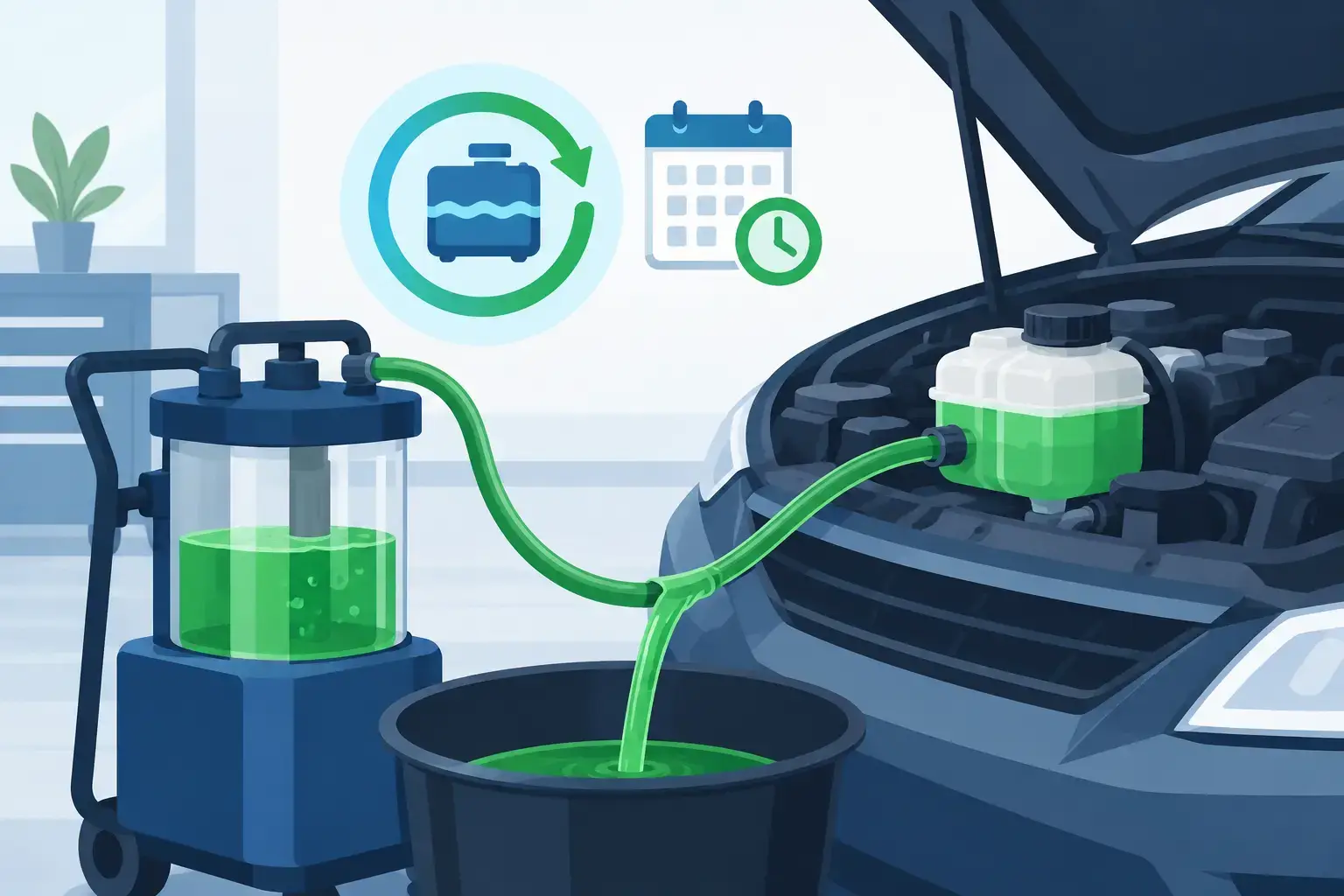
What Is the Right Coolant Flushing Interval?
A missed coolant flushing interval can turn a simple maintenance job into an overheating repair, a leaking radiator, or damage to the water pump and engine. Coolant does far more than stop the engine from freezing. It controls heat, prevents corrosion inside the cooling system, lubricates key components, and helps protect hoses, seals, and the radiator.
The right schedule is not the same for every vehicle. Your vehicle’s coolant type, age, engine design, and working conditions all matter. The best starting point is always the maintenance schedule in the owner’s manual, then adjust when there are signs the cooling system needs attention sooner.
What Is a Typical Coolant Flushing Interval?
Many newer vehicles using long-life coolant are scheduled for their first coolant replacement around 100,000 miles or five years, with later services often due every 50,000 miles or five years. Some manufacturers specify longer intervals, while older vehicles using conventional green coolant may need service every two to three years or around 30,000 miles.
Those figures are useful guides, not a rule to apply to every car, truck, or SUV. A work vehicle that sits in traffic, tows a trailer, carries tools every day, or runs in hot weather puts more strain on its cooling system than a lightly used commuter. In those cases, checking the coolant condition before the factory interval is sensible.
Do not rely on coolant color alone. Green, red, blue, pink, orange, and yellow coolants can use very different corrosion inhibitors, and color is not a universal identification system. Two coolants that look similar may not be compatible. Using the correct specification for your vehicle matters more than matching what is already in the reservoir by appearance.
Why Coolant Does Not Last Forever
Fresh coolant is a mix of antifreeze and water, usually at a 50/50 ratio for most road vehicles. The antifreeze helps manage extreme temperatures, while the additives in the coolant protect metal parts from rust, scale, and electrolysis.
Over time, those protective additives wear out. The coolant may still look fairly clean, but it can lose its ability to stop corrosion inside the radiator, heater core, engine passages, and water pump. This is where delayed maintenance becomes expensive. Internal corrosion can restrict coolant flow, damage seals, and create deposits that make it harder for the engine to shed heat.
Coolant can also become contaminated by tap water minerals, rust, oil, combustion gases, or mixed products. A vehicle that has had cooling system repairs, a radiator replacement, or a hose failure may need a coolant service earlier than the normal schedule. The system has been opened, and the original fluid may have been lost or contaminated.
Coolant Flush or Drain and Refill?
People often use the words interchangeably, but a flush and a drain-and-refill are not always the same service. A drain-and-refill removes coolant from the radiator and accessible parts of the system, then replaces it with the correct new coolant mixture. Some old fluid can remain in the engine block and heater core.
A proper coolant flush is more thorough. It is used when the system contains heavy rust, incorrect coolant, contamination, or significant buildup. The technician may use approved equipment and a cleaning process to circulate fluid through the system before refilling it to the correct specification.
More aggressive is not automatically better. Some older systems with neglected coolant or fragile components need a careful inspection before any flush procedure. Disturbing heavy deposits can expose existing leaks or loosen debris. That does not mean the old coolant should be left in place. It means the workshop should assess the condition of the system and choose the right approach rather than selling a one-size-fits-all service.
Signs You Should Not Wait for the Scheduled Interval
The factory maintenance schedule assumes the cooling system is working normally. If your vehicle shows a problem, waiting until the next listed service can put the engine at risk. Book an inspection if you notice any of these signs:
- The temperature gauge is running hotter than normal or fluctuating while driving.
- Coolant looks rusty, cloudy, oily, gritty, or has floating debris in the reservoir.
- You smell a sweet odor around the vehicle, notice a puddle under it, or need to top up coolant regularly.
- The heater blows cold when the engine is warm, or the air temperature changes unexpectedly.
- There is white crust around hose connections, the radiator cap, water pump, or coolant reservoir.
An overheating engine is not a situation to test by continuing to drive. Pull over safely, switch the engine off, and allow it to cool. Never remove a radiator cap or coolant reservoir cap from a hot system. Pressurized hot coolant can cause serious burns.
Driving Conditions That Can Shorten the Interval
A vehicle used for short runs may never spend enough time at steady operating temperature, which can increase moisture and contamination in the system. Stop-start traffic also makes the cooling fan, radiator, and coolant work harder than highway driving.
Towing is another major factor. Trailers, loaded work vehicles, and 4WDs carrying gear make the engine produce more heat, especially on hills or during summer. If you drive a truck, use a trailer regularly, or take a 4WD off-road, include cooling system checks in your regular service routine. A coolant test, pressure check, and visual inspection can identify trouble before a long trip or busy work week.
Age matters as well. Rubber hoses, clamps, radiator tanks, thermostat housings, and water pumps wear over time. Even if the coolant test looks acceptable, a small leak or weak cap can reduce the system’s pressure and lower its boiling point. That can cause overheating under load even when the vehicle seems fine around town.
Use the Coolant Your Vehicle Calls For
The safest option is to use coolant that meets the manufacturer’s required specification. Universal coolant can be suitable for some vehicles, but only when it is clearly approved for that application. Guessing based on color is risky, and mixing incompatible formulas can reduce corrosion protection or create sludge.
Water quality matters too. If coolant needs to be mixed, distilled or demineralized water is generally preferred because it does not introduce the minerals found in ordinary tap water. Pre-mixed coolant is convenient and avoids ratio mistakes, though concentrated coolant can make sense where a different mixture is required for extreme conditions.
Avoid adding straight water as a permanent fix unless it is an emergency and there is no alternative. Water alone does not provide the same corrosion protection, lubricity, or freeze and boil protection. Once the immediate issue is handled, have the cooling system checked and restored with the correct coolant mixture.
What a Proper Cooling System Service Should Include
A worthwhile coolant service is more than pouring new fluid into the reservoir. The system should be inspected for external leaks, brittle hoses, loose clamps, radiator damage, and signs of corrosion. The technician should verify the coolant specification, test its condition where appropriate, and check that the radiator cap can hold pressure.
The old coolant needs to be drained or flushed according to the vehicle’s needs, then replaced with the correct product and mixture. Air must be bled from the system afterward. Air pockets can cause poor heater performance, erratic temperature readings, or overheating, particularly on vehicles with complicated cooling circuits.
A road test or warm-up check helps confirm the thermostat is opening correctly, the cooling fan operates when required, and the temperature remains stable. If the vehicle has been losing coolant, the job should also include finding the cause. Topping it up without locating a leak only delays the repair.
When to Have It Checked
Check the owner’s manual first, then use your driving conditions and the coolant’s actual condition to make the call. For a newer vehicle with documented servicing and the correct long-life coolant, following the manufacturer interval is usually the right move. For an older vehicle, a recently purchased used vehicle with an unclear history, or a hard-working truck or 4WD, an earlier inspection is cheap insurance.
At Ryan Automotive and Tyres, a cooling system check can be handled alongside your regular service, tire work, or pre-trip inspection, saving you another stop. If your temperature gauge has changed, coolant level keeps dropping, or you are unsure what fluid is in the vehicle, get it looked at before the next hot day, heavy load, or long drive asks more from the engine than the system can handle.