How to Rotate 4WD Tyres for Even Tread Wear
A 4WD can hide uneven tire wear for a while. The vehicle may still feel planted on the highway and capable on a dirt track, but worn shoulder blocks, cupping, or mismatched tread depth can catch up with you fast. Knowing how to rotate 4wd tyres is one of the simplest ways to protect traction, improve tire life, and avoid replacing an expensive set earlier than necessary.
For work utes, family SUVs, touring rigs, and weekend off-road vehicles, tire rotation is not a one-size-fits-all job. The correct pattern depends on your tire design, wheel setup, spare tire, and the way your vehicle is used. A proper rotation should always include an inspection for alignment, balance, suspension, and tire damage.
Why 4WD tire rotation matters
Four-wheel-drive vehicles are heavier than many passenger cars, and they are often asked to do more. Towing, carrying tools, long freeway commutes, gravel roads, steep driveways, and low-range work all place different loads on the tires.
Front tires commonly wear faster on the outer shoulders because they handle most of the steering forces. They also take extra load during braking. Rear tires can wear differently when a vehicle carries a canopy, tools, camping gear, or a heavy tow-ball load. If you leave every tire in the same position for its full life, those wear differences become more pronounced.
Rotation spreads the workload around the vehicle. That helps preserve a more even tread depth across the set, which supports predictable braking, wet-weather grip, handling, and road noise. It can also make it easier to replace all four tires together, rather than trying to match one or two worn tires with new ones.
That last point matters on many 4WD systems. Large differences in rolling diameter between tires can put unnecessary strain on driveline components, particularly when four-wheel drive is engaged. Always follow your vehicle manufacturer’s limits for tread-depth differences.
When to rotate 4WD tires
A practical starting point is to rotate your tires about every 5,000 to 7,500 miles, or at each regular service if that interval suits your driving. Check the tire manufacturer’s advice and your owner’s manual first, as some vehicles have specific requirements.
You may need to rotate sooner if your 4WD does a lot of hard work. Regular towing, rough roads, off-road travel, heavy loads, frequent short trips, or aggressive all-terrain and mud-terrain use can speed up irregular wear. It is worth checking tread and tire pressures before a big trip, then again once you return.
Do not wait until the tires look obviously worn. By then, an alignment issue or worn suspension component may have already removed a useful amount of tread. Early checks cost less than prematurely replacing a set of quality tires.
Check the tires before moving them
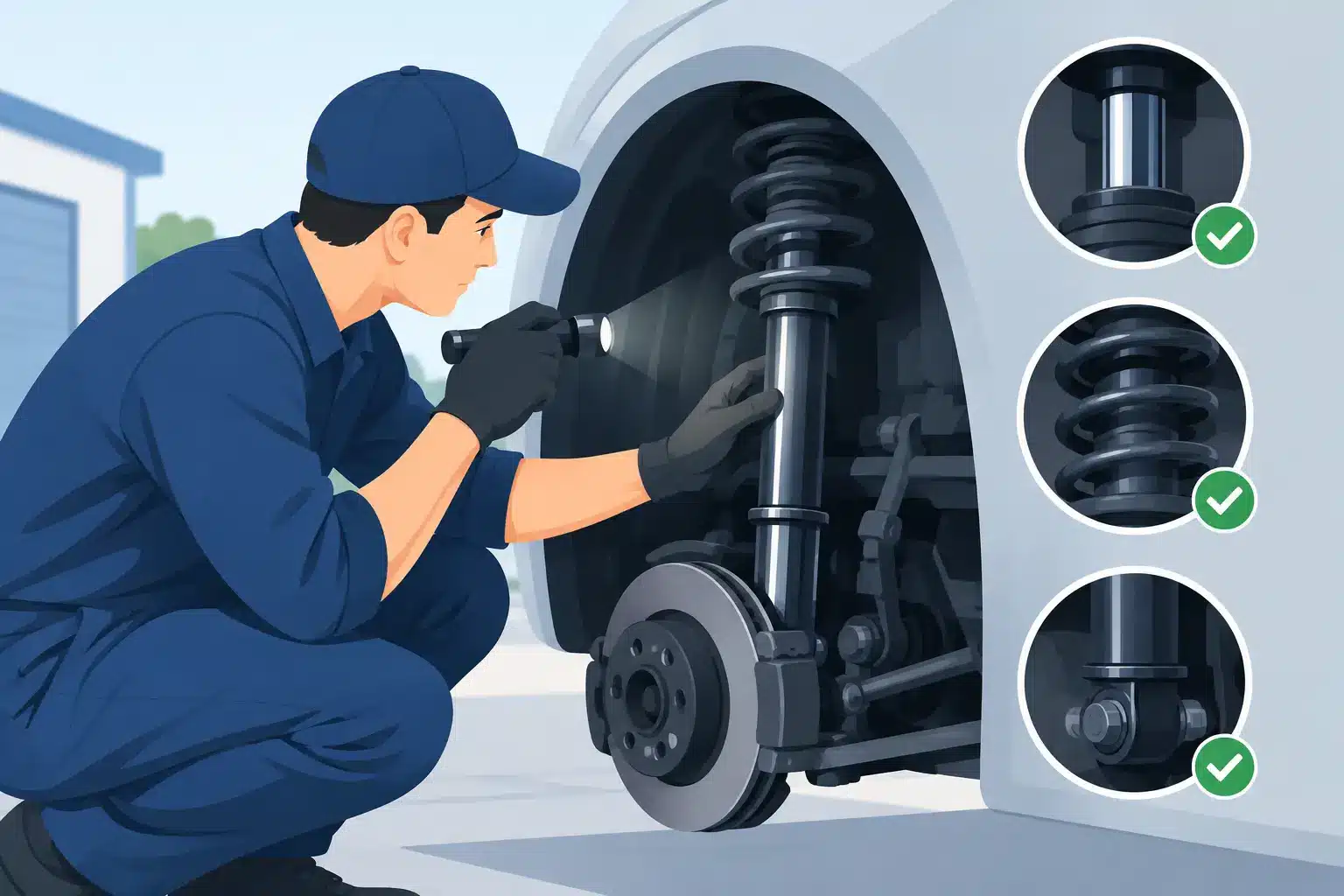
Rotation does not fix the cause of uneven wear. It only moves the tires, so inspect each one before it changes position. Look across the tread rather than checking one spot only.
Feathering, where one edge of each tread block feels sharp and the other feels rounded, can point to alignment problems. Wear concentrated on one shoulder may come from poor alignment, underinflation, or hard cornering. Wear down the center of the tread often suggests overinflation. Cupping or scalloped patches can be linked to wheel balance, worn shocks, or suspension wear.
Also check for punctures, sidewall damage, cracks, exposed cords, missing tread blocks, and stones lodged in the grooves. Mud-terrain tires can pick up damage that is easy to miss after a trail day. If one tire has significantly less tread than the others, ask a tire professional whether it should stay in service and whether the rest of the set is still suitable for your 4WD system.
How to rotate 4WD tyres with the right pattern
The right rotation pattern is determined mainly by the tire and wheel setup, not just the fact that the vehicle is four-wheel drive. Before starting, check whether your tires are directional, asymmetrical, or a conventional non-directional design.
Non-directional tires on same-size wheels
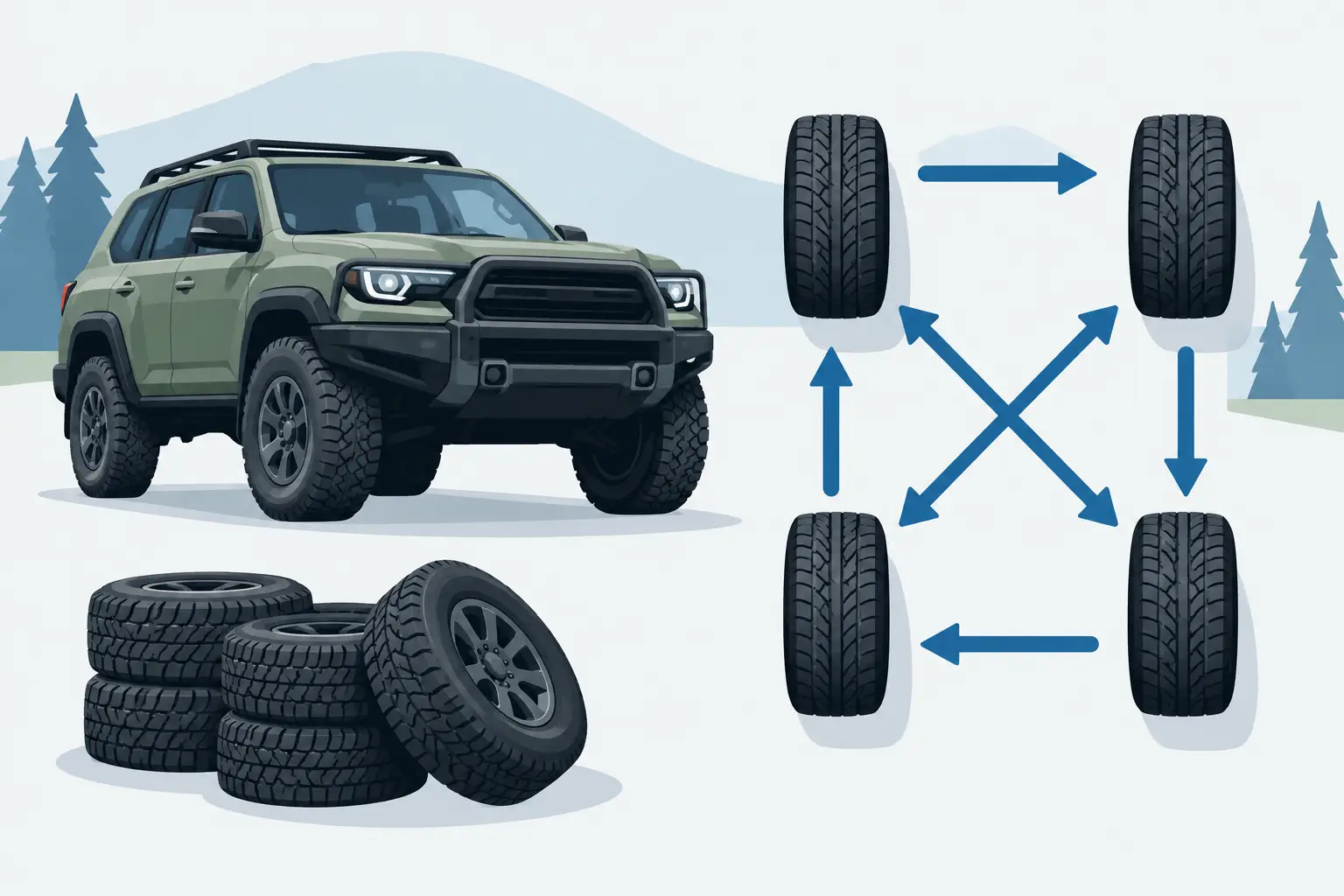
Most 4WDs with four same-size, non-directional tires can use a cross-rotation pattern. A common approach is to move the rear tires straight to the front, then cross the front tires to the opposite sides at the rear. This pattern helps distribute front steering wear across the rear axle over time.
Some tire manufacturers recommend the reverse pattern instead, with front tires moving straight back and rear tires crossing to the front. Either may be suitable depending on the tire construction and vehicle. The tire maker’s instructions take priority.
Directional tires
Directional tires are designed to roll in one direction. Their tread pattern often uses arrows on the sidewall showing the correct direction of rotation. These tires should generally move from front to rear on the same side of the vehicle. Crossing them to the other side would make them rotate backward unless they are removed from the wheels and remounted.
Asymmetrical tires
Asymmetrical tires have an inside and outside sidewall marking. They can usually be moved to another corner of the vehicle, provided the outside marking remains facing outward. However, the recommended pattern can vary, so check the tire manufacturer’s guidance before crossing them.
Staggered wheel and tire setups
If your 4WD has wider rear tires or different wheel sizes front to rear, front-to-back rotation is usually not possible. You may only be able to swap each tire from side to side if the tire design allows it. These setups often look sharp, but they can limit rotation options and may result in faster replacement cycles.
Using the spare tire
If your vehicle has a full-size spare that matches the other four tires exactly, a five-tire rotation can extend the life of the entire set. The spare must be the same size, construction, and ideally the same model as the road tires. Check its age, pressure, and condition before adding it to the rotation.
Do not include a temporary spare, a damaged spare, or a tire that is substantially different from the rest. On a 4WD, a mismatched spare may be fine for a short emergency trip, but it is not a long-term replacement for a correctly matched tire.
Rotate safely or have it done professionally
If you rotate tires at home, work on level ground and use the correct lifting points from the owner’s manual. Use properly rated jack stands rather than relying on a jack alone. Mark each tire’s original position before removing it, then set tire pressures to the vehicle placard specification after the rotation.
Wheel nuts need to be tightened in the correct sequence and torqued to the manufacturer’s specification with a torque wrench. Too loose is dangerous, while overtightening can damage studs and make roadside wheel changes difficult. After driving a short distance, it is sensible to recheck wheel-nut torque if your vehicle manufacturer recommends it.
A workshop rotation has another advantage: it creates a good opportunity to inspect brakes, suspension, wheel balance, and alignment. If the steering wheel is off-center, the vehicle pulls, or the tread is wearing unevenly, an alignment check should be part of the job. Freshly rotated tires will not stay even for long if the alignment is out.
Do not rotate away a warning sign
A tire that has a bulge, deep cut, exposed cords, severe cupping, or repeated pressure loss needs attention before it goes back on the road. The same applies if a tire is near its legal or safe tread limit. Rotation can maximize the service life of healthy tires, but it cannot make a compromised tire safe.
For drivers around Kingswood and Penrith, Ryan Automotive and Tyres can rotate and inspect your 4WD tires while checking the mechanical issues that often cause uneven wear. Whether your vehicle is used for school runs, site work, towing, or weekend tracks, keeping the tires matched, correctly inflated, and evenly worn gives you a better chance of getting home without an avoidable tire problem.
Make tire rotation part of your regular maintenance routine, not something you remember only when a trip is coming up. A few minutes of inspection at the right interval can protect a much bigger investment in tires, driveline parts, and safe everyday driving.