Car Batteries: Signs It’s Time for a Replacement
A car that will not start can bring a workday, school run, or weekend trip to a stop fast. Car batteries often give warning signs before they fail completely, but they are easy to miss until the engine only clicks or the dash lights go dim. Knowing what to watch for can save you from an unexpected breakdown and help you replace the battery before it becomes urgent.
How Long Do Car Batteries Last?
Most car batteries last around three to five years, although the real answer depends on how the vehicle is used, where it is parked, and the battery quality. Heat is especially hard on batteries because it speeds up the chemical reaction inside and can shorten their service life. Short trips can also be a problem. If the engine is started frequently but does not run long enough, the alternator may not fully recharge the battery.
A vehicle used every day on longer drives may keep its battery charged better than a car that sits for weeks at a time. On the other hand, a work vehicle with extra lights, accessories, tools, or a fridge may place more demand on the electrical system. The battery needs to match the vehicle and the way it is used, not just fit in the tray.
If your battery is approaching the three-year mark, a quick test during a regular service is sensible. A test can show whether it still has enough cranking capacity, rather than relying only on whether the car happened to start that morning.
Warning Signs Your Battery Is Running Down
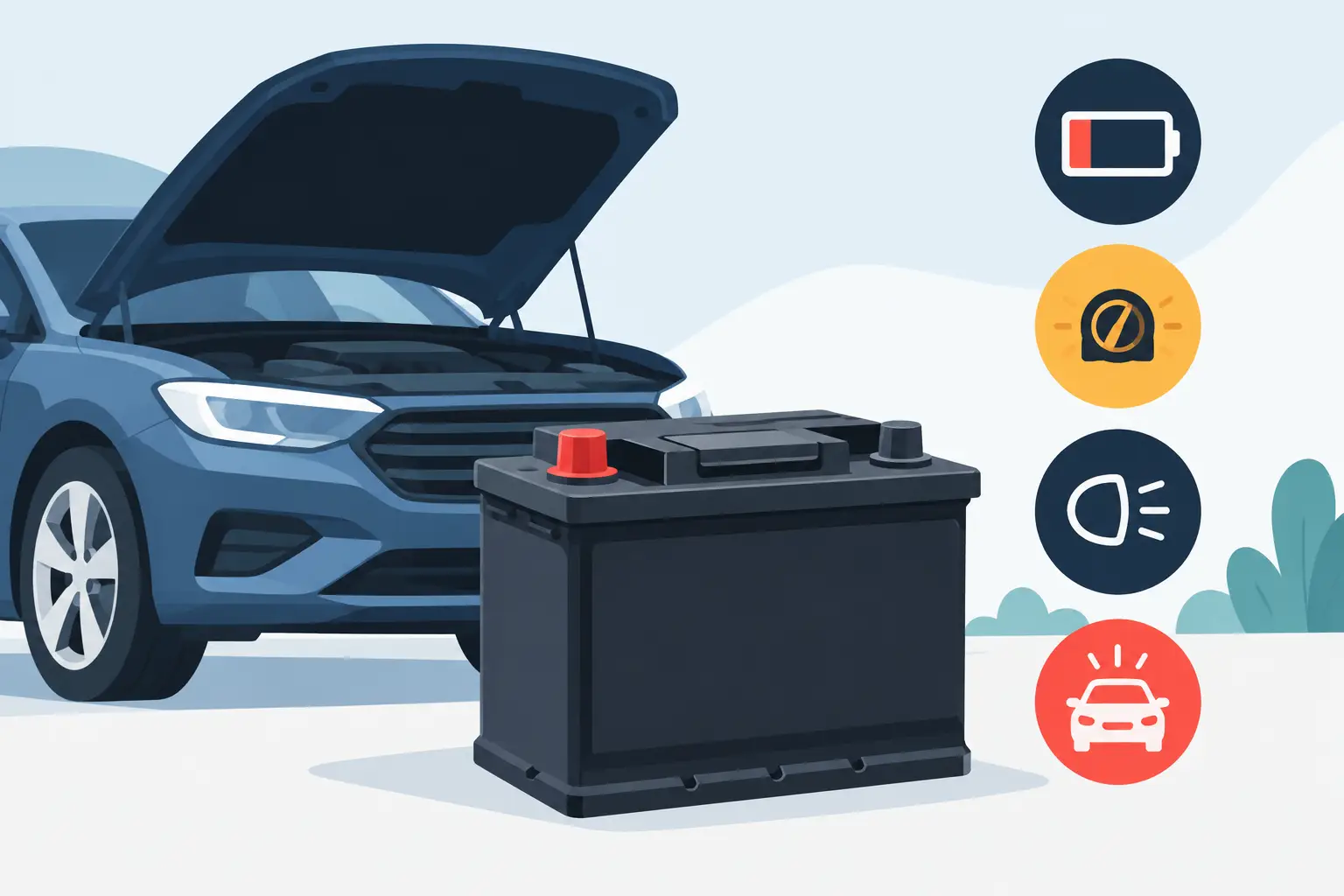
Slow cranking is one of the clearest signs. The engine may still start, but it turns over more slowly than usual, particularly first thing in the morning. You might also notice headlights dimming at idle, power windows moving slowly, a clock or radio resetting, or dashboard warning lights appearing unexpectedly.
A clicking sound when you turn the key or press the start button commonly points to a low battery, though loose terminals, poor cable connections, a starter fault, or charging-system trouble can cause similar symptoms. That is why testing matters. Replacing a battery will not solve the problem if the alternator is not charging correctly.
Look under the hood occasionally as well. Corrosion around the battery terminals, a swollen battery case, a rotten-egg smell, or fluid leakage all need attention. Do not try to force a swollen battery into service. It is unsafe and should be replaced promptly.
Choosing the Right Car Battery
The cheapest battery is not always the best value. A battery that is undersized for the vehicle may start it for a while, but it can struggle in hot weather, wear out sooner, and leave less reserve capacity when accessories are in use. The right choice comes down to fitment, electrical rating, technology, and intended use.
Start with the physical size and terminal layout. The battery must sit securely in its tray, with cables reaching the correct terminals without stretching or rubbing. Next, check the cold cranking amps, usually called CCA. This rating indicates how much starting power the battery can supply in cold conditions. Even in warmer areas, adequate CCA gives the starter a stronger reserve when a battery is older or the engine needs more effort to turn over.
Reserve capacity also matters. It measures how long a battery can support the vehicle’s electrical system if the charging system is not operating as it should. This is particularly relevant for vehicles with accessories, aftermarket audio, additional lighting, winches, or work equipment.
Many newer vehicles use start-stop systems and require AGM or EFB batteries. These are built to handle frequent starts and deeper cycling. Fitting a standard flooded battery to a vehicle designed for AGM or EFB technology can lead to poor performance and a shorter battery life. Some vehicles also need the replacement battery registered or reset through diagnostic equipment so the charging system can manage it correctly.
Why a Battery Test Beats Guesswork
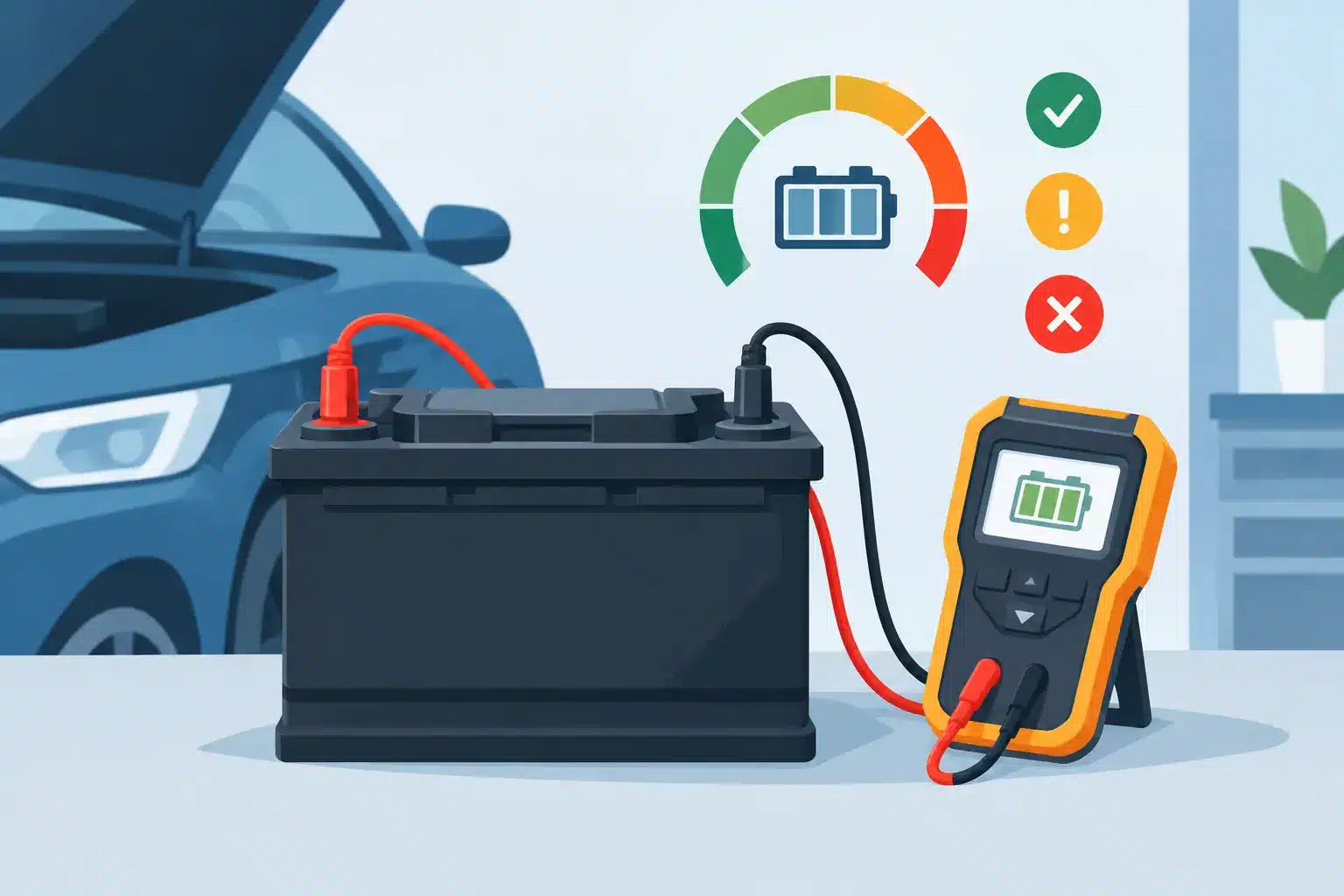
Voltage alone does not tell the whole story. A battery can show close to 12 volts at rest yet lose voltage quickly when the starter places it under load. A proper battery test checks its condition and available cranking power, while a charging-system check can confirm whether the alternator is keeping the battery charged.
This is useful when a car has needed a jump-start. It may simply be a battery left flat by an interior light or accessory, and a full recharge may bring it back. But if it goes flat again after charging, the battery may have lost capacity or there may be a parasitic drain, loose connection, or alternator issue. Repeatedly jump-starting the vehicle without finding the cause can leave you stranded again and may put extra stress on the starter and electrical system.
At Ryan Automotive and Tyres, battery replacement can be handled alongside diagnostics, servicing, or other workshop work. That one-stop approach is helpful when the fault is not obvious, because the battery, terminals, cables, starter, and charging system can be checked rather than replacing parts on a guess.
How to Help Your Battery Last Longer
A few practical habits can make a difference. Keep the battery terminals clean and secure, especially if you see white or blue-green corrosion building up. Make sure the battery hold-down bracket is tight, since vibration can damage internal battery plates over time.
If a vehicle is parked for extended periods, drive it long enough to recharge properly or use a quality battery maintainer suited to the battery type. Avoid leaving lights, chargers, dash cameras, or accessories running when the engine is off. Modern vehicles can have a small normal electrical draw while parked, but an added accessory or electrical fault can drain a battery much faster than expected.
For 4WDs, tradie vehicles, and cars with accessory batteries, the setup needs to be planned properly. An auxiliary battery system can protect the main starting battery from being discharged by camping equipment, fridges, or site gear. It costs more up front, but it is often a better solution than fitting a larger main battery and hoping for the best.
What to Do When Your Car Will Not Start
If the vehicle will not start, switch off lights and accessories first. Check for obvious loose battery terminals, but do not touch damaged cables or a leaking battery. A jump-start may get the car moving, but treat it as a temporary measure, not a repair.
After a jump-start, have the battery and charging system tested as soon as practical. If the car starts but a battery warning light stays on, the alternator may not be charging and driving farther could cause the vehicle to stop once the battery runs down. If you notice smoke, a burning smell, severe corrosion, or a swollen case, do not jump-start it.
A reliable battery is easy to take for granted until it is the reason the car cannot leave the driveway. Checking it before it fails gives you more choice, less downtime, and a better chance of getting the right battery fitted for the road ahead.