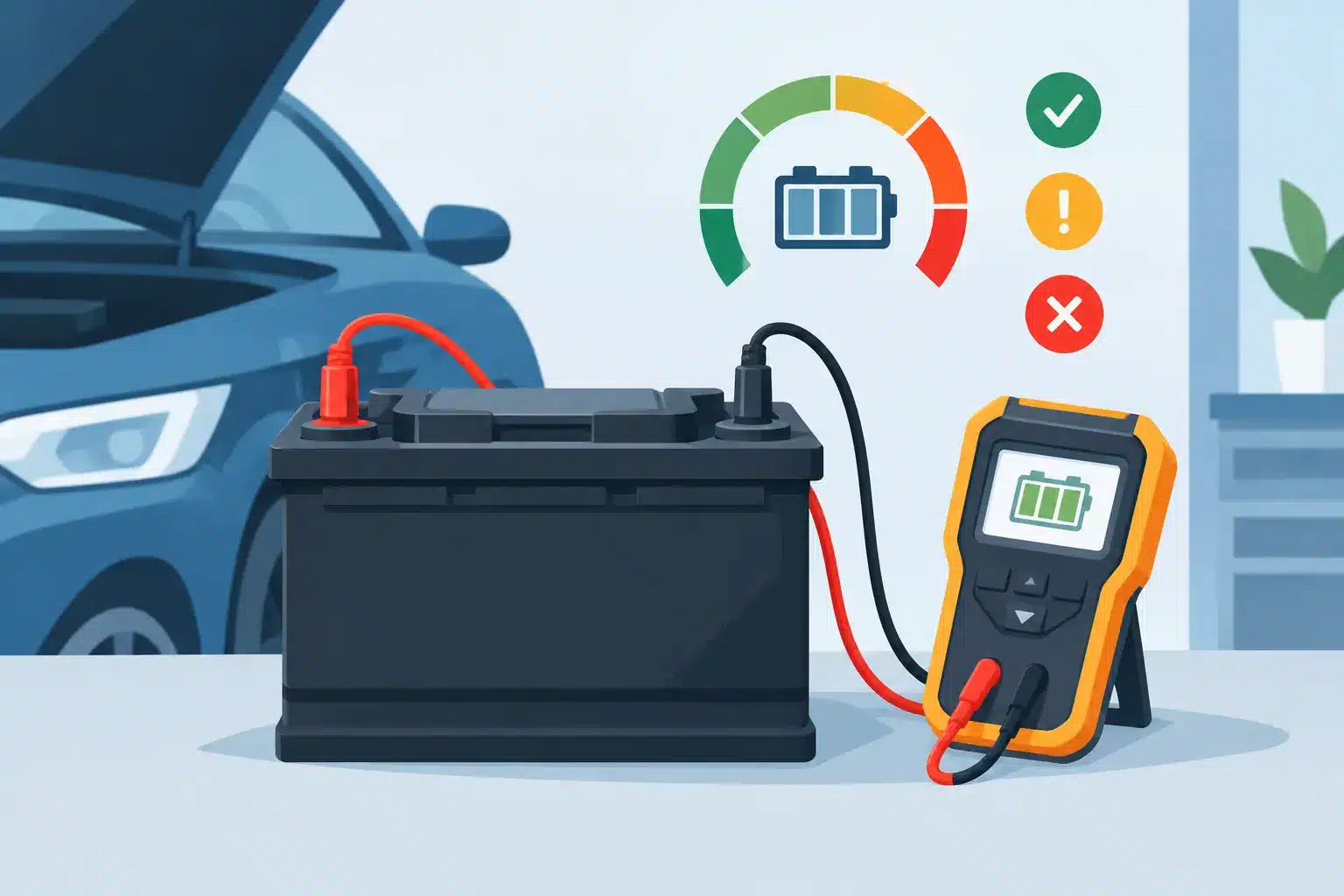
How to Test Car Battery Health Before It Fails
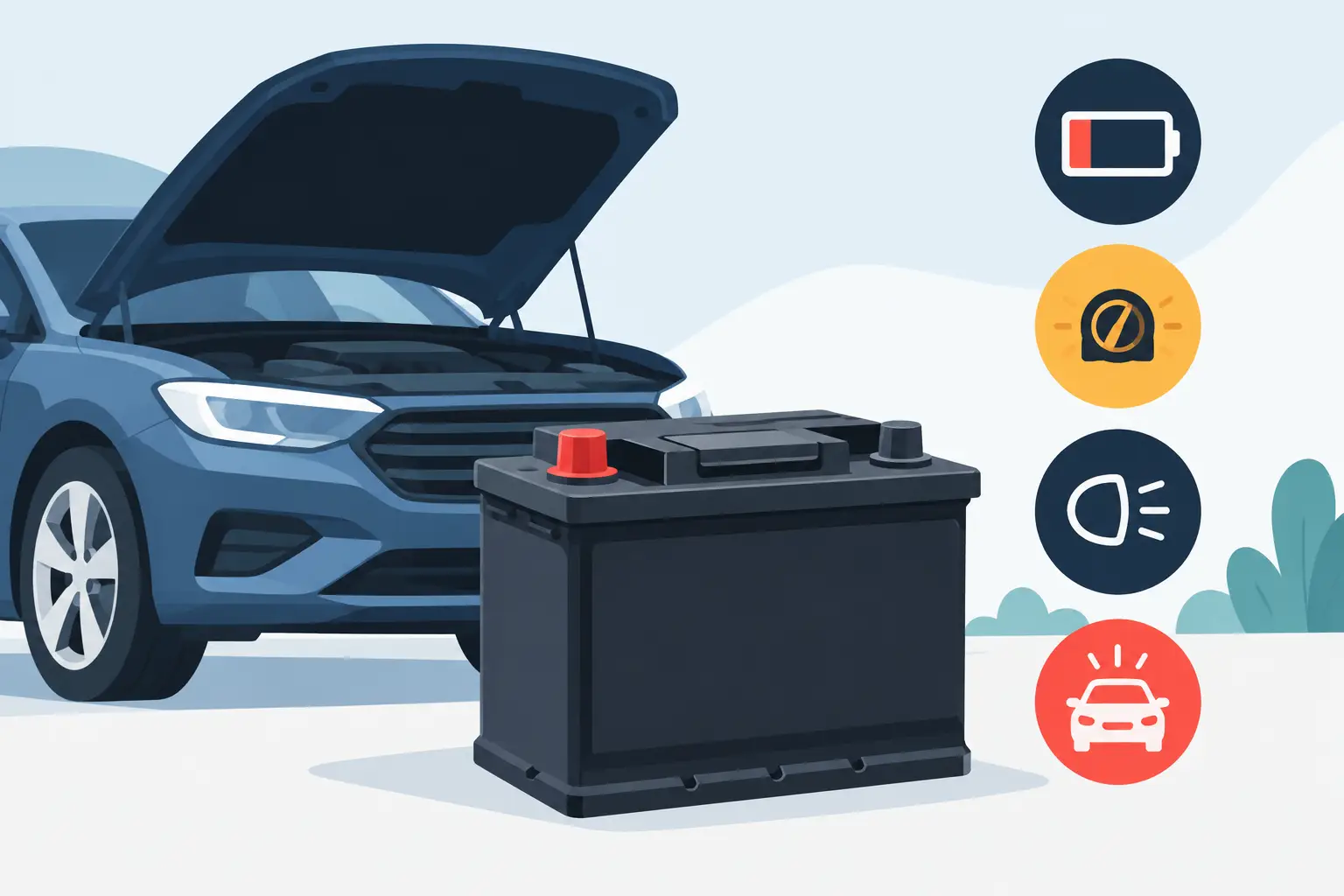
A car that cranks slowly on a cold morning, needs a jump after sitting overnight, or shows a battery warning light is giving you a reason to test car battery health before you get stranded. Battery trouble often looks like a starter or alternator problem at first, and replacing parts without proper testing can cost more than it should.
Most batteries do not fail without warning. They lose capacity gradually, especially in vehicles used for short trips, cars that sit for days at a time, work vehicles carrying extra electrical accessories, and 4WDs running lights, fridges, winches, or dual-battery gear. A quick voltage check can tell you a lot, but the most reliable diagnosis considers the battery, connections, starter draw, and charging system together.
Signs You Should Test Car Battery Condition
Slow cranking is the common sign. The engine may still start, but it turns over more slowly than usual before firing. You may also notice headlights dimming when the engine is off, power windows moving sluggishly, the clock resetting, or dash warning lights appearing when you start the vehicle.
A battery that repeatedly goes flat is another clear signal. One flat battery after an interior light was left on does not automatically mean the battery is bad. But if the battery is charged, driven, and then flat again within a day or two, it needs proper attention. The fault could be an aging battery, loose terminals, a parasitic electrical draw, or an alternator that is not charging correctly.
Battery age matters as well. Many car batteries last around three to five years, although heat, vibration, frequent short trips, and heavy electrical use can shorten that life. Check the date label on the case if it is still readable. Once a battery is approaching that age range, testing it before a long trip or busy work week is a sensible move.
How to Test a Car Battery With a Multimeter
A digital multimeter is the simplest useful tool for checking battery voltage. Set it to DC volts, using the 20-volt range if the meter is not auto-ranging. Park safely, switch off the ignition and all accessories, and make sure the transmission is in Park or Neutral with the parking brake applied.
Before taking a reading, look at the battery itself. Do not test or handle a battery that is swollen, cracked, leaking, or heavily damaged. Battery acid and hydrogen gas are hazards. If you see corrosion around the terminals, disconnecting the battery and cleaning the terminals may be necessary, but note that corrosion can be a symptom of a deeper battery or charging issue.
Touch the red meter lead to the positive battery terminal and the black lead to the negative terminal. Test directly on the lead posts where possible, rather than on dirty cable clamps. A poor connection can produce a misleading reading.
Check the resting voltage
For the best resting-voltage result, let the car sit with the engine off for several hours, ideally overnight. A healthy, fully charged conventional 12-volt battery usually reads about 12.6 volts. Readings around 12.4 volts indicate it is partly discharged, while about 12.2 volts suggests the battery is near 50 percent charge.
A reading below 12.0 volts means the battery is significantly discharged. That does not prove it must be replaced. It may simply need a correct slow charge, followed by a retest after resting. However, a battery that will not hold voltage after being fully charged is likely near the end of its service life.
If the vehicle was just driven, the battery can show a temporary surface charge and read higher than its true condition. Turn the headlights on for roughly two minutes, switch them off, wait a few minutes, then test again. This gives a more useful starting point.
Watch the voltage while cranking
Resting voltage only shows the battery’s current state of charge. A weak battery can appear acceptable at rest but collapse when the starter demands high current. Keep the multimeter connected and have another person start the vehicle while you watch the display.
As a general guide, voltage should not drop below about 9.6 volts during cranking in moderate temperatures. A lower reading can point to a weak battery, although extremely cold conditions, a high-compression engine, thick oil, or a starter motor problem can affect the result. If the engine cranks normally but the voltage dips sharply, the battery deserves a load test.
Check charging voltage with the engine running
Once the engine is running, test across the terminals again. Most vehicles should show roughly 13.7 to 14.7 volts, depending on the vehicle, temperature, battery state of charge, and smart charging system. This indicates the alternator is replenishing the battery.
If voltage remains close to the engine-off reading, the charging system may not be doing its job. A reading that stays excessively high can also cause trouble by overcharging the battery. Modern vehicles may vary charging voltage on purpose, so one number alone is not always a final diagnosis. It is the pattern, warning lights, battery condition, and vehicle specifications that matter.
What Your Test Results Actually Mean
A good resting voltage and normal charging voltage are encouraging, but they are not a full battery health report. Batteries can lose cold-cranking capacity over time. They may show 12.6 volts with no load and still lack the power to start the engine reliably on the next cold morning.
This is where a professional conductance or load test is useful. It measures the battery’s available starting power against its rated cold-cranking amps. It can also identify an internal fault that a multimeter cannot see. For drivers who rely on a vehicle for work, school runs, towing, or weekend travel, that extra check is often worth it.
Loose or corroded connections can create the same symptoms as a weak battery. Check that both terminals are secure and that the earth cable connection is clean and tight. Do not assume a new battery will fix a poor cable connection. Likewise, a battery repeatedly discharged by an accessory, dash camera, faulty module, or wiring fault will fail early even if the replacement battery is good.
Battery Problem or Alternator Problem?
A battery starts the engine. The alternator keeps it charged while the engine runs. When the alternator fails, the vehicle may start after a jump but lose electrical power as you drive. You may see the battery warning light, dimming lights, unusual electrical behavior, or a stalled engine once the stored battery charge is used up.
When the battery is the main problem, a jump-start may get the vehicle going, but it may struggle again after being parked. The distinction is not always clean. A failing battery can make the alternator work harder, and a weak alternator can leave a healthy battery undercharged. Testing both prevents guesswork.
Avoid the old practice of disconnecting a battery terminal while the engine is running to test the alternator. On modern vehicles, that can create voltage spikes and damage sensitive electronics. A meter and the right diagnostic equipment are safer and more accurate.
When a Battery Should Be Replaced
Replacement is usually the practical answer when a battery fails a load test, cannot hold a charge, has physical damage, or is old and causing repeated no-start issues. Choose a battery with the correct physical size, terminal layout, reserve capacity, and cold-cranking rating for the vehicle.
This matters even more for diesel utes, trucks, vehicles with stop-start systems, and cars with many electrical accessories. Some vehicles require AGM or EFB battery technology rather than a standard flooded battery. Fitting the wrong type can reduce battery life and affect stop-start operation. Certain late-model vehicles may also need the new battery registered or coded to the battery management system.
At Ryan Automotive and Tyres, battery testing can be handled alongside charging-system checks and general vehicle diagnostics, so you are not left replacing a battery when another fault is actually causing the problem. For Kingswood and Penrith drivers, that can save time when a no-start issue needs attention quickly.
A battery test takes far less time than arranging a tow or losing a day of work. If starting has become slow, the battery warning light has appeared, or the vehicle has needed a jump more than once, have it checked while it can still make it to the workshop under its own power.