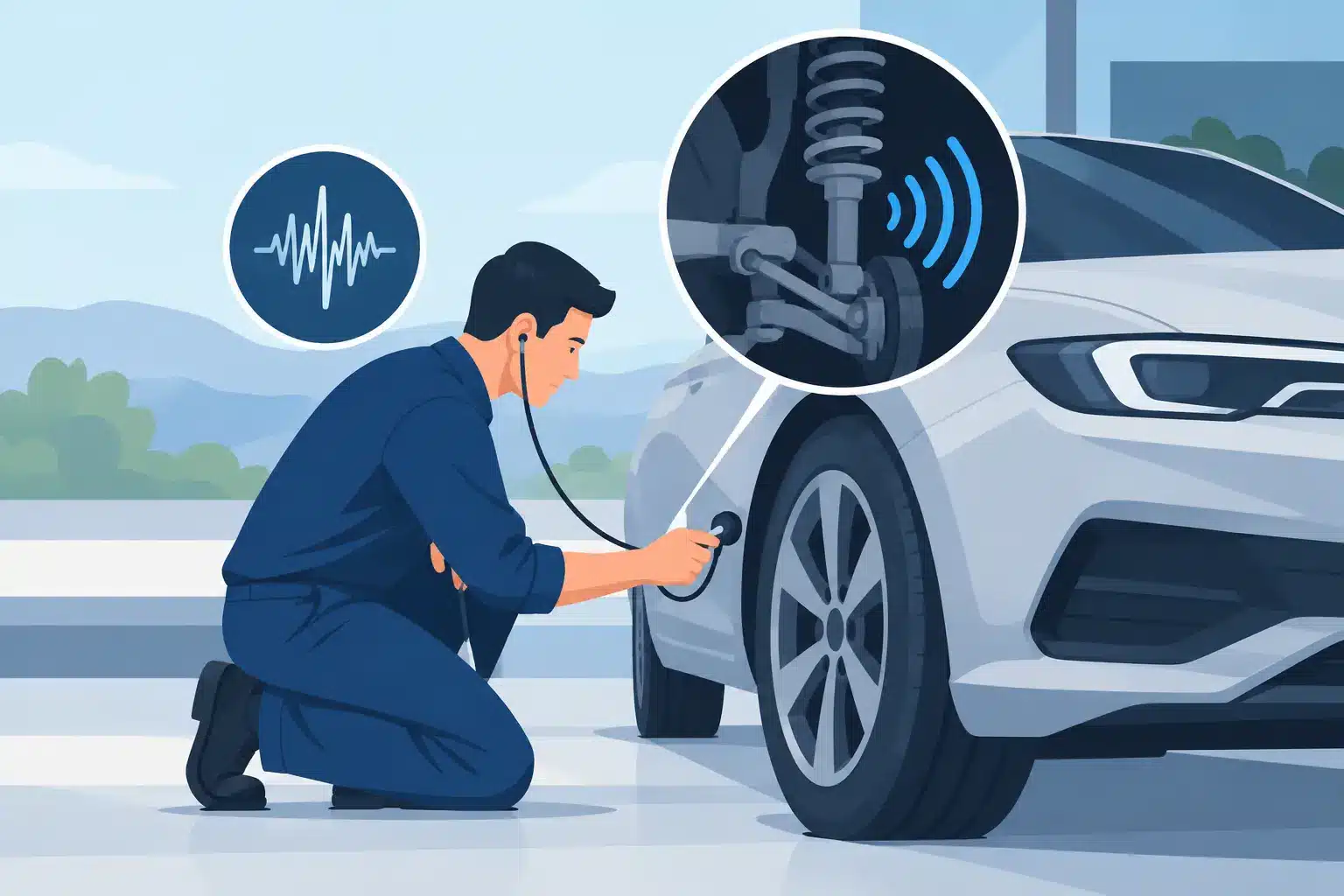
Suspension Noise Diagnosis for Safer Driving
A clunk over the same speed bump every morning is easy to ignore until it becomes a steering problem, uneven tire wear, or a failed inspection. Proper suspension noise diagnosis starts with more than identifying the sound. It means working out when it happens, where it seems to come from, and which suspension parts are under load at that moment.
Your suspension keeps the tires planted, manages bumps, and supports safe steering and braking. When something starts knocking, squeaking, rattling, or creaking, the cause may be minor, but it should not be guessed at. A worn part can put extra strain on nearby components, turning a straightforward repair into a larger job.
Start Suspension Noise Diagnosis With the Conditions
The same vehicle can make very different sounds depending on road surface, speed, steering angle, and load. Before booking the car in, take note of the conditions that reproduce the noise. This gives the technician a much better starting point and can reduce diagnostic time.
A noise over potholes, driveway entries, or speed bumps usually points toward parts moving through suspension travel. Think sway bar links, control arm bushings, strut mounts, ball joints, or shock absorbers. A sound that appears mainly while turning may be connected to steering and front-end components, although a damaged CV joint can also click or knock during tight turns.
If the vehicle clunks when braking or accelerating, worn control arm bushings, engine mounts, or loose brake hardware may be involved. A noise that changes with vehicle speed rather than bumps could be a wheel bearing, tire issue, or driveline concern instead of the suspension itself. This is why listening to the pattern matters as much as listening to the sound.
What Common Suspension Sounds Can Mean
A single sound does not confirm a failed part. Suspension assemblies contain many components that move together, and sound can travel through the chassis. Still, the character of the noise gives useful clues.
Clunking or Knocking
A solid clunk over rough roads is one of the most common complaints. Loose or worn sway bar links are frequent culprits because they can knock as the suspension moves side to side. Worn ball joints, damaged strut mounts, loose control arm bushings, or a loose shock absorber can create a similar sound.
Clunking should be checked promptly if the steering feels vague, the vehicle pulls, or the noise is getting louder. Those symptoms can indicate wear in a component that affects wheel alignment or steering control.
Squeaking or Creaking
Squeaks are often associated with dry or worn rubber bushings. Control arm bushings, sway bar bushings, and suspension mounts can squeak as they twist and flex. The sound may be more noticeable in cold weather, after rain, or when entering a driveway at an angle.
Do not assume a squeak is harmless. Some bushings can make noise for a long time before they significantly affect handling, while others may be cracked, separated, or allowing excessive movement. An inspection determines whether lubrication, adjustment, or replacement is the right fix.
Rattling
A light rattle on rough roads can come from loose sway bar links, worn strut mounts, brake hardware, loose heat shields, or even objects moving in the trunk. This is a good example of why a workshop should inspect the whole area rather than replace suspension parts based on sound alone.
A rattle that disappears when the brakes are lightly applied may point to brake hardware. A rattle that remains over every small bump may be more likely to involve suspension or steering components.
Clicking While Turning
Repeated clicking on full-lock turns is often caused by an outer CV joint rather than a suspension component. However, steering joints, loose wheel hardware, and worn front-end parts should still be checked. If the clicking is accompanied by vibration, grease around the inside of the wheel, or a torn CV boot, arrange an inspection soon.
Why Road Testing Comes Before Replacing Parts
Suspension repairs are not a place for parts swapping. Two vehicles can make the same clunk for completely different reasons. A road test allows a technician to hear the concern under real driving conditions and identify whether it occurs during rebound, compression, braking, cornering, or steering input.
Back in the workshop, the vehicle can be lifted and checked for movement in ball joints, tie rod ends, sway bar links, bushings, wheel bearings, and mounts. The technician may inspect for leaking shocks or struts, broken springs, cracked rubber, damaged boots, and fasteners that have loosened over time.
The result should be a clear explanation of what is worn, what is urgent, and what can be monitored. Not every worn bushing requires immediate replacement, but a ball joint with excessive play, a broken coil spring, or a loose steering component should not be put off.
Tires and Alignment Often Tell Part of the Story
Suspension noise and tire wear are often connected. A vehicle with worn suspension parts may develop feathering, inner-edge wear, cupping, or irregular patches across the tread. These patterns can indicate that the wheel is bouncing, the alignment angles are changing under load, or a component is allowing too much movement.
Replacing tires without addressing the underlying cause can be an expensive short-term solution. If new tires are being fitted after a suspension repair, a wheel alignment is generally a sensible next step. Alignment helps protect the tire investment and confirms the vehicle tracks correctly.
For work vehicles, trailers, 4WDs, and vehicles that regularly carry heavy loads, this matters even more. Extra weight and rough roads increase the demands on shocks, springs, bushings, and steering components. Lifted 4WDs may also need specialized alignment attention because altered ride height changes suspension geometry.
What You Can Check Safely at Home
There are a few simple observations any driver can make, but avoid crawling under a vehicle supported only by a jack. Look for obvious signs such as a vehicle sitting lower at one corner, fluid leaking from a shock or strut, a broken spring visible near the wheel, or uneven tire wear.
With the engine off and the car parked safely, you can also listen for a creak while someone gently turns the steering wheel. Check that nothing loose is rolling around in the trunk or cabin, and make sure wheel nuts have been tightened correctly after recent tire work. If a warning light is on, steering feels different, or the vehicle wanders under braking, skip the home investigation and have it inspected.
When a Suspension Noise Needs Immediate Attention
Do not keep driving simply because the vehicle still moves. Arrange urgent help if you notice a loud bang followed by a change in ride height, steering that feels loose or pulls sharply, strong vibration through the wheel, metal-on-metal grinding, or a wheel that appears to sit at an unusual angle.
The same applies if a noise follows striking a pothole, curb, or road debris. Damage can be hidden, and a bent wheel, damaged tire, broken spring, or bent control arm may not be obvious from the driver’s seat.
At Ryan Automotive and Tyres, a practical inspection can identify whether the noise is coming from the suspension, steering, brakes, tires, or another nearby system. For drivers around Kingswood and Penrith, having diagnosis, repairs, tires, balancing, and alignment available in one workshop helps avoid unnecessary running around when the real cause needs more than one service.
A noise does not always mean a major repair, but it is your vehicle asking for attention. Make a note of when it happens, avoid rough roads where possible, and get it checked before a small knock becomes a safety issue or a set of prematurely worn tires.