Wheel Offset Fitment Guide for a Better Fit
A new set of wheels can transform the look and feel of your vehicle, but the wrong offset can cause tire rub, poor clearance, heavy steering, or wheels that sit too far inside the guards. This wheel offset fitment guide explains what to check before buying, whether you drive a family SUV, work truck, trailer tow vehicle, or 4WD.
Offset is not just a styling number stamped on the back of a wheel. It affects where the wheel and tire sit in relation to the brakes, suspension, fenders, and steering components. Getting it right means a safer fit, better road manners, and fewer expensive surprises after installation.
Wheel Offset Fitment Guide: What Offset Means
Wheel offset is the distance between the wheel’s centerline and its mounting face, measured in millimeters. The mounting face is the flat surface that sits against the vehicle hub.
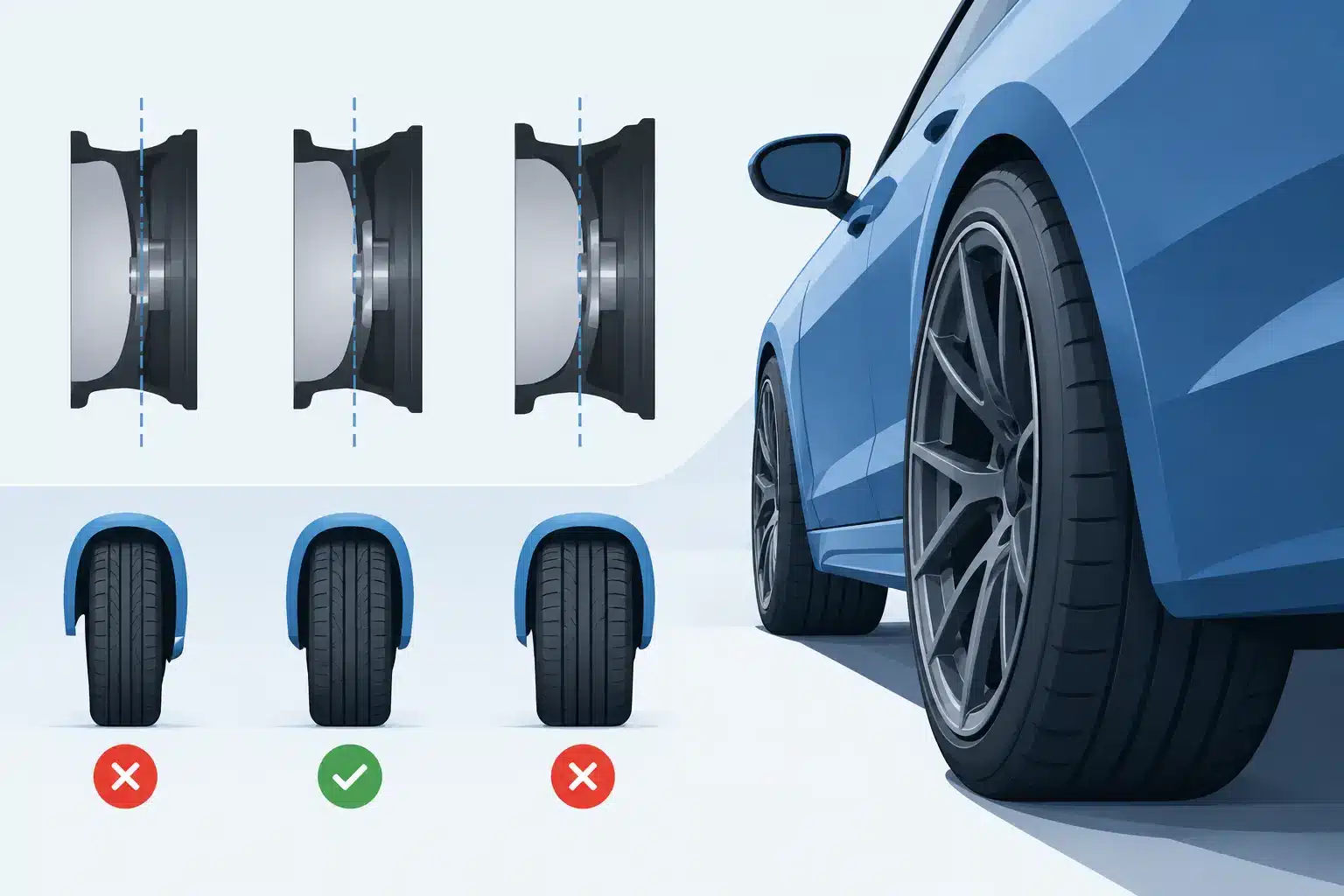
A positive offset means the mounting face is positioned toward the outside face of the wheel. This pulls the wheel farther inward under the vehicle. Most modern front-wheel-drive cars, many SUVs, and late-model pickups use positive-offset wheels.
A negative offset means the mounting face sits toward the inside of the wheel. This pushes the wheel outward, creating a wider stance. Negative offset is common on some older vehicles, purpose-built off-road setups, and deep-dish wheel designs.
A zero offset wheel has its mounting face directly on the wheel centerline. It sits between the two extremes.
You may see offset marked as ET, such as ET35 or ET45. ET is simply another label for offset. An ET35 wheel has a positive 35 mm offset.
Why a Few Millimeters Matter
A small offset change can make a major difference, particularly when fitting wider wheels or larger tires. Moving from a +45 mm wheel to a +35 mm wheel pushes the wheel outward by 10 mm. That may improve the stance, but it also reduces fender clearance by 10 mm.
At the same time, the inside edge of the wheel moves away from the strut or suspension by 10 mm. This is why offset is always a balancing act. A wheel can clear the suspension perfectly yet rub the fender when turning or driving over a bump. Conversely, a wheel can sit neatly under the fender while being too close to the strut, brake caliper, or upper control arm.
Wheel width changes the calculation as well. A wider wheel adds material to both the inner and outer sides unless the offset is adjusted. For example, moving from an 8-inch-wide wheel to a 9-inch-wide wheel adds roughly half an inch to each side. If the offset remains the same, you need additional clearance both inside and outside.
Check the Full Fitment, Not Just Offset
Offset is essential, but it is only one part of correct wheel fitment. Before ordering wheels, confirm the vehicle’s bolt pattern, center bore, wheel diameter, wheel width, brake clearance, and load rating.
The bolt pattern must match the hub exactly. It is expressed as the number of wheel studs and the diameter of the bolt circle, such as 5×114.3. A wheel with the wrong bolt pattern should never be forced to fit.
Center bore matters too. A hub-centric wheel centers accurately on the hub, reducing the risk of vibration. If the wheel’s center bore is larger than the vehicle hub, properly sized hub rings may be needed. If it is too small, the wheel will not fit over the hub.
Brake clearance is another common issue. A wheel may have the correct diameter and offset but still contact a larger caliper because of its spoke design. This is especially relevant for performance models, upgraded brakes, and some late-model trucks.
For trucks, SUVs, trailers, and work vehicles, wheel load rating is just as important as physical fit. The wheel must be rated to carry the vehicle safely, including passengers, tools, cargo, and towing loads. A wheel that looks right but is not built for the job is not a good deal.
How to Read Your Current Wheel Specs
The easiest starting point is your current wheel. Many factory and aftermarket wheels have their size and offset stamped or cast on the back of a spoke or barrel. You may see a marking such as 18x8J ET40.
In that example, 18 is the wheel diameter in inches, 8 is the wheel width in inches, J refers to the rim flange profile, and ET40 means a positive 40 mm offset. Use these details as a baseline, but do not assume every wheel with similar numbers will clear. Tire size, wheel design, suspension height, and brake package can all change the result.
If the markings are not visible, a workshop can measure the wheel and compare it against the vehicle. This is often worthwhile before committing to a wheel-and-tire package, particularly if you are changing size or fitting a wider setup.
Choosing Offset for Everyday Driving
For daily drivers, the best choice is usually an offset close to the manufacturer’s specification. Factory-style fitment protects steering feel, bearing loads, suspension geometry, and clearance through the full range of steering and suspension movement.
That does not mean you cannot make a modest change for appearance. A slightly lower positive offset can bring the wheels closer to flush with the fenders without creating problems, provided there is enough clearance. The key word is modest. A wheel that sticks well beyond the fender may look aggressive, but it can throw road debris down the body, increase tire wear, and create rubbing under load.
Tire size needs to be considered alongside offset. A taller or wider tire can rub even when the wheel itself clears. Test fitting should include turning the steering from lock to lock and checking suspension compression, not simply looking at the vehicle while parked.
Offset Considerations for 4WDs and Work Vehicles
4WD owners often want a wider track for appearance or off-road stability. A lower offset wheel can create more room on the inside for wider tires, but it also pushes the tire toward the fender edge. On a lifted vehicle, this may look fine at ride height but still rub at full steering lock or when the suspension flexes.
For tradies and tow vehicles, avoid choosing offset based on appearance alone. Added track width can increase leverage on wheel bearings, ball joints, and steering components. The effect may be small with a sensible change, but it grows as wheels move farther outward and as vehicle loads increase.
Mud-terrain tires add another variable because their tread blocks are wider and more aggressive than a highway tire of the same labeled size. They need extra room around the guards, mud flaps, and suspension. A package that works with all-terrain tires may not clear with mud tires.
What About Wheel Spacers?
Wheel spacers move a wheel outward by reducing its effective offset. For example, a 15 mm spacer on a +45 mm wheel produces an effective offset of about +30 mm. They can solve an inner clearance problem, but they are not a shortcut for poor planning.
Spacers must be correctly engineered for the vehicle, hub-centric where required, and installed with suitable studs or hardware. They also need to comply with applicable vehicle rules and inspection requirements. Poor-quality spacers, incorrect torque, or insufficient thread engagement can create serious safety risks.
In many cases, selecting a wheel with the correct offset from the start is the cleaner and more dependable option. It avoids stacking extra components between the hub and wheel and makes future servicing simpler.
Signs Your Wheel Offset Is Wrong
Some fitment problems are obvious immediately, while others appear after driving. Listen for rubbing during full-lock turns, over speed bumps, or with passengers and cargo in the vehicle. Look for fresh marks inside the fender liner, on suspension parts, or along the tire sidewall.
Vibration may point to a centering or balancing problem rather than offset alone, but it should never be ignored. A change in steering effort, a vehicle that follows ruts more than usual, or uneven tire wear can also indicate that the wheel-and-tire combination needs to be checked.
Do not trim guards, remove liners, or accept regular rubbing as part of a custom setup without understanding the cause. Tires are a safety item, and contact can quickly damage the sidewall or compromise steering when you need it most.
Get the Fit Checked Before You Buy
The safest approach is to match the wheel to the exact vehicle, not just the make and model. Trim level, year, brake package, suspension modifications, and intended tire size all matter. Bring the vehicle details and the wheels or tire size you are considering to a workshop that handles both wheel sales and mechanical fitment.
At Ryan Automotive and Tyres, a proper fitment check can account for clearances, load requirements, tire choice, wheel balancing, and alignment in one place. That is especially useful when downtime matters and you need the vehicle ready for family driving, work, towing, or weekend tracks.
A wheel should look right, but it also needs to steer, stop, carry weight, and clear every component without compromise. Take the extra time to verify the numbers before purchase, and you will spend more time enjoying the drive than chasing fitment problems.